Set up signposts, make landmarks; set your heart toward the highway, the way in which you went. Turn back, O virgin of Israel, turn back to these your cities. How long will you gad about (waver and hesitate), O you backsliding daughter?
Jeremiah 31:21
Every religious person whether he is a Christian, Judaist, or Muslim, aspires to spiritual relation or even to a blood relation with Abraham, calling him a ‘forefather’ and calling oneself an heir of the promises with all of its due repercussions.
With so many making this claim, the question surfaces: is it true that a person can be defined as an heir to the promises Elohim had foretold to Abraham regardless of the religious or ethnic heritage that they have come from?
Of course not, it is enough to look at the life story of Abraham and his children in order to understand the criteria for one to be defined as a «chosen one» of YHWH*.
Many different religious teachings were introduced to the lives of believers during the last two thousand years. Some of these teachings are based on the traditions of the elders and wise men, while others are founded on the explanations and interpretations of the Scripture as presented by the different schools and teachers of the Law. For the most part these teachings did not open the true meaning of the Scripture but instead added a lot of useless and contradictory information in regards to following the commandments of the Most High. On one side, this trap could easily lead to the religious slavery of an individual, while on the other it may lead to the negligence of YHWH’s Law.
The majority of Christians will also find themselves lost and confused if they continue to believe that, through accepting the forgiveness of sins and salvation through the blood of Yeshua, they automatically fulfill the commandments of the Law. As a result of this theology, they incorrectly believe that they need only follow the commandments that regard love towards YHWH and one’s neighbour, (these concepts having been taught by Yeshua in the “new testament”). With this type of perspective, they forget that the commandments given in the Law of YHWH stand as infinitely relevant to us and that they present a summary of all the commandments found in YHWH’s Law.
The goal of this book is to help the believer find a way of truth in building a strong relationship with his Creator and also with his neighbour. In addition, it is sincerely hoped that the reader will become a rightful heir of Abraham and will follow the living Word of Truth with the wisdom to avoid the various common teachings, interpretations and traditions that surround us.
This book includes** materials based on the Five Books of Moshe, the Books of the Prophets and other Writings (historical books, Psalms and Proverbs, the Book of Enoch, the Book of Jubilees (Little Genesis), the Book of Tobit, the Books of Maccabees and other ancient books). The Gospels, apostolic letters and the Book of Revelation are also considered.
* YHWH – Name of the Creator of the Universe.
** This book does not include commandments about the sacrifices, tabernacle, Temple service and Levites.
What do we mean when we speak of love to YHWH* ELOHIM**? What is love to YHWH? How can we demonstrate it? The question is what kind of love does the Creator need? And which kind of love does He teach us to demonstrate in His Word?
Deut.11:1 Therefore you shall love YHWH your Elohim, and keep His charge, His statutes, His judgments, and His commandments always.
1Jn.5:3 For this is the love of YHWH, that we keep His commandments. And His commandments are not burdensome.
The Father tells us that our love to Him is demonstrated by following His Word. He, as the Father, loves all: those who believe in Yeshua the Anointed One, and also the sinners who have not repented yet. However, the Father does not love the sin itself, or the evil actions the sinner commits, but rather the confused soul beneath it. The perfect will of YHWH is for all people to live within His blessing and under His protection. The only thing we need to do is to accept His perfect will, to understand it, and to follow it as the word of Elohim urges us to.
Deut.28:9 YHWH will establish you as a holy people to Himself, just as He has sworn to you, if you keep the commandments of YHWH your Elohim and walk in His ways.
Yes, our repentance reconciles us with YHWH, gives us forgiveness, and opens the door to an abundant life, yet it is important to understand that promises cannot come easily to us just because we have accepted Yeshua as our Savior. Our part is now to keep the covenant and we do that by ‘following the commands of YHWH Elohim’, which gives us a guarantee of an abundant life in Him.
Our Father’s love for us is certainly unconditional, however He is also eager to see us grow. Any father or mother who truly loves their child is capable of changing their child’s diapers daily and, if needed, they are prepared to do it for the rest of the children’s life. However, despite the fact that parents are willing to do all that is needed for their child, that does not mean that we, the children, can remain babies for the rest of our lives. It is the dream of every parent that their child’s future will be filled with prospects and they wait, with eager expectation, the fulfillment of that dream of maturity, wisdom and success for their son or daughter. Does not a father dream of sitting down and engaging in a mature conversation with his son instead of constantly providing the most basic of his needs so that he can grow up? Do our parents not wait for us to grow up and become wholesome and blessed members of society? These questions lead us further: Does not the heavenly Father wish the same for us?
Despite the fact that the love He has for us is the eternal love of a father, does it mean that this unconditional love is the excuse for us to remain in ignorance, uncleanliness and idolatry? Such ways will only lead to curses in our life. As any parent, our Father hopes that we might go far in our journey of life and complete it with success.
The commandments of YHWH give us orientation for each of our actions and for the decisions we make in life. He created this world and He created us as well, so if we are to live here on earth, it follows that the Creator would know best how we should live in His creation! It is not only for our protection, but also the means by which we express our love towards Elohim. To live in YHWH’s Word is both a blessing and a privilege for His people.
* YHWH – Name of the Creator of the Universe.
** Elohim (אֱלֹהִים) – the Almighty, the Most High.
IRELATIONSHIP WITH YHWH
WALKING BEFORE YHWH
1Deut.4:39 Understand this today, and keep it in your heart: YHWH is the only Elohim. There is no other in heaven or on earth.
2Deut.7:9 Know that YHWH your Elohim is faithful. He keeps His covenant and shows steadfast love to those who love Him and keep His commandments—for a thousand generations. But those who hate Him will face the consequences. He does not delay in repaying them. So keep the commandments, statutes, and judgments that I give you today, and live by them. If you listen to them, keep them, and obey them, YHWH your Elohim will keep the covenant and steadfast love He swore to your fathers.
3Deut.13:4 Follow YHWH your Elohim. Honor Him. Keep His commandments. Listen to His voice. Serve Him. Stay close to Him, and never turn away from Him.
4Deut.6:13 Live with reverence before YHWH your Elohim (follow Him). Serve Him alone. And if you make an oath, make it in His name.
Mtt.4:10 Then Yeshua said to him, "Go away, Satan! It is written: Worship YHWH your Elohim, and serve Him alone."
5
Deut.4:9 Be careful and watch over yourself. Don't forget what your own eyes have seen. Keep it in your heart for as long as you live. Teach it to your children and grandchildren. Remember the day you stood before YHWH your Elohim at Horeb, the mountain where He spoke to you. Then YHWH said, "Gather the people before Me, and I will let them hear My words, so they may learn to live with a serious awareness of who I am (to fear Me) all the days of their lives, and teach the same to their children."
Deut.10:20 Live before YHWH your Elohim with a clear awareness of who He is (fear YHWH)—live with an awareness of His holiness. Serve Him alone. Stay close to Him—do not turn away from Him. And if you make an oath, make it in His name. He is your glory and your Almighty One. He has done great and mighty things for you, which you saw with your own eyes.
Lk.12:5 But I will tell you before whom you should live with a serious awareness of who He is (whom to fear): it is the One who has authority even after death—authority over life and eternity, and the right to decide a person's destiny. Live before Him with a clear awareness of who He is (fear Him). Yes, I tell you, live responsibly before Him.
Mtt.10:28 Do not live in fear of those who can kill the body but cannot touch the soul (do not fear them). Live with a serious awareness of the One who has authority over both soul and body—and who decides their destiny in Gehenna (the place of final judgment).
1Pet.1:17 If you call as Father the One who judges everyone's actions fairly, then live your time here with a clear awareness of who He is (live in reverence before Him). Remember that your life on this earth is only temporary.
Act.2:42 They remained faithful to the apostles' teaching, spent time together, broke bread, and prayed. And everyone was filled with a deep and serious reverence (fear of YHWH—a clear awareness of His presence).
2Cor.5:11 Understanding what it means to live before YHWH with a clear awareness of who He is (knowing this reverence), we do our best to help others understand it too and guide them toward Him.
1Tim.5:20 Those who continue to break YHWH's commandments should be corrected openly, in front of everyone. This is so that the others will understand the seriousness of what is happening (and have a healthy reverence).
Phil.2:12 Continue to live out your salvation seriously and carefully (with fear and trembling), always remembering before whom you stand.
Hebr.10:31 To fall into the hands of the living YHWH Elohim is something to take very seriously (it is a fearful thing to fall into His hands).
6Ex.23:25 Direct your thoughts, your heart, and your actions toward YHWH your Elohim (serve YHWH your Elohim). Then He will bless your bread and your water—He will give you everything you need. And He will remove sickness from among you.
Josh.24:15 If you do not want to direct your life toward YHWH and follow His commandments (serve Him), then decide today whom you will serve: the gods your fathers served beyond the River (the Euphrates), or the gods of the Amorites, in whose land you now live. But as for me and my household, we will serve YHWH (we will direct our lives, our hearts, and our actions toward the Most High).
7Deut.8:2 Remember the whole journey that YHWH your Elohim led you through the wilderness for forty years. He led you this way to teach you humility and to reveal what was in your heart—whether you would keep His commandments or not. When, in the wilderness where there seemed to be nothing to eat, you thought you would be left without food, He gave you manna (bread from heaven that you had never known or even imagined). In this way He showed you that people do not live by bread alone, but by everything that YHWH provides (His living and active word).
Mtt.4:4 He answered, "It is written: People do not live by bread alone, but by everything that YHWH provides (His living and active Word)."
1Pet.1:7 Gold is tested by fire, and in the same way your faith is being tested. These trials are meant to prove that your faith, which is far more valuable than gold, is genuine. Then, when Yeshua, the Anointed One, is revealed, it will result in praise, glory, and honor.
Jam.1:2 My brothers, when you go through different kinds of trials, receive them with joy. Understand that the testing of your faith makes you stronger (produces endurance). And let that endurance finish its work, so that you may become mature and whole, with no weak spots (complete, lacking nothing).
8Deut.8:5 Understand and keep this in your heart: YHWH your Elohim is raising you the way a father raises his son (teaching you the way a father teaches his own son).
Prov.3:12 YHWH corrects and guides those He loves (raising them with loving discipline), just as a father does with the son he loves.
Hebr.12:6 YHWH trains those He loves, sometimes with firmness (teaching them, sometimes strictly). And every son whom He accepts, He leads through discipline (allowing pain because of his stubbornness and mistakes, in order to help him grow).
Rev.3:19 Those whom I love, I correct directly and train (I correct and teach them).
9Deut.8:10 When you have eaten and are satisfied, do not forget to thank YHWH your Elohim for the good land He has given you (bless YHWH your Elohim).
1Thess.5:18 In every circumstance, remain thankful, because this is YHWH's desire for you—those who live in union with Yeshua, the Anointed One.
Col.3:17 Whatever you do or say, act the way Yeshua would act (in Yeshua's name—in His likeness). And through Him give thanks to YHWH the Father.
Eph.5:20 Always give thanks for everything to YHWH the Father, acting the way Yeshua would act and relying on His name (doing this in the name of Yeshua, the Anointed One).
ABOUT BEING CHOSEN
10
Lev.19:2 Live differently—separate yourselves from all evil (everything that goes against YHWH's commandments; be holy), because I, YHWH your Elohim, am holy (set apart and pure).
Lev.20:7 Separate yourselves from evil and make your lives pure (consecrate yourselves and be holy), because I, YHWH your Elohim, am holy.
1Pet.1:14 As obedient children, do not live like the world around you, letting your desires control you (and do not return to your former desires, if they once had a place in your life). Follow the example of the One who called you and who is holy, and live according to YHWH's word, so that your actions reflect His commandments (be holy). For YHWH's word says, "Be holy, because I am holy" (be set apart, because I am set apart).
Mtt.5:48 Strive to become mature and whole, just as your heavenly Father is (be perfect).
Rev.3:2 Wake up! Strengthen what still remains in you and is barely holding on (what is on the verge of death). For I see that your deeds are far from what they should be before YHWH (I have not found your deeds complete).
11
Lev.11:45 I am YHWH, who brought you out of Mitsrayim so that you would live with Me in covenant and under My protection, and I would be your Elohim (you would be My chosen people). Live by My commandments and act in a way that makes your life different from the lives of those around you (be holy), because I am holy!
Lev.20:26 Live by My commandments and keep yourselves separate from what I call unclean (be holy before Me), because I, YHWH, am holy. I have set you apart from the other nations so that you would be under My protection (you would be Mine).
2Cor.7:1 Dear friends, since we have these promises—that YHWH will be with us and bless us if we live according to His Word—let us cleanse our lives from everything that corrupts our actions and our thoughts (from every defilement of body and spirit), and learn to live in a way that pleases YHWH, sincerely striving to live according to His Word (perfecting holiness in the fear of YHWH).
Col.3:12 Since you are those whom YHWH has chosen, loves, and has set apart for Himself (His chosen, holy, and beloved people), let this be seen in the way you treat others: show mercy and kindness, be humble, gentle, and patient (clothe yourselves with compassion, kindness, humility, gentleness, and patience).
12Deut.18:13 Live honestly and uprightly before YHWH your Elohim (be blameless).
Lk.1:6 Both of them (Zechariah and Elizabeth) lived honestly and rightly before YHWH (they were righteous before YHWH) and did their best to follow all His commandments (they followed all His commandments and instructions blamelessly).
Lk.2:25 There was a man in Jerusalem named Simeon. He lived honestly before YHWH and took Him seriously (he was righteous and devout), waiting for YHWH to forgive and restore Israel—those who would turn to Him. And the Holy Spirit was upon him.
Lk.23:50 There was a man named Joseph from the Judean town of Arimathea. He was a member of the council. He was a good and honest man (righteous) who was waiting for YHWH to establish His Kingdom (waiting for the Kingdom of YHWH). He did not support the decision of the Jewish leaders when they decided to put Yeshua to death.
13Ex.19:5 Now, if you carefully listen to Me and live by My covenant, you will become My special people among all the nations (My treasured possession, My own special treasure). For the whole earth belongs to Me. You will be a people who serve Me as a royal priesthood (a kingdom of servants) and a people who live by My commandments (a holy nation). This is what you must say to the people of Israel.
1Pet.2:9 But you are those whom He has chosen and set apart for Himself, a royal priesthood, a people who live by His commandments (a holy nation), people who live with Him in covenant and under His protection (His own possession), so that you may speak about His character and His works (proclaim His excellencies)—the One who called you out of darkness into His wonderful light.
14Deut.9:4 When YHWH your Elohim drives these nations out before you, do not say in your heart, "It is because I am righteous (because I live according to His ways) that He has given me this land." No. He is driving them out not because you are better, but because they live in evil—they reject His Word, follow their own ways, and refuse to live by His commandments. You are entering this land not because of your righteousness or because your heart is blameless, but because YHWH is fulfilling the promise He made to your fathers—Abraham, Isaac, and Jacob. Understand this clearly: it is not because of your righteousness that He is giving you this good land. You yourself are inclined to stubbornly go your own way (you are stiff-necked).
Rom.11:6 In the same way, there is also a remnant today—those whom He has preserved by His mercy (by grace). And if it is by mercy, then it is not a reward for human effort. Otherwise, it would no longer be mercy, but something earned. So what does this mean? Israel was seeking righteousness—it wanted to be recognized as righteous before YHWH—but not all attained it. Only those who accepted His Word and remained faithful to His covenant were recognized as righteous before Him. The rest became hardened, stopped listening to Him, and turned away from His Word.
THE TEST OF FAITHFULNESS
15
Deut.6:16 You shall not tempt YHWH your Elohim as you tempted Him in Massah (Exodus chapter 17).
Deut.24:9 Remember what YHWH your Elohim did to Miriam on the way as you came out of Mitsrayim—how she was disciplined for speaking against Moses and for showing disrespect toward the role that the Most High had entrusted to him.
1Cor.10:9 Do not doubt the Anointed One (Yeshua) or make Him "prove" Himself, as some of them did—and they were struck down by snakes. And do not complain in rebellion against YHWH, as they complained and were destroyed by the destroyer. All these things happened to them as a warning and were written down for us—those who are living in the closing period of history (upon whom the ends of the ages have come)—so that we would learn from their mistakes. Therefore, if anyone thinks they are standing firm and that everything is fine with them, let them remain watchful and carefully guard their heart, so that they do not stumble (turn away from His way and lose their faithfulness).
Hebr.3:8 Do not harden your hearts—do not close yourselves off inside or stubbornly resist, as happened during the rebellion in the wilderness, on the day they began to doubt Me and put Me to the test. There your fathers tested Me, questioning whether I could be trusted, even though for forty years they had seen My works. Therefore YHWH said, "These people are always going astray in their hearts and do not understand My ways." So in My righteous anger I swore, "They will never enter My rest" (the life I prepared for them—under My guidance and within My promise).
Mtt.6:31 Therefore, do not worry with distrust, constantly asking, "What will we eat? What will we drink? What will we wear?"
Mtt.4:7 Yeshua said to him, "It is also written: Do not doubt YHWH your Elohim or demand that He prove His faithfulness (do not demand proof from Him)."
OATHS. RESPONSIBILITY FOR THE NAME OF YHWH
16
Ex.20:7 Do not swear falsely (do not lift up*) in the name of YHWH your Elohim, and do not use His Name*** to support a lie or empty promises (in vain**), because YHWH will not overlook anyone who associates His Name with falsehood.
Deut.5:11 Do not swear falsely by the Name of YHWH your Elohim, and do not use His Name in a false oath or an empty promise, because a false oath made in His Name will not be without consequences.
* lift up — Hebrew: נשא (nasa), which also means "to carry" or "to raise up."
** in vain — Hebrew: שָׁוְא (shav), which also means "falsely" or "deceitfully."
*** name — Hebrew: שֵׁם (shem), which also means "character" or "reputation."
In light of this, this commandment can also be understood as: "Do not misrepresent the character of Elohim," or, in other words, "Do not bring dishonor to His reputation." Considering that human beings were created in His likeness—or, more literally, as His "image" (Hebrew צֶלֶם (tselem) also means "shadow"; Gen. 1:27)—this commandment takes on an even deeper meaning.
17Lev.19:12 Do not swear falsely by My Name, and do not dishonor the Name of YHWH your Elohim by associating it with deceit.
18Ex.22:28 Do not speak about YHWH your Elohim with contempt, and do not speak against the head of your family or your community.
Jud.1:8 In the same way, these people live according to their own fantasies. They corrupt themselves, reject the order established by YHWH, and speak with contempt about those who have been given authority. Even Michael the archangel, when he was disputing with the adversary about the body of Moses, did not presume to pronounce a condemning judgment on his own, but said, "May YHWH Elohim rebuke you."
Rom.2:24 Because of the way you live, the Name of YHWH is dishonored among the nations. You call yourselves His people, yet you live in such a way that His Name becomes an object of mockery.
19Lev.22:32 Do not dishonor* My holy Name, so that I may be recognized as holy among the people of Israel.
* dishonor — Hebrew: חָלַל (chalal), which also means "to defile," "to profane," or "to pollute."
CIRCUMCISION OF THE HEART (SPIRITUAL)
20Deut.10:16 Therefore, remove the stubbornness from your hearts (circumcise the foreskin of your hearts) and stop stubbornly insisting on your own way.
Jer.4:4 Begin living wholeheartedly for YHWH your Elohim, and remove the stubbornness from your hearts (circumcise the foreskin of your hearts).
Ezek.44:6 Say to the stubborn house of Israel, "This is what YHWH Elohim says: Enough of all your detestable practices, house of Israel! You bring foreigners with uncircumcised hearts and uncircumcised flesh into My sanctuary, allowing them to enter and so defiling My temple. You offer Me bread, fat (tallow), and blood, and by all your detestable practices you break My covenant."
Rom.2:28 A true Jew is not simply someone who has the outward mark of circumcision on the body from childhood. A true Jew is one whose heart has been circumcised—someone who has begun to live by YHWH's commandments, removing stubbornness and resistance from the heart. This is the work of the Spirit, not (only) of an outward ceremony, but of inward faithfulness. And the praise of such a person comes not from people, but from YHWH.
Col.2:11 In union with Him, you received a circumcision—not the physical circumcision that a person receives from their parents in childhood, but an inward one. You left behind your former life without His commandments (life according to the flesh) and began a new one. With Him, you buried your old life through immersion in water, and with Him, you also began to live a new life.
Acts 7:51 You are stubborn people, with uncircumcised hearts and ears. You continually resist the Holy Spirit. Just as your fathers did, so do you.
CIRCUMCISION OF THE FLESH — THE SIGN OF THE COVENANT
21
Gen.17:10 This is My covenant, which you are to keep between Me and you, and between your descendants after you: every male among you must be circumcised. Circumcise the foreskin—it will be the sign of the covenant between Me and you. Every boy who is eight days old must be circumcised throughout your generations, whether he was born in your household or bought from a foreigner who is not one of your descendants. Every one of them must be circumcised. This sign will remain on your body as the everlasting sign of My covenant. But if a man is not circumcised and does not receive this sign of the covenant, he will be cut off from his people because he has rejected My covenant.
Lev.12:3 On the eighth day, the boy must be circumcised—receiving the sign of the covenant.
The Book of Jubilees Chapter 15 And YHWH said to Abraham:
"Keep My covenant—you and your descendants after you. Circumcise the foreskin, and it will be the sign of My everlasting ordinance between Me and you and your descendants.
On the eighth day every boy must be circumcised throughout your generations—whether he was born in your household or purchased with silver from foreigners. Everyone from your offspring must be circumcised. The one born in your house and the one purchased with silver must be circumcised. My covenant will remain on your body as an everlasting sign.
If any male is not circumcised on the eighth day, he will be cut off from his people because he has broken My covenant."
And YHWH said to Abraham:
"Your wife Sorah will no longer be called Sorah; Sarah will be her name. I will bless her and give you a son through her. I will bless him, and a nation will come from him, and kings of nations will descend from him."
Abraham fell facedown, rejoiced, and said in his heart:
"Will a son really be born to a man who is a hundred years old? And will Sarah give birth at ninety?"
Then Abraham said to YHWH:
"If only Ishmael might remain under Your protection."
But YHWH said:
"Sarah will bear you a son, and you shall name him Isaac. I will establish My everlasting covenant with him and with his descendants after him. I have heard your request concerning Ishmael. I will bless him and make him numerous. Twelve rulers will come from him, and I will make him into a great nation. But I will establish My covenant with Isaac, whom Sarah will bear to you at this same time next year."
After YHWH had finished speaking with him, He departed.
Abraham took Ishmael, everyone born in his household, and everyone purchased with silver—all the males in his household—and circumcised them that very day. On that day Abraham was circumcised, and all the men of his household—those born in the house and those purchased from foreigners—were circumcised together with him.
This law is for all generations forever. Circumcision must not be delayed—it must take place on the eighth day after birth. This is an everlasting blessing, established and written on the heavenly tablets.
Anyone who is not circumcised on the eighth day does not belong to the sons of the covenant that YHWH made with Abraham. He does not bear the sign of the covenant and has broken YHWH's covenant.
YHWH set Israel apart to be His people. Over the other nations He appointed spiritual beings—angels and spirits. But over Israel He appointed no angel and no spirit. He Himself is their Ruler. He watches over them and leads them. If they keep His commandments, He will bless them, and they will be His sons, and He will be their Father forever.
But the time will come when the people of Israel will turn away from this ordinance. They will stop circumcising their sons on the eighth day. They will abandon the sign of the covenant and become like the nations around them.
Then the anger of YHWH will be great, because they themselves abandoned His covenant and brought its consequences upon themselves.
Lk.2:21 On the eighth day, when it was time to circumcise the child, He was given the name Yeshua, just as the angel had said before He was conceived.
Lk.1:59 On the eighth day they came to circumcise the child. They were about to name him Zechariah, after his father, but his mother said, "No, he is to be called Yohanan (John)."
Phil.3:4 If anyone thinks they can rely on their heritage and religious accomplishments, I have even more reason to do so: circumcised on the eighth day, from the people of Israel, from the tribe of Benjamin, a Jew born of Jews; as for religious teaching, a Pharisee.
Circumcision is the sign of the covenant (an outward testimony) between Abraham, his descendants, and YHWH Elohim. According to the commandment, circumcision was to be performed by the parents on the eighth day. On that day, through circumcision, the child was brought into the holy community of Israel.
There were, however, times when this commandment was not observed (Exod. 4:20–26; Josh. 5:1–8), yet YHWH Elohim gave His people another opportunity to fulfill it.
When the apostle Paul (Shaul) wrote about circumcision, he appears to have been referring not to YHWH's commandment itself, but to the traditional religious ceremony known as Brit Milah.
In Paul's understanding, this traditional religious ceremony, by itself, does not make someone a "true" Jew simply because of an outward sign.
Circumcision is a person's commitment to follow YHWH's commandments and to live according to His Law, not a reason to boast about a procedure that their parents performed on them in childhood.
Rom. 2:25 Circumcision has value if you live by YHWH's commandments. But if you break them, your circumcision becomes as though you were uncircumcised.
1 Cor. 7:18–19 Was anyone uncircumcised when YHWH called him? He should not seek to undergo the traditional ceremony of Brit Milah. And if anyone was already circumcised, he should not try to hide it. By itself, the fact that a person is circumcised or uncircumcised does not make them righteous. What truly matters is living by YHWH's commandments.
Rom. 2:28–29 A true Jew is not simply someone who bears the outward sign of circumcision that was performed on him in childhood. Nor is true circumcision only outward and physical. Rather, a true Jew is one who is such inwardly, and true circumcision is the circumcision of the heart—spiritual, not merely literal (not merely a ritual). Such a person's praise comes not from people, but from YHWH.
The same principle can be applied today to Christians who have undergone the religious ceremony of baptism and consider themselves "true believers," while neglecting the commandments of YHWH Elohim.
The book of Acts also describes a situation in which Pharisees who had come to believe in Yeshua, but were still influenced by traditional Judaism, continued trying to impose a special religious ceremony on the Gentiles. This ceremony included religious rules, regulations, and traditions, as well as the mandatory process of giyur (Hebrew: גיור).
Acts 15:1 Some men who came down from Judea were teaching the brothers, "Unless you are circumcised according to the ceremony of Moses, you cannot be saved."
Acts 15:5 Then some of the believers who belonged to the party of the Pharisees stood up and said that the Gentiles must be circumcised and instructed to keep the Law of Moses (the regulations added to the Law).
Acts 15:10 "Why, then, are you now testing YHWH by trying to place additional and burdensome requirements (a yoke*) on the disciples—requirements that neither our fathers nor we have been able to bear?"
Acts 15:19–21 "Therefore, I conclude that we should not create unnecessary difficulties for the Gentiles who are turning to YHWH. Instead, we should write to them (as a starting point) to abstain from food sacrificed to idols, from sexual immorality, from the meat of strangled animals (meat in which the blood remains), and from blood itself, and to do to others as they would have others do to them. For the Law of Moses (the Word of YHWH—His commandments) has been read in the synagogues in every city, from generation to generation, every Sabbath."
* It is evident that this "yoke" refers to human teachings and traditions, not to YHWH's Law. These were the very things that made life difficult for those who had come to believe in the Anointed One, placing on them "heavy burdens" (Matt. 23:4; Luke 11:46), instead of allowing them to keep YHWH's commandments in simplicity—that is, without religious interference. The true Law (the Word of YHWH) continued to be read and taught in the assemblies of believers every Sabbath—the holy day of Shabbat—for all believers.
Let us consider another statement made by Paul:
Phil. 3:1–3 Finally, my brothers, rejoice in YHWH. It is no trouble for me to repeat this, and it is for your benefit. Beware of the "dogs." Beware of evil workers—those who distort the truth. Beware of the circumcision* (those who mutilate the body / false circumcision). For we are the true circumcision: those who serve YHWH from within by living according to His Word, who boast in Yeshua and do not rely on outward signs.
It is important to understand that circumcision, given as YHWH's commandment (His Holy Word) to Abraham and his descendants forever, has nothing to do with mutilating the body, nor with evil workers and dogs. In this context, Paul is not speaking about circumcision itself, but about the giyur procedure—the Jewish (Pharisaic) teaching, which claimed that salvation was impossible without this religious ceremony (Acts 15:1).
Once we understand that circumcision is a commandment given for a newborn son—not for the father himself—we can understand Paul's words in their proper context: "Beware of the dogs, the evil workers, and those who are trying to bring you into religious bondage." Circumcision is not a Jewish religious ceremony but the sign of the covenant, which is to be present on a person's body together with a circumcised heart.
Physical circumcision is the pledge given to a person from birth. That person must then demonstrate in practice the reality of their spiritual circumcision by living according to YHWH's commandments, or confirm their spiritual circumcision by receiving the sign on their body if, for some reason, it was not received earlier. Circumcision by itself has no value.
Deut.4:1 People of YHWH—Israel, listen to the statutes and judgments that I am teaching you to follow. Live by them, and you will preserve your life. Then you will enter and receive the land—the place where you will live—that YHWH Elohim of your fathers is giving you.
Lev.20:8 Keep My statutes and follow them. I am YHWH, who makes you holy.
Lev.20:22 Keep all My statutes and judgments, and live by them. Otherwise, the land—your place to live, where I am bringing you—will drive you out.
Deut.12:28 Listen carefully and hold on to all the words I am giving you. Then it will go well with you and with your children after you, if you do what is right before YHWH your Elohim according to His Word.
Deut.27:9 Holy people of YHWH—Israel, listen carefully. Today you have become the people of YHWH your Elohim. Therefore, listen to His voice and keep His commandments and statutes that I am giving you today.
Jam.1:22 Don't be people who only listen to the Word of YHWH—live by it. Otherwise, you are deceiving yourselves. Anyone who listens but does not act is like someone who looks at his face in a mirror, sees himself, walks away, and immediately forgets what he looks like. But the one who looks carefully into the perfect Law of YHWH—the Law of freedom—and continues to live by it, not merely listening but acting on it, will be blessed in everything he does.
Mtt.7:24 Everyone who listens to My words and lives by them is like a wise man who built his house on solid rock.
STRIVE TO LIVE BY HIS COMMANDMENTS—YOU, YOUR SON, AND YOUR GRANDCHILDREN
2
Deut.6:1 These are the commandments, statutes, and judgments that YHWH your Elohim commanded to be taught to you, so that you may live by them in the land—your place to live—where you are going to live under His blessing. Live with an awareness of who YHWH your Elohim is by keeping His statutes and commandments—you, your son, and your grandchildren—all the days of your lives. Then your lives will be long. Listen, My people, and strive to live by these words, so that it may go well with you and you may become a great nation, just as YHWH, the Elohim of your fathers, promised to give you a land—a place where you can live in peace and abundance.
Deut.12:1 These are the statutes and judgments that you are to strive to live by in the land—your place to live—that YHWH, the Elohim of your fathers, is giving you as your own, all the days of your life in that land.
Deut.5:1 Holy people of Israel, listen to the statutes and judgments that I am declaring to you today. Figure out what they mean for yourselves, and strive to live by them.
Mtt.23:1 Then Yeshua spoke to the crowd and to His disciples:"The teachers of the Law and the Pharisees have taken the place of Moses. So follow what they read to you from the Law of YHWH. But do not live as they do, because they teach you to live by the commandments of YHWH, yet they do not live by them themselves."
YHWH ELOHIM IS ONE
3Deut.6:4 Listen, Israel: YHWH our Elohim—YHWH is one*, whole, and indivisible.
* The Hebrew word אֶחָד (echad) means "one" in the sense of a unified whole or an indivisible unity, not merely "one" as a number.
1Tim.2:5 There is one YHWH, and one Mediator between Him and humanity: Yeshua—the Word of YHWH, the Anointed One.
Mk.12:29 Yeshua answered, "The first and greatest commandment is this: Listen, Israel: YHWH our Elohim—YHWH is one."
Mk.12:32 The teacher of the Law replied, "You are right, Teacher. You have spoken the truth: YHWH our Elohim is one, and there is no other besides Him."
TO LOVE YHWH IS TO LIVE BY HIS COMMANDMENTS
4
Deut.6:5 Love YHWH your Elohim with all your heart, with all your life, and with all your strength.
Deut.11:1 Love YHWH your Elohim, and always hold fast to everything He has commanded: His statutes, laws, and commandments.
Deut.10:12 Holy people of Israel, what does YHWH your Elohim expect of you? That you live before Him with an awareness of who He is, walk in His ways, love Him, and live for Him with all your heart and with all your life. Keep His commandments and statutes that I am giving you today. Then your life will flourish instead of falling apart.
1Jn.5:3 This is what it means to love YHWH: to live by His commandments. His commandments are not a heavy burden but the way to life.
Jn.14:15 If you love Me, live by My commandments.
Jn.14:21 Whoever accepts My commandments and lives by them is the one who loves Me. And whoever loves Me will be loved by My Father.
Jn.15:10 If you remain faithful to My commandments, you will remain in My love, just as I remain faithful to My Father's commandments and remain in His love.
MAKE HIS COMMANDMENTS PART OF YOUR LIFE
5
Deut.6:6 Let these words that I am giving you today become part of who you are.
Deut.11:18 Make My words part of who you are, so they shape your thoughts and your decisions.
Prov.7:1 My son, hold on to My words, and never let go of My commandments.
Live by My commandments, and you will preserve your life.
Guard My teaching as carefully as you guard your eyesight.
Let them shape your life and be written deep within your heart, your thoughts, and your decisions.
Ps.37:30 The righteous speak wisely, and their words are true. The Law of YHWH lives in their heart, so their steps never stray from the path.
Ps.40:8 I delight in doing Your will, YHWH, because Your commandments live in my heart.
Jer.31:33 This is the covenant I will make with the house of Israel—the northern and southern kingdoms—after those days," declares YHWH. "I will write My commandments deep within their hearts, so they will shape their thoughts and their decisions. I will be their Elohim, and they will be My people.
Jer.32:40 I will make an everlasting covenant with the house of Israel and the house of Judah—the northern and southern kingdoms. I will never turn away from them but will continue to do them good. I will place within their hearts a deep awareness of who I am, so that they will never turn away from Me or from My commandments.
Ezek.36:27 I will put My Spirit within you and enable you to live by My commandments and remain faithful to My statutes—not out of obligation, but from an inner desire.
2Cor.3:3 You yourselves are a living letter from the Anointed One, written not merely with words, but by the Spirit of the living Elohim—not on stone, but on your hearts.
TEACH AND REPEAT HIS COMMANDMENTS TO YOUR CHILDREN, MAKING THEM PART OF THEIR LIVES
6Deut.6:7 Talk to your children about His commandments again and again until they become a natural part of their lives. Discuss them at home and on the road, before bedtime and when you get up in the morning—make them part of everyday life.
Josh.1:8 Let the Book of the Law of YHWH (His Word) become part of your life. Read it and meditate on it day and night, so that you may live by everything written in it. Then your life will be successful, and you will act wisely.
1Tim.4:16 Pay close attention to your life and to the commandments of YHWH (the teaching of the Word of YHWH) that you teach others. Persevere in this. By doing so, you will preserve both your own life and the lives of those who listen to you.
ATTITUDE TOWARD HIS COMMANDMENTS
7
Deut.6:8 Let His commandments guide your actions and your thoughts.
Deut.11:18 Make My words part of who you are, so that they live in your thoughts and your decisions. Let them guide your actions and shape your thinking, so that you both think about them and live by them.
In the Hebrew text, the expressions "a sign on your hand" and "between your eyes" are used. This is figurative language: the hand represents a person's actions, while "between the eyes" represents the thoughts and focus of a person's mind. The point is not an external object, but that the commandments should determine both the way a person thinks and the way they act. The book of Revelation also speaks about a mark on the hand and on the forehead (Rev. 13:16), showing the same principle: what a person accepts into their mind is then confirmed by their actions.
Ps.1:1 Happy is the person who does not live by the advice of those who go against the Law of YHWH, does not walk in the path of breaking His commandments (the path of sin), and does not sit among those who mock the truth. He holds fast to the Law of YHWH and meditates on it day and night.
Ps.119:15 I meditate on Your commandments and keep my eyes on Your ways.
Ps.119:97 Your commandments are what I think about continually.
Ps.119:99 I have more understanding than all my teachers, because I meditate on your instruction.
Ps.119:113 I hate double-minded people, but I love your Torah.
Rom.7:22 Deep inside, I delight in the Law of YHWH—I know that it is right, and I want to live by it.
8Deut.6:9 Let His commandments shape life in your home and beyond—in your family and among the people around you.
In the Hebrew text, the words "doorposts" and "gates" are used. This expression is not limited to an outward sign or an object placed on a wall.
Prov.7:2 My son, keep My commandments, and you will preserve your life. Guard My teaching as carefully as you guard your eyesight. Let them guide your actions and be written deep within your thoughts and your decisions.
Deut.4:2 Do not add anything to what I am telling you or leave anything out. Live by the commandments of YHWH your Elohim that I am giving you.
Deut.12:32 Be careful to follow everything I command you exactly. Do not add anything of your own or leave anything out. Do not follow only the parts that are convenient for you.
Prov.30:6 Do not add anything to His words, or He will correct you and expose you as a liar.
Psalm 119:113 I hate empty human ideas, but I love the Law of YHWH—His commandments
Josh.23:6 Be strong and faithful in living by everything written in the Book of the Law of YHWH—His commandments given through Moses. Do not turn away from them, either to the right or to the left.
Mtt.5:17 Do not think that I came to abolish the Law of YHWH or the words of the Prophets. I did not come to abolish them, but to fulfill them—to reveal them as YHWH intended them to be, without distortion or human additions. I tell you this with all seriousness: as long as heaven and earth remain, not even the smallest letter or the tiniest stroke will disappear from the Law until everything has been completely fulfilled—until the day when there is a new heaven and a new earth (until everything comes to pass).
Tit.1:10 This is important: there are many rebellious people—empty talkers and deceivers, especially among the circumcised, followers of Pharisaic teaching, who insist on adding their own traditions to the Law. They must be stopped and not allowed to speak irresponsibly, because they are tearing whole families apart by teaching things they have no right to teach, and they do it for personal gain.
Tit.1:13 Therefore, rebuke them firmly (the rebellious, the empty talkers, and the deceivers—especially those from the circumcised, followers of Pharisaic false teaching), so that they may return to a sound faith. They must stop clinging to Jewish myths (Judaistic teachings) and man-made rules, and stop listening to those who have turned away from the truth.
GAIN WISDOM, UNDERSTANDING, AND STRENGTH THROUGH HIS COMMANDMENTS
2
Deut.4:6 Keep and live by My commandments. They are your wisdom and your understanding in the sight of the nations. When they hear about these commandments, they will say, "Surely this is a wise and understanding people." Is there any other nation whose god is as close to them as YHWH our Elohim is to us whenever we call on Him? And is there any other nation with laws as just as this Law of YHWH that I am giving you today?
Ex.23:22 If you listen to His voice and do everything I tell you, I will stand on your side. I will be against your enemies and stop those who oppress and mistreat you.
Ps.19:10 His commandments are worth more than any amount of money—more valuable than everything people consider wealth and strive to obtain. They bring greater joy than the most desirable things in life. Through them, YHWH watches over you. Living by them protects you from unnecessary pain and brings lasting benefit.
1King.10:4 When the Queen of Sheba saw all of Solomon's wisdom—his palace, the abundance at his table, the order of his household, the discipline and coordination of his servants, their fine clothing, the drinks he served, and the offerings he presented in the house of YHWH—she was overwhelmed.
Ps.119:98 Your commandments give me such wisdom that I become wiser than those who oppose me, because I continually live by them. I understand more than my teachers because I keep thinking about Your words. I have become wiser than my elders because I live by Your commandments.
Ps.19:8 The Law of YHWH works perfectly (is perfect)—it restores your strength and strengthens your life.
Prov.6:23 A commandment is a light in the darkness. The Law of YHWH lights the way, and the instruction that corrects you leads to life.
Prov.2:1 My son, if you accept my words and keep my commandments, if you learn to listen carefully and reflect on them, if you seek understanding and pursue it, if you search for wisdom as eagerly as people chase money or valuable treasures, then you will understand what it means to live with a deep awareness of YHWH, and you will truly come to know Elohim.
2Tim.3:15 From childhood you have known the Scriptures*, which are able to make you wise for salvation through faith in His Word (Yeshua the Anointed One). All Scripture comes from YHWH and is filled with His breath. That is why it is useful: it teaches the truth, shows you where you are wrong, corrects you, and trains you to live a righteous life. Through it, you learn to examine yourself, find the right direction, and live the right way. His Word teaches, rebukes, corrects, and guides, so that the person who belongs to YHWH may become mature, fully prepared for everything that is needed, and ready for every good work—for everything that is truly right before Him.
* "Holy Scriptures" — in Hebrew: הַקּדֶשׁ כִּתְבֵי (Kitvei HaKodesh). The TANAKH consists of three parts: the Torah (instruction and teaching), the Nevi'im (the Prophets), and the Ketuvim (the Writings, including Proverbs, historical books, the Minor Prophets, and the Psalms).
LEARN HIS COMMANDMENTS
3Deut.5:1 These are the statutes and laws that I am giving you today. Learn them well and make every effort to live by them.
Matt. 28:19 Therefore, go to all nations and make them My disciples, immersing them into a life under the authority of the Father, into faithfulness to the Son as His Word, and into the guidance of the Holy Spirit, who reminds and leads. Teach them to live according to everything I have commanded you.
Mtt.23:2 Yeshua said, “The Pharisees and the teachers of the Law have taken the place of those who teach the Law of YHWH. So listen to them when they read and explain the Law, but do not live the way they do. They speak about the Law, but they do not live by it themselves.”
KEEP HIS COMMANDMENTS
4
Deut.8:6 Therefore, keep the commandments of YHWH your Elohim: live in His ways and live before Him with a sincere awareness of who He is.
Deut.5:29 Oh, if only their hearts were willing to live before Me with a sincere awareness of who I am and to keep all My commandments every day. Then it would always go well with them and with their children.
Lk.11:28 Yeshua said, “The people who are truly blessed are those who hear the Word of Elohim and live by it.”
1Jn.3:21 Dear friends, if there is no inner conflict between what the Word says and the way we live, we can come to YHWH with confidence. Whatever we ask, we receive from Him because we live by His commandments and do what is right in His sight.
Jam.1:21 What good is it, my brothers, if someone says they believe the Word of YHWH but ignore it in the way they live? Can that kind of faith save them?
Jam.2:14 What does it profit, my brethren, if someone says he has faith but does not have works (commandments)? Can faith save him?
Lk.1:5 In the days of Herod, king of Judea, there was a priest named Zechariah from the priestly division of Abijah. His wife Elizabeth was a descendant of Aaron. Both of them were righteous before YHWH and faithfully lived by all the commandments and statutes of YHWH.
5Deut.5:32 I will give you all the commandments, statutes, and laws. Teach them to the people of YHWH, so that they may live by them in the land I am giving them as their inheritance. Be careful to do exactly what YHWH your Elohim has commanded you. Do not turn aside to the right or to the left. Walk in the path He has set before you. Then you will live, things will go well for you, and you will firmly establish yourselves in what I am giving you—in your future.
Josh.1:7 Be strong and very courageous. Carefully live by the entire Law of YHWH that Moses, My servant, entrusted to you. Do not turn away from it either to the right or to the left, so that you may act wisely wherever you go.
LIVE BY HIS COMMANDMENTS ON EARTH
6Lev.18:4 Live by My laws and keep My statutes—live by My Word. This is how you are to live. I am YHWH your Elohim, the One who established this way for you. Hold firmly to My Word: the person who lives by it will truly live.
Gal.3:12 The Law of YHWH is not based on the idea, “Just believe, and it will all be credited to you.” It says something different: live as it teaches. The problem is not the Law itself, but legalism—when a person thinks they can earn acceptance simply by following rules, without trust and faithfulness to YHWH. But the Scriptures say, “Live by My laws... the person who lives by them will truly live.”
DO NOT ADOPT THE WAYS OF OTHER NATIONS
7
Lev.18:3 Do not live the way people live in Mitsrayim, where you once lived. And do not follow what people do in the land of Canaan, where I am bringing you. Do not adopt their rules or customs. Live by My laws and keep My statutes. Let them guide the way you live. I am YHWH your Elohim. You live before Me.
Lev.20:23 Do not live the way the people live whom I am driving out before you. They lived that way until they reached the point where I could no longer protect them.
Ps.106:32 At the waters of Meribah they began arguing and complaining again, and because of them even Moses lost control. But they did not stop there. They failed to destroy the nations as YHWH had told them. Instead, they mixed with them and began living the same way they did.
1Pet.4:2 So that for the rest of your life in this body, you no longer live according to desires that go against YHWH, but live according to His will—the commandments He has given.
Eph.5:7 Therefore, do not side with those who stubbornly stand against YHWH. You once lived in darkness, but now you are light in YHWH. Live as people of the light. The light produces goodness, integrity, and truth. Keep testing what is truly pleasing to YHWH. Do not take part in the works of darkness, which produce nothing good. Instead, bring them into the light.
Rom.12:2 Do not conform to the way this world lives. Do not accept its standards as the norm. Let your way of thinking be transformed—keep renewing your mind. Then you will begin to understand the will of YHWH: what is truly good, what is pleasing to Him, and what works as He intended—whole and complete.
Mtt.7:13 Do not go where the majority is going. The broad and comfortable way leads to destruction, and many choose it. But the narrow way, not the path most people choose (the masses), leads to life, and only a few choose it.
8Lev.18:30 Hold firmly to My warning. Do not adopt either the way of life or the customs of the nations who lived here before you, so that you do not defile your own life. I am YHWH your Elohim. You live before Me.
Gal.4:9 Now you have come to know Elohim and have begun living with Him in covenant—and He has acknowledged you as His own. So why are you turning back again to those weak and empty spiritual forces (beggarly and worthless elementary things) that stand behind the ways and customs of the nations? Do you really want to become their slaves again? You have started observing special days, months, seasons, and years once more. I am concerned about you. Was all my work among you in vain?
This passage is often interpreted as if Paul were speaking against the appointed festivals of YHWH and the Sabbath. But that is not what the text says. He is not referring to the commandments given in Leviticus. The appointed festivals of YHWH, including the Sabbath, cannot be the "weak and beggarly elements," because they were established by YHWH Himself. In Colossians 2:17, Paul says that these festivals are a shadow of the things to come, pointing to Yeshua. Here in Galatians 4, however, he speaks about religious cycles connected with the "elementary principles of the world." If one set of days is a shadow pointing to Yeshua, the other belongs to an entirely different spiritual system. That is why it is important to distinguish between the appointed festivals of YHWH and religious cycles that originated among the nations
9Lev.18:24 Do not defile yourselves by adopting the way of life, customs, and practices of the nations in this land. That is exactly how they defiled themselves. Because of this, even the land became defiled, and I held it accountable for their guilt, so that the land "vomited out" its inhabitants.
10Lev.18:26 But you must hold firmly to My statutes and laws. Do not adopt any of these ways of life, customs, or practices—whether you are native-born or a foreigner living among you. These are the very things the nations before you practiced, and because of them the land became defiled. If you begin living the same way, you will bring the land to the same point, and it will reject you just as it rejected those who lived there before you.
Rev.22:14 Blessed are those who keep His commandments. They have the right to the tree of life and will enter the holy city—the New Jerusalem.
Mtt.7:21 Not everyone who says to Me, “We belong to You,” calling Me their Lord, will enter the Kingdom of Heaven, but only the one who does the will of My heavenly Father. On that day many will say, “Didn't we serve You? Didn't we speak in Your name, drive out demons, and perform miracles?” Then I will tell them plainly, “I never acknowledged you as My own. Depart from Me—you practice lawlessness*; you live without the Law of YHWH.”
* "Lawlessness" — living in violation of the Law (the Word) of YHWH.
DO NOT FORGET (REMEMBER) THE COMMANDMENTS OF YHWH
11
Deut.8:11 Be careful not to turn away from YHWH your Elohim. Keep His commandments, laws, and statutes that I am giving you today.
Deut.6:12 Be careful not to lose your connection with YHWH, who brought you out of Mitsrayim, out of the house of slavery.
1Jn.2:3 If you live by His commandments, it shows that you know Him. The one who says, “I know Him,” but does not keep His commandments is a liar, and the truth is not in them.
2Jn.1:9 Anyone who thinks they can add to or change the teaching of the Anointed One has departed from YHWH. But whoever remains in that teaching lives in a living relationship with both the Father and the Son.
Tit.1:16 They claim to know YHWH, but the way they live says otherwise. Their actions prove it: they live wrongly, refuse to obey, and are incapable of doing what is truly good.
Rev.3:15 I know the way you live. You have no real commitment—neither true faithfulness to Me nor an open rejection of Me. You say that you belong to Me, but you do not walk in My ways. You have chosen the comfortable middle ground. I wish you would make up your mind. But if you remain in this condition, I will reject you!
What does it mean to "remember" YHWH your Elohim and "not forget" Him? Does "forgetting YHWH" simply mean forgetting that He exists? The Hebrew word שָׁכַח (shakach) means not only "to forget," but also "to ignore." For YHWH, then, remembering Him means living by His commandments, while forgetting Him means beginning to ignore them
12
Deut.8:14 Be careful that your heart does not become proud and that you do not begin to ignore YHWH your Elohim—the One who brought you out of Mitsrayim, out of the house of slavery, where you were not free. He led you through the vast and dangerous wilderness, among poisonous snakes and scorpions, through a dry land without water. He brought water for you out of the rock. He fed you with manna in the wilderness—something no one had ever known before. He did all this to teach you humility, to test your heart, and in the end to bless you with the life He intended for you.
Be careful not to say to yourselves, "We achieved all this on our own. Our own ability and hard work brought us this success." Remember YHWH your Elohim, because it is He who gives you the ability to achieve and to prosper. In this way, He fulfills the covenant He confirmed by oath to your fathers.
But if you forget YHWH your Elohim—if you begin living as though His Word no longer matters—if you follow other gods, serve them, and bow down to them, I warn you today: you will perish. Just like the nations YHWH is driving out before you, so you too will perish if you do not listen to His voice.
13Deut.9:7 Remember this, and do not ignore how many times you rebelled against YHWH your Elohim in the wilderness. From the day you left Mitsrayim until you arrived here, you continually resisted Him.
1Cor.10:22 Do you really want to challenge YHWH? Do you think you are stronger than He is?
DO NOT LISTEN TO A FALSE PROPHET
14Deut.18:21 If a prophet speaks in the name of YHWH and what he says does not happen, then it was not from YHWH. He was speaking on his own. Do not let him intimidate you.
1Jn.4:1 Dear friends, do not trust every spiritual teaching. Test whether it truly comes from YHWH, because many false prophets have gone out into the world—people who present their own words as if they were His.
15Deut.18:20 But if a prophet dares to speak in My name something I have not told him to say, or speaks in the name of other gods, that prophet must be sentenced to death and removed from among the people.
Jer.14:15 Therefore, this is what YHWH says about those prophets: they speak in My name even though I never sent them. They keep saying, “There will be no war or famine in this land.” Yet it is by war and famine that they themselves will perish.
2Pet.2:1 Just as there were false prophets among the people, there will also be false teachers among you. They will promote teachings that lead people away from the truth and destroy their faith. While claiming to follow the Anointed One, they deny Him by the way they live—the One who gave His life for them. In the end, they will bring destruction upon themselves.
1Tim.4:1 The Spirit clearly warns that in the last days some will turn away from the faith and follow deceptive influences and false spiritual teachings.
LISTEN TO THE PROPHET
16Deut.18:15 YHWH your Elohim will appoint for you a prophet from among your own people, one of your brothers, like me. Listen to him. This is what you asked of YHWH your Elohim at Mount Horeb (Sinai) on the day of the assembly, when you said, “We can no longer bear to hear this voice or see this great fire. We are afraid we will die.” Then YHWH said to me, “What they have asked is right. I will raise up for them a prophet from among their own people, one like you. I will put My words in his mouth, and he will tell them everything I command him. If anyone refuses to listen to My words that he speaks in My name, that person will answer to Me for that disobedience.”
Is.55:4 I appointed Him to represent Me before the nations—to lead them and to teach them.
Is.51:16 I will put My words in your mouth and keep you under My protection, so that through you I may restore all things and say to Zion, “You are My people.”
Mtt.17:1 Six days later, Yeshua took Peter, Jacob, and his brother John with Him and led them up a high mountain, where they were alone. There He was transformed before them. His face shone like the sun, and His clothes became dazzling white, like light. Suddenly, Enoch and Elijah appeared and began talking with Him.
Peter said to Yeshua, “Master, it is good for us to be here. If You wish, let us put up three shelters here: one for You, one for Enoch, and one for Elijah.”
While he was still speaking, a bright cloud overshadowed them, and a voice came from the cloud, saying, “This is My beloved Son. I fully approve of Him. Listen to Him.”
Jn.4:19 The woman said, “It seems to me that You are a prophet.”
Jn.5:39 You search the Scriptures because you think that in them you have eternal life. And you are right—they point to the One who leads you to the Word of YHWH and to a life lived by His commandments. I am the Way, the Truth, and the Life *.
* "The Way," "the Truth," and "the Life" are not three separate ideas. Throughout the Tanakh, it is the Word of YHWH that shows the way, reveals the truth, and gives life. Yeshua calls Himself the Way, the Truth, and the Life because He is the living embodiment of the Word of YHWH, leading people back to Him.
Jn.12:48 The one who rejects Me and does not accept My words has already brought judgment upon himself. The Word that I have spoken will judge him on the last day. For I do not speak on My own authority. The Father who sent Me has commanded Me what to say. And I know that His commandment is eternal life. That is why I speak exactly what the Father has told Me to say.
Act.3:22(Peter's speech) Moses said to our fathers, “YHWH your Elohim will raise up for you a Prophet from among your own people, like me. Listen to Him in everything He tells you.”
Act.7:37(Stephen's speech) This is the Moses who said to the people of Israel, “YHWH your Elohim will raise up for you a Prophet from among your own people, like me. Listen to Him.”
Yeshua spoke and confirmed everything written in the Law of YHWH and the Prophets. He revealed the true meaning of the Word of YHWH and demonstrated it through His life. Many rejected Him, spoke against Him, and tried to silence the Word of YHWH that He proclaimed. But YHWH raised Him from the dead, showing that His Word remains forever and can never be destroyed.
IVIGNORANCE OF THE LAW DOES NOT REMOVE RESPONSIBILITY
1Lev.5:17 If a person breaks a commandment of YHWH and does something that must not be done, even if they did not realize it, they are still guilty. They are responsible for what they did.
Rom.2:12 Those who lived without the Law of YHWH and broke it will still be held accountable, even if they did not know the Law. And those who lived under the Law of YHWH and broke it will be held accountable according to it.
Jn.3:18 Whoever accepts His Word (believes in Him) and lives by it is not under condemnation. But whoever rejects His Word is already under condemnation, because they have rejected the name—the character and authority—of the only Son of YHWH.
BREAKING A COMMANDMENT BY MISTAKE OR WITHOUT KNOWING
2Lev.5:15 If a person mistakenly takes or uses something that has been dedicated to YHWH—for example, food, property, or money set apart for His service—they are still responsible. They must make compensation to YHWH in an amount worth at least two shekels of silver (23 g—about 1 ounce). Whatever they used must be restored in full, with an additional 20% added. All of it goes toward the service of YHWH. After that, their debt is settled, and they can continue living honestly before YHWH.
Ez.18:20 If a person turns away from all their former wrongdoing and begins to live by the statutes of YHWH, doing what is right and just, they will live and will not perish. None of their former violations will be held against them. Because they have begun to do what is right, they will live. Does YHWH really desire the death of a person who lives wrongly? No. YHWH wants that person to change, turn away from their former way of life, and live
3Num.15:22 If the community unknowingly breaks a commandment of YHWH, the people must make the required compensation: one offering as a sign that the people are changing their course and correcting the mistake, and another offering as compensation for their guilt. YHWH accepts this as restoring what was put out of order: the mistake is acknowledged, the responsibility is settled, and the relationship is restored to its proper state. Then the whole community—both those born among Israel and the foreigners living among them—settles its debt and continues to live honestly before YHWH.
1 Tim. 1:12 I thank Yeshua for the strength He gave me. He saw that I could be faithful and entrusted me with this service, even though I had previously spoken against Him, persecuted His followers, and harmed them. But I was given an opportunity to change because I had acted in ignorance and did not understand that I was rejecting the truth.
Act.3:14 You rejected this holy, righteous one and instead demanded the release of a murderer. You killed the author of life, but YHWH raised him to life. And we are witnesses of this fact! “The name of Yeshua has healed this man – and you know how lame he was before. Faith in Yeshua’ name has caused this healing before your very eyes. And now, brethren, I know that you acted in ignorance (not aware of what you were doing), as did your leaders also.
Act.17:30 It is time to stop living in ignorance. Now YHWH is calling everyone to change the way they think and begin living differently. He has appointed a day when He will judge the world with justice through His Son. And He gave proof of this by raising Him from the dead.
4Num.15:27 If one person unknowingly breaks a commandment of YHWH, they must make the required compensation for their mistake. This shows that they acknowledge what they did and take responsibility for it. In this way, the wrongdoing is covered: the responsibility is settled, and the person can continue to live honestly before YHWH. The same rule applies to everyone—both those born among Israel and the foreigners living among you. When a mistake is made unknowingly, the process of restoration is the same for everyone.
1Jn.5:16 If you see your brother breaking a commandment out of weakness or ignorance—and it does not lead to death—pray for him, and YHWH will restore him and preserve his life.
Lk.23:34 Yeshua said, “Father, forgive them—they do not understand what they are doing. Their actions come from blindness, not from fully understanding what they are doing.”
Mtt.5:19 Whoever breaks even one of His commandments and teaches others to do the same will be considered least in the Kingdom of Heaven. But whoever strives to live by His commandments and teaches others to do the same will be valued and honored in the Kingdom of Heaven.
KNOWINGLY BREAKING A COMMANDMENT
5Num.15:30 If a person knows the commandment but chooses to ignore it and keeps going against it because they simply do not care, this is no longer a mistake. It is open rebellion against YHWH, whether that person is native-born or a foreigner. They reject the Word of YHWH and break His commandment. Such a person will be removed from their people, and they remain responsible for what they have done.
The book of Numbers describes a case where someone broke the Shabbat “with a defiant hand”—meaning that he knew the holy commandment but chose to break it anyway: Numbers 15:32 While the people of Israel were in the wilderness, they found a man gathering wood on the Shabbat. They detained him and kept him in custody because it was not yet clear what decision should be made. YHWH said to Moses, “This man must be sentenced to death. The whole community must carry out the sentence outside the camp.” They took him outside the camp, and the whole community carried out the sentence.
Ezekiel 18:24 If a person was living the right way but then turns away from it and begins to live wrongly, doing the same terrible things as someone who rejects YHWH’s Law, will that person live? No. None of the good they did before will count for them. They will be held responsible for their unfaithfulness and for the commandments they are now breaking, and they will perish.
1Jn.5:16 There is a violation that leads to death—when a person knows the commandment and still chooses to go against it because they simply do not care. I am not saying that you should pray about such a case.
Hebr.10:26 If we knowingly continue breaking YHWH’s commandments after we have come to know the truth, there is no longer a sacrifice (compensation) left for what we are doing. All that remains is the fearful expectation of Judgment and the fire that destroys those who knowingly go against YHWH’s commandments (Isaiah 26:11).
Hebr.10:29 Think how much more serious the punishment will be for someone who has received the truth but still chooses to live against the Law of YHWH, and by doing so tramples on the Son. Such a person no longer takes seriously the blood of the Covenant, through which they received forgiveness and were brought back into a right relationship with YHWH. They reject the work of the Spirit, through whom YHWH reminds us of His commandments and shows mercy to those who are willing to change. We know these are the words of YHWH Himself: “Vengeance belongs to Me; I will repay,” and again, “YHWH Elohim will judge His people” (Deuteronomy 32:35–36). It is a fearful thing to come under the judgment of the living YHWH!
Mtt.12:31 That is why I tell you: any violation and any insult can be forgiven. But if a person rejects the work of the Spirit—through whom YHWH shows them where they are wrong and gives them the opportunity to change—they close the way to forgiveness for themselves.
Gen.2:2 And on the seventh day Elohim finished His work which He had made. And He rested on the seventh day from all His work which He had made. And Elohim blessed the seventh day, and hallowed it because that in it He rested from all His work which Elohim in creating had made.
Ex.31:16 The people of Israel must keep Shabbat and observe it throughout their generations as an everlasting Covenant. It is a sign between Me and the people of Israel forever.
Lev. 19:30 Keep My Shabbats
Is.56:2 Blessed is the person who does what is right—who lives by the laws of YHWH, keeps Shabbat, and does not dishonor it.
Is.66:22 “Just as the new heavens and the new earth that I will create will remain before Me forever,” says YHWH, “so will your descendants and your name. From one month to the next and from one Shabbat to the next, all people will come to worship before Me,” says YHWH. “They will go out and see the bodies of those who turned away from Me. Their worm will not die, and their fire will not go out. They will be repulsive to all people.”
Ezek.20:10 I brought them out of the land of Mitsrayim and led them into the wilderness. I gave them My commandments and made My statutes known to them—the statutes by which a person will live if he follows them. I also gave them My Shabbats to be a sign between Me and them, so they would know that I am YHWH, who sets them apart. But the house of Israel rebelled against Me in the wilderness. They did not follow My commandments and rejected My statutes—the statutes by which a person will live if he follows them—and they treated My Shabbats with great disrespect.
Hebr.4:9 Therefore, keeping Shabbat remains for the people of YHWH.
Mk.2:27 Yeshua said to them, “Shabbat was made for people, not people for Shabbat. Therefore, the Son of Man is the Master of Shabbat.”
In Greek, Yeshua’s words are κύριος τοῦ σαββάτου—“Master of Shabbat.” The phrase uses the genitive case: “Master of what?—of Shabbat,” which assumes that Shabbat itself exists. Therefore, Yeshua’s words do not replace Shabbat but show that He has authority over it: if there is a Master of Shabbat, then Shabbat itself remains.
Constantine’s Civil Law Concerning Sunday. In AD 321, Emperor Constantine issued the first civil law requiring rest on Sunday. It declared: “On the venerable Day of the Sun (dies Solis), let the magistrates and the people living in the cities rest, and let all workshops be closed.”
The Council of Laodicea. Around AD 363–364, the Council of Laodicea instructed Christians to give special honour to the “Lord’s Day” and, under threat of anathema, prohibited them from observing Shabbat:
Canon 29: “Christians must not Judaize by resting on the Sabbath, but must work on that day. Instead, they should give special honour to the Lord’s Day. If anyone is found Judaizing, let him be anathema.”
Thus, Sunday rest was first established by civil law, and the observance of Shabbat was later prohibited by a church decree. Instead of the seventh day established by YHWH, the religious system established another day.
The Catholic Church itself openly acknowledges this change:
“The Church of God has thought it well to transfer the celebration and observance of the Sabbath to the Lord’s Day.” — Catechism of the Council of Trent, Part III, “The Third Commandment”
“The Catholic Church, by its own authority, transferred the observance of the Sabbath to the first day of the week.” — The Catholic Record, London, September 1, 1923
“More than a thousand years before the rise of Protestantism, the Catholic Church changed the day from Saturday to Sunday.” — Catholic Mirror, Baltimore, September 23, 1893, from the series “The Christian Sabbath”
Thus, through the Babylonian-Catholic system, the commandment concerning Shabbat—the day of YHWH—was abolished and replaced by a human decree establishing Sunday.
At the same time, Sunday was connected with ancient sun worship and various solar deities. In ancient Mitsrayim, people worshipped Horus and Ra, who was associated with the “all-seeing eye”; in Babylon and Assyria, Tammuz, who was associated with Ishtar, Easter, or Astarte; and in Slavic culture, Kolyada, Yarilo, or Yar. In India, Persia, and Iran, people worshipped Mithra. The Greeks worshipped Helios as a sun god; the ancient Romans, Apollo; the ancient Carthaginians, Molech; the ancient Aztecs, Tonatiuh; and the Japanese, the sun goddess Amaterasu.
THE HOLY SHABBAT GATHERING
2Lev.23:3 Work may be done for six days, but the seventh day is a Shabbat of complete rest and a holy gathering. Do not do any work. It is a Shabbat to YHWH wherever you live.
Act.15:21 For many generations, there have been people in every city who read the words of Moshe, and these words are read in the synagogues every Shabbat.
Act.13:42 As they were leaving the Jewish synagogue, the people from other nations asked them to speak about these things again on the next Shabbat.
Act.13:44 On the next Shabbat, almost the entire city gathered to hear the Word of YHWH.
Act.16:13 On Shabbat, we went outside the city to a place by the river where people usually gathered for prayer. We sat down and spoke with the women who had gathered there.
Act.18:4 Every Shabbat, he spoke in the synagogue and tried to persuade both Jews and people from other nations.
REMEMBER (HONOUR) SHABBAT AS A SPECIAL DAY
3
Ex.20:8 Remember the day of Shabbat and make it a special day (set it apart).
Ex.31:14 Anyone who treats this day as ordinary and does not set it apart will be cut off* from among their people.
Lev.19:3 Keep My Shabbats. I am YHWH your Elohim.
* “Cut off” does not refer here to someone who breaks Shabbat out of ignorance, weakness, or by mistake. It refers to someone who does so knowingly and openly, deliberately disregarding the commandment. Scripture gives the example of a man who intentionally gathered wood on Shabbat (Num. 15:32–36). The text itself explains that this was an act committed “with a raised hand”—that is, a deliberate act of contempt for the commandment (Num. 15:27–30).
Neh. 13:17 You know that your ancestors also treated Shabbat with disrespect. That is why YHWH brought trouble upon us and this city. And now you are doing it again, bringing even greater anger upon Israel by dishonouring the day of Shabbat and treating it like an ordinary day.
Is.56:4 For this is what YHWH says: “To the eunuchs who keep My Shabbats, choose what pleases Me, and hold firmly to My Covenant, I will give within My house and within My walls a memorial and a name better than sons and daughters. I will give them an everlasting name that will never disappear. “And the foreigners who join themselves to YHWH—to serve Him, to love the name of YHWH, and to be His servants—all who keep Shabbat without dishonouring it and hold firmly to My Covenant, I will bring to My holy mountain and give them joy in My house of prayer. Their burnt offerings and sacrifices will be accepted on My altar, for My house will be called a house of prayer for all nations.” This is what YHWH Elohim, who gathers the scattered people of Israel, says: “I will gather still others to those already gathered.”
4Deut.5:15 Remember that you were a slave in the land of Mitsrayim, and YHWH your Elohim brought you out of there with a mighty hand and an outstretched arm. That is why YHWH your Elohim commanded you to keep the day of Shabbat.
2Chron.36:20 Nebuchadnezzar took the survivors to Babylon, where they became slaves to him and his sons until the kingdom of Persia came to power. This fulfilled the Word of YHWH spoken through the prophet Jeremiah: the land had to make up for its missed years of rest. Throughout the time it lay desolate, it rested until seventy years were completed—so that the land could receive its Shabbat rest, which the people had failed to observe (Lev. 26:34).
THE DURATION OF SHABBAT: FROM SUNSET ON THE SIXTH DAY TO SUNSET ON THE SEVENTH DAY
5Lev.23:32 Observe your Shabbat from evening to evening (from sunset to sunset).
Neh. 13:19 When the gates of Jerusalem began to grow dark before Shabbat (as shadows began to fall), I ordered the gates to be closed and commanded that they not be opened until Shabbat was over.
Shabbat is not an object of worship, but a time YHWH set apart for rest and peace. Therefore, no one should judge people for how they observe festivals, the new moon, or Shabbat. As it says in Col. 2:16: “Let no one judge you over food or drink, a festival, a new moon, or Shabbat days. All these are a shadow of what is to come, and the body that casts this shadow belongs to the Anointed One.”
DO NOT WORK ON SHABBAT
6
Ex.20:9 Do your work for six days, but the seventh day is a Shabbat to YHWH your Elohim. Do not do any work on that day—neither you, nor your son or daughter, nor your male or female servant, nor your livestock, nor the foreigner who lives among you. For in six days YHWH made the heavens and the earth, the sea and everything in them, and on the seventh day He rested. That is why YHWH blessed the seventh day—Shabbat—and made it special.
Ex.34:21 Do your work for six days, but rest on the seventh day. Rest even during planting and harvest (stop working even during the busiest season).
Lev.25:2 Tell the people of Israel: When you enter the land I am giving you, the land must rest—a Shabbat to YHWH.
Ex.31:15 Work may be done for six days, but the seventh day is a Shabbat of rest, a special day for YHWH. Anyone who works on Shabbat will be expelled from among their people; anyone who works on Shabbat faces a death sentence*.
* “Faces a death sentence” refers to repeated, deliberate violations, not an accidental mistake. Failing to observe Shabbat is an evil that must be removed from among the people.
Is.58:13 If you refrain from your own activities on Shabbat, My holy day, and call Shabbat a delight, a holy day of YHWH worthy of honour—if you honour it by setting aside your own activities, making no personal plans, and not discussing your own affairs—then you will find joy in YHWH. I will lift you to the heights of the earth and give you the inheritance of Yaakov your father. YHWH Himself has spoken.
Jer.17:21 This is what YHWH says: Be careful and guard your lives—do not bring destruction on yourselves by doing this: do not carry loads or goods through the gates of Jerusalem on Shabbat. Do not carry loads or goods out of your homes on Shabbat, and do not do any work on that day. Make this day special, as I commanded your ancestors.
Book of Jubilees, ch. 2 Make the law concerning this day known to the people of Israel, so that they keep Shabbat and do not forget it because their hearts lead them astray. They must not do any of their work on this day: they must not prepare food or drink, draw water, or carry any load in or out through their gates—all of this must be prepared beforehand in their homes during the six days. They must not carry anything from one house to another, because this day is holy and blessed. YHWH Elohim blessed this day and set it apart for Israel, so that they would eat, drink, and celebrate Shabbat on earth. This law was given to the people of Israel as an everlasting law for all generations.
Book of Jubilees, ch. 50 I have written down for you the commandment concerning Shabbats and all the regulations related to them: do your work for six days, but the seventh day is a Shabbat to YHWH your Elohim. Do not do any work on this day—neither you, nor your sons, nor your male or female servants, nor your livestock, nor the foreigner who lives among you. Anyone who does any work on this day must die. Anyone who dishonours this day—who has sexual relations with his wife (this refers to the laws of ritual purity following the release of semen—see Lev. 15:16–18), discusses or plans a journey, talks about buying and selling, draws water without having prepared it beforehand on the sixth day, or picks up a load to carry it out of his tent or house—breaks Shabbat. Therefore, on Shabbat, do not do any work that was not prepared beforehand on the sixth day. This day is for eating, drinking, and resting, keeping Shabbat and praising YHWH your Elohim, who gave this day as a celebration. It must be a holy day and a day of the holy kingdom for the people of YHWH throughout all generations. This is a great honour that YHWH has given His people: on this day they can eat, drink, and rejoice in peace, resting from their everyday activities. The only exception is service to YHWH—burning incense and presenting gifts and sacrifices before Him on Shabbat. But anyone who works on Shabbat, sets out on a journey, uses livestock for work, lights a fire for work or cooking, rides an animal, travels by sea on a ship, catches an animal, bird, or fish, fasts, or wages war on Shabbat (see Matt. 24:20)—breaks Shabbat. In this way, the people of YHWH must keep Shabbat according to the commandments concerning the Shabbats of the earth, as recorded on the heavenly tablets, which were given to preserve the laws governing time and the order of its days.
Over time, the Pharisees and teachers of the law added many extra, unnecessary, and even pointless rules to this commandment, specifying in detail what people could and could not do on Shabbat. As a result, following these rules became hard “work” in itself: people had to constantly monitor every action—their own and everyone else’s—to avoid accidentally breaking the established rules. Yeshua showed that this understanding distorts the meaning of the commandment. He did not break Shabbat in YHWH’s eyes, but He often broke the rules of the religious system: Luke 11:46“Woe to you too, experts in the law! You place heavy burdens on people, but you yourselves will not lift a finger to help carry them.”Matt. 12:12“So it is lawful to do good on Shabbat.”Luke 14:5“If your donkey or ox falls into a well, wouldn’t you pull it out immediately, even on Shabbat?” Shabbat was given to people so that they could set aside their everyday activities and enter YHWH’s rest, rather than be bound by countless prohibitions.
DO NOT COOK ON SHABBAT
7
Ex.35:3 Do not light a fire in any of your homes on Shabbat (for work or cooking).
Ex.16:23 He said to them, “Tomorrow is a day of rest, a holy Shabbat to YHWH. Bake whatever needs to be baked today, and boil whatever needs to be boiled today (on the sixth day). Set aside everything that remains and keep it until morning.”
* Some religious groups interpret this commandment as a ban on turning on lights at home, using hot water, elevators, and other household devices. However, these are later interpretations. The text says, “Do not light a fire.” The Hebrew word אֵשׁ (esh) means “fire,” and in ancient times, lighting a fire was directly connected with cooking and household work. Thus, the commandment primarily concerns kitchen and household work involving fire, rather than the use of electrical appliances, which appeared much later. A distinction should be made between cooking food and reheating it: warming up food that is already cooked is not the same as cooking it. Scripture shows that the main food preparation takes place on the sixth day, before Shabbat: Ex. 16:23“Bake whatever needs to be baked today…” At the same time, Scripture itself shows that preparing food is not treated in the same way as ordinary work. For example, the account of Pesach says: Ex. 12:16“No work is to be done on these days, except to prepare the food each person needs—that alone you may do.” The Pesach lamb had to be eaten that same night, roasted over a fire (Ex. 12:8–9). This kind of cooking takes time and naturally implies preparing food for the festive meal itself so that it can be eaten hot. Thus, Scripture itself does not introduce a separate rule stating that cooking is permitted only for Pesach and must be forbidden on other days of rest. Scripture speaks primarily about setting aside ordinary work, without creating a complicated system of additional restrictions. Therefore, simple tasks involving food that cannot be done beforehand—such as cutting fresh vegetables or making a salad—do not amount to full meal preparation. Shabbat puts ordinary kitchen work on hold, but it does not rule out the meal itself or the simple preparation it requires.
VIBRINGING FORTH AND SETTING APART THE FIRSTFRUITS
THE FIRSTFRUITS OF THE LAND
1
Deut.26:1 When you settle in the land that YHWH Elohim is giving you and it begins to produce crops, take some of the firstfruits of that land. Put them in a basket and bring them before YHWH, acknowledging that all of it came from Him. And say before YHWH: “Our ancestors were a small family living in Mitsrayim. But there they grew into a large and strong nation. The Mitsrayimites oppressed us and forced us to work hard. Then we cried out to YHWH, the Elohim of our fathers. He heard us, saw our suffering, and brought us out of Mitsrayim by His power—with great signs and wonders. He brought us to this land and gave us a place where we could live in abundance, flowing with milk and honey. So now I bring the firstfruits of the land You have given me, YHWH.”
Gen.4:3 Cain brought YHWH some of the firstfruits of the land, while Abel brought the firstborn of his flock and their best portions.
Prov.3:9 Honour YHWH with what you have, and set apart the firstfruits of your labour. Then your storehouses will be full, and your winepresses will overflow with new wine.
Nehem.10:35 We decided to set apart the firstfruits of our land and the first fruit from all our trees every year and bring them to YHWH. We also set apart our firstborn sons and the firstborn of our animals, as required by the Law of YHWH. We set aside a portion of our grain, bread, wine, and oil, and bring the firstfruits of everything YHWH blesses us with.
2
Deut.26:10 Take some of the firstfruits of the land YHWH has given you. Bring them before YHWH, thank Him, and rejoice in all the good things He has given you and your household. Rejoice together—you, the Levite, and the foreigner living near you.
Ex.23:19 Bring the firstfruits of the land to YHWH.
3
Num.15:18 When you enter the land YHWH is leading you to and eat bread made from its grain, set aside a portion of the first batch of dough. Make a flatbread from it and dedicate it to YHWH, just as a portion of the harvest is set apart from the threshing floor. Always set aside a portion of the first dough for YHWH, throughout all generations.
Lev.23:14 Do not eat bread from the new harvest, or any raw or dried grain, until you have set aside the first portion for YHWH. This is a lasting rule for you throughout all generations, wherever you live.
4Ex. 22:28 Do not delay setting apart your firstfruits and the dedicated portion. Dedicate your firstborn son to Me. Do the same with the firstborn of your cattle and flocks.
In many of Scripture’s commandments, what comes first is connected with gratitude. The first fruit of the land, the first bread, the firstborn of the animals, and even the firstborn son all remind us of the same thing: blessings come from YHWH. That is why the first is not mixed in with the rest—it is acknowledged and set apart, and the family rejoices together before YHWH.
The purpose of these commandments is not taxation or obligation, but gratitude and celebration for the blessing received. Everything that comes first also serves as a reminder of deliverance, when YHWH brought His people out of Mitsrayim.
THE FIRSTBORN OF LIVESTOCK
5Ex.13:2 Dedicate every firstborn to Me—the first to be born: the firstborn son and the firstborn male among your livestock. Everything that is first belongs to Me, says YHWH.
6Deut. 14:23 Eat a tenth of your bread, wine, and oil before YHWH. Eat the firstborn of your livestock there as well. Do this before YHWH so that you may live each day with an awareness of His holiness.
7Deut. 15:19 Set apart every firstborn male among your livestock for YHWH. Do not use a firstborn bull for work or shear the firstborn of your flock. Each year, eat it with your family before YHWH and rejoice. But if the animal has a defect—for example, if it is lame or blind—do not dedicate it to YHWH. You may eat such an animal in your own town as ordinary meat, just as you would eat gazelle or deer.
8Deut.15:19 Ex. 13:12 (Ex. 34:19) Set apart for YHWH the firstborn of your livestock—every firstborn male. A firstborn donkey is redeemed with a lamb: its owner gives a lamb to YHWH and may then keep the donkey. If no lamb is given, the donkey is put to death.
9Ex. 22:29 Let the firstborn stay with its mother for seven days. On the eighth day, dedicate it to YHWH.
10Lev. 27:26 But you must not dedicate a firstborn animal from your livestock to YHWH as a special gift or to fulfil a promise, because it already belongs to Him from birth.
THE FIRST SON (THE FIRSTBORN)
11Ex.13:2 Dedicate every firstborn to Me—the first to be born among the people of Israel: the firstborn son (and the firstborn of your livestock). Everything that is first belongs to Me, says YHWH.
12
Ex. 13:13 Redeem every firstborn son—give YHWH a redemption payment for him.
Ex. 34:20 Redeem each of your firstborn sons. Let no one come before YHWH empty-handed
Lk.2:22 When the days of purification required by the Law of YHWH were over, His parents brought Yeshua to Jerusalem to present Him before YHWH, as written in the Law: “Every firstborn boy must be dedicated to YHWH.”
13Ex. 13:14 When your son later asks you, “What does this mean?” tell him: “With a mighty hand, YHWH brought us out of Mitsrayim, where we were slaves. When Pharaoh stubbornly refused to let us go, YHWH struck down all the firstborn in Mitsrayim, both people and animals. That is why I dedicate every firstborn male among my livestock to YHWH and make a redemption payment for my firstborn son.”
Lev.27:30 A tenth of everything the land produces—grain from the fields and fruit from the trees—belongs to YHWH. It is set apart for Him.
Gen. 28:22 Then this stone, which I have set up as a memorial, will be a house of Elohim, and I will give You a tenth of everything You give me.
Book of Jubilees, ch. 13 Avram’s servant brought YHWH a tithe of the firstfruits from Avram’s household and his descendants. Therefore, YHWH established this as a lasting ordinance for all generations: to give a tithe to the priests who serve in His presence. This ordinance is for all generations: to give YHWH a tenth of the grain, wine, and oil, as well as the cattle and sheep. He gave this tithe to His priests so that they could eat from it with joy and drink before Him. Then the king of Sedom came out to meet Avram, bowed before him, and said, “My master Avram, give me the people you have freed, and keep the plunder for yourself.” But Avram said to him, “I raise my hands to YHWH, the Most High: I will not take anything that belongs to you—not even a thread or a sandal strap—so that you cannot say, ‘I made Avram rich.’ The only exceptions are what the young men have eaten and the share belonging to the men who went with me—Aner, Eshkol, and Mamre. Let them have their share.”
Mal.3:8 Would anyone rob YHWH? Yet you are robbing Me. You ask, “How are we robbing You?” By withholding tithes and offerings. You are under a curse because the whole nation is robbing Me. Bring the full tithe into the storehouse so that there may be food in My house. Test Me in this, says YHWH of armies, and see whether I will not open the windows of heaven for you and pour out more blessings than you have room for. I will stop the devourer from destroying the produce of your land, and the vines in your fields will not lose their fruit, says YHWH of armies. Then all nations will call you blessed, because your land will become a land of blessing, says YHWH of armies.
Giving a tenth of all your income fulfils this commandment. However, people sometimes begin counting personal expenses—such as travel, tuition at a religious school, or other voluntary donations—as part of their tithe. But these expenses do not count as a tithe. The tithe is a separate portion of income dedicated to YHWH. If someone runs a business and has business expenses—such as wages, materials, or other costs—the tithe is set aside from the profit, not from all the money that comes into the business.
2Lev.27:31 If someone wants to keep the tithe of their harvest and give money instead, they must add one-fifth (20%) to its value.
3Lev.27:32 A tenth of your herds and flocks must be dedicated to YHWH. When the animals are let out of the pen and counted one by one, every tenth animal belongs to YHWH. The owner must not choose based on the animal’s quality or replace it with another. If the owner does replace it, both animals will belong to YHWH. Such an animal cannot be redeemed.
THE FIRST PORTION (OF THE TITHE)
4
Num. 18:21 I have given the descendants of Levi a tenth of everything Israel has. This provides for them in return for their service at the Tent of Meeting. That is why they have no land of their own among the people of Israel.
Gen. 14:18 Malki-Tzedek, king of Shalem, brought out bread and wine. He was a priest of YHWH, the Most High, and he blessed Avram. And Avram gave him a tenth of everything.
The Book of Jubilees Chapter 13 His servant brought YHWH a tithe of the firstfruits to make atonement for Avram and his descendants. YHWH then established a lasting ordinance that it (the tithe) should be given to the priests who serve in His presence, so that they could continue to benefit from it forever. This was not a rule for a single day; He established it for all generations: to give YHWH a tenth of the grain, wine, oil, cattle, and sheep. He gave it to His priests so that they could eat from it with joy and drink before Him. Then the king of Sedom came out to meet Avram, fell facedown before him, and said, “My master Avram, give me the people you have freed, and keep the plunder for yourself!” Avram said to him, “I raise my hands to YHWH, the Most High: I will not take anything that belongs to you—not even a thread or a sandal strap—so that you cannot say, ‘I made Avram rich.’ The only exception is what the young men have eaten. And the men who went with me—Aunan, Eshkol, and Mamre—must receive their share.”
5Deut.12:19 Be careful not to leave the Levite without support for as long as you live in your land.
THE SECOND PORTION (OF THE TITHE)
6Deut. 14:22 Set apart a tenth of your field’s entire harvest—everything it produces each year. Eat the tithe of your grain, wine, and olive oil, along with the firstborn of your herds and flocks, before YHWH your Elohim, at the place He chooses for His name to dwell. In this way, you will learn to live each day with an awareness of the holiness of YHWH your Elohim.
7Deut. 12:17 Do not eat the tithe of your bread, wine, and oil, the firstborn of your herds and flocks, anything you have promised in a vow, or your voluntary offerings as ordinary food. Eat these before YHWH your Elohim at the place YHWH your Elohim chooses—you, your son and daughter, your male and female servants, and the Levite who lives among you. And rejoice before YHWH your Elohim in everything your hands have accomplished.
Above all, tithing is an act of worship to YHWH.
8Deut. 12:5 (Deut. 12:11) Go to the place YHWH your Elohim chooses from among all your tribes for His name to dwell. Bring there your burnt offerings, sacrifices, tithes, offerings, gifts promised in vows, voluntary gifts, and the firstborn of your herds and flocks. There, eat before YHWH your Elohim and rejoice—you and your families—in everything YHWH your Elohim has blessed you with, in everything your hands have accomplished.
Book of Jubilees, ch. 32 Yaakov set apart a tenth of everything and celebrated before YHWH with his sons. In this way, he gave the second tithe to YHWH. It was established as a law that the second tithe should be given and eaten before YHWH at the place He chooses.
9Deut. 14:24 If the journey to the place YHWH your Elohim chooses for His name to dwell is too long, and you cannot carry there everything YHWH your Elohim has blessed you with, exchange it for silver and take the silver with you to the place YHWH your Elohim chooses. There, use it to buy whatever you wish: cattle, sheep or goats, wine or other strong drink—whatever your heart desires. Eat there before YHWH your Elohim and rejoice with your family. And do not forget the Levite who lives among you, because he has no share in the land as you do.
THE THIRD PORTION—“THE YEAR OF TITHING”
10Deut. 14:28 At the end of every third year, bring out the full tithe of that year’s harvest and store it in your towns (within your gates). Then the Levite—who has no share in the land among you—may come, along with the foreigner, the orphan, and the widow who live in your town. Let them eat until they are satisfied. Then YHWH your Elohim will bless you in all your work.
Matt. 23:23 Be warned, teachers of the law and Pharisees, you hypocrites! You carefully set aside a tenth even of your mint, anise, and caraway, yet you have neglected what matters most in the Law: justice, mercy, and faithfulness. You should have practised these things without neglecting tithing.
Mint, anise, and caraway are small garden herbs. The commandment concerning tithing did not require a tithe from such small plants. Yeshua uses them as an example of how the Pharisees carefully counted even the smallest herbs while neglecting the more important matters of the Law—justice, mercy, and faithfulness.
Yeshua does not abolish tithing or present it as being in conflict with these qualities. On the contrary, He says: “You should have practised these things without neglecting tithing.” In other words, justice, mercy, and faithfulness should go hand in hand with keeping the commandments, rather than replace them.
11Deut. 26:12 When you have set aside all the tithes from your land’s harvest in the third year—the year of tithing—and given them to the Levite, the foreigner, the orphan, and the widow so that they can eat in your town (within your gates) and be satisfied, then declare before YHWH your Elohim: “I have set aside from my household the portion dedicated to You and given it to the Levite, the foreigner, the orphan, and the widow, according to all the instructions You gave me. I have not broken Your commandments or forgotten them. I have not eaten any of it while mourning, set it aside while ritually unclean, or given any of it for the dead. I have obeyed YHWH my Elohim and done everything You commanded me. Look down from Your holy dwelling—from heaven—and bless Your people, Israel, and the land You have given us, as You swore to our fathers: a place of abundance and stability, where we can grow, build a home, and live in peace without fearing what tomorrow may bring.”
Tobit 1:6 I often travelled alone to Jerusalem for the festivals, as required of all Israel. I brought the firstfruits of the harvest, tithes of the land’s produce, and the first wool shorn from the sheep, and gave them to the priests, the descendants of Aaron, for the altar. I gave a tenth of all my produce to the Levites serving in Jerusalem. I sold another portion of this tithe and brought the money to Jerusalem each year to spend it there. The third portion I gave to those it was intended for, as Devorah, my father’s mother, had taught me, because I had been left an orphan after my father’s death.
APPLYING THE PRINCIPLE OF TITHING TODAY
YHWH established tithing not only as a form of worship but also as a wise way of organizing life among His people. It supported His festivals, ministry, people in need, widows, and orphans. In this way, joy, justice, and care for one another were preserved among the people. Unfortunately, in many congregations and communities today, tithes are often used only to maintain buildings, buy various “accessories,” or provide for a single minister. This distorts the original meaning of the commandment. When the principle of tithing is forgotten or misapplied, people become dependent on outside help and may even feel ashamed of receiving government assistance instead of support from within YHWH’s people. Today, living in modern society and receiving a regular income, we can apply the principle of tithing in the following ways:
Supporting ministry A portion of the funds covers the needs of the ministry: maintaining a meeting place, materials, printing, necessary expenses, and payment for work or projects related to the ministry.
Festivals and shared worship A portion of the funds supports the celebration of YHWH’s festivals and Shabbats—gathering for worship and joyful meals with family and the community.
Helping those in need A portion is set aside to support people facing difficult circumstances, including foreigners, widows, and orphans.
Where tithing is properly understood, worship of YHWH goes hand in hand with justice and care for people.
2Ex. 34:14 Do not worship any other god, because YHWH’s name is Jealous. He is the Most High who demands faithfulness.
When people hear the word “idolatry,” they usually think of worshipping idols—wooden or metal statues, images, or other gods. This is certainly one form of idolatry. But Scripture shows that the meaning goes much further.
It would be strange for YHWH to give these commandments only to people who had already completely turned away from Him and were serving other gods. At that point, such commandments would already mean very little to them. Scripture therefore shows us a deeper side of idolatry.
The story of the golden calf is a clear example. YHWH says: “They have quickly turned away from the way I commanded them” (Exodus 32:8). Notice that YHWH does not simply say that the people turned away from Him. He says that they turned away from the way He commanded them.
Israel made the calf, and then announced, “Tomorrow will be a festival to YHWH” (Exodus 32:5). In other words, the people presented what they were doing as worship of YHWH. They believed they were holding a festival for Him. But the form of worship was something they had created themselves; YHWH had never commanded it. This is why YHWH says that they had turned away from the way He commanded them.
The same principle is clearly expressed in the story of King Saul. Through the prophet Samuel, we are told: “Rebellion is like the sin of witchcraft, and resistance and self-will are like idolatry” (1 Samuel 15:23).
Idolatry, then, is not limited to worshipping other gods or statues. It can also happen when a person tries to serve YHWH according to his own will while disregarding what YHWH has made known in His Word.
So the main question is not what a person decides to do “for YHWH” on his own initiative, but whether he is actually doing what YHWH Himself commanded in His Word.
Matt.4:10 Then Yeshua said to him, “Go away, Satan. Scripture says: Worship YHWH your Elohim and serve Him alone.”
3Lev. 19:4 Do not turn to other gods or make cast images of gods for yourselves. I am YHWH your Elohim.
4Deut. 27:15 Cursed is anyone who makes a carved image or a cast statue for worship—something detestable to YHWH, made by human hands—and sets it up in secret.
5
Ex. 20:4–6 Do not make for yourself a statue or any image of anything in the heavens above, on the earth below, or in the waters beneath the earth for the purpose of worshipping or serving it. Do not worship them or serve them. For I am YHWH your Elohim. I am the Most High who requires faithfulness to the Covenant. I punish the guilt of those who reject Me, and the consequences of their actions can affect their children to the third and fourth generation. But I show mercy to thousands of generations of those who love Me and keep My commandments.
Ex. 34:17 Do not make cast statues for yourselves
6Deut. 4:23 Be careful not to forget the Covenant of YHWH your Elohim, which He made with you. Do not make for yourselves a statue or an image of anything in the created world, because YHWH your Elohim commanded you not to do this. For YHWH your Elohim is a fire that destroys everything unclean. He requires complete faithfulness
7Ex. 20:23 Do not make gods of silver or gods of gold before Me—do not make such gods for yourselves.
8Deut. 7:26 Do not bring anything connected with idols into your home, or you may come under the same destruction. Completely reject and detest such things, because they are marked for destruction.
Ps. 100:3 I will not put anything wicked before my eyes. I hate lawless ways—they will have no place in my life.
9Deut. 13:17 Do not keep for yourself anything connected with idolatry.
10Deut. 4:15–18 So be very careful, because you saw no form on the day YHWH spoke to you at Horeb from the fire (the people heard His voice, but they saw no form). Do not corrupt yourselves by making a carved image in any form: a man or a woman, any animal on the earth, any bird that flies in the sky, any creature that crawls on the ground, or any fish in the waters below the earth
11Deut. 6:14 Do not follow other gods—the gods of the nations around you
Jer. 7:18 The children gather wood, the fathers light the fire, and the women knead dough to make cakes for the goddess (the queen) of heaven and pour out drink offerings to other gods, provoking Me.
Jer. 44:15 Then all the men who knew that their wives were burning incense to other gods, all the women who were standing there in a large crowd, and all the people living in the land of Mitsrayim, in Pathros, answered Jeremiah:
“We will not listen to the words you have spoken to us in the name of YHWH. We will do whatever we have decided for ourselves. We will burn incense to the queen of heaven and pour out drink offerings to her, just as we, our fathers, our kings, and our leaders did in the cities of Judah and in the streets of Jerusalem. Back then we had plenty of food, life was good, and we saw no trouble. But since we stopped burning incense to the queen of heaven and pouring out drink offerings to her, we have lacked everything and are dying by the sword and famine.”
This passage shows how idolatry can become deeply rooted in customs and family traditions. The people justified these religious practices because they believed the practices brought them prosperity and abundance.
But Scripture warns that serving YHWH must not be based on human customs or on what seems beneficial or pleasing to us. Faithfulness to YHWH is not measured by tradition or by how well life seems to be going, but by obedience to His Word.
Jubilees, Ch. 12 Abram said to his father Terah, “My father, what help or benefit is there in all these idols you worship? There is no spirit or life in them. They are made by human hands, and you yourselves carry them on your shoulders. They cannot help you at all. They only deceive the hearts of those who make them and honor them.
Honor the Elohim of heaven, who sends rain and dew upon the earth, who does everything on the earth and created everything by His word. All life is before Him.”
His father said to him, “I know this, my son. But what can I do about my relatives? If I tell them the truth, they will kill me, because their hearts have become attached to these idols. Be quiet, my son, so they do not kill you.”
In this light, the words of the apostle Paul (Shaul) to the believing communities become clearer. Some people in these communities were still holding on to elements of their former pagan way of life:
Gal. 4:8 Before you knew Elohim, you served those who by nature are not gods. But now that you know Elohim—or rather, are known by Elohim—why are you turning back to your former pagan customs and religious cycles (“weak and worthless elementary principles”), which once held you under their power? Why do you want to become enslaved to them again? You observe days, months, seasons, and years. I am afraid that my work among you may have been for nothing.
1 Cor. 10:20 When the nations offer sacrifices, they offer them to demons, not to Elohim. I do not want you to have fellowship with demons.
Paul is not speaking about YHWH’s Festivals established in His Word, but about people returning to the pagan customs and religious cycles they followed before coming to know Elohim.
12Deut. 12:5 Go to the place YHWH your Elohim will choose from among all your tribes for His name to dwell there, and come to that place.
13Deut. 12:13 Be careful not to offer your burnt offerings in just any place you choose, but only in the place YHWH chooses among one of your tribes. Offer your burnt offerings there, and there do everything I command you.
John 4:20 Our fathers worshipped on this mountain, but you say that the place where people should worship is in Jerusalem. Yeshua said to her, “Believe Me, the time is coming when you will worship the Father neither on this mountain nor in Jerusalem.”
John 4:23 But the time is coming—and is already here—when true worshippers will worship the Father in spirit and in truth, because these are the kind of worshippers the Father is looking for.
GUARD YOUR HEART AGAINST DECEPTION
14Deut. 11:16 Be careful that your hearts are not deceived, causing you to turn away, serve other gods, and worship them.
Matt. 6:24 No one can serve two masters. You will either love one and reject the other, or be devoted to one and disregard the other. You cannot serve both YHWH and mammon (wealth, money).
1 Tim. 6:10 Love of money is the root of many troubles. Because of it, some have turned away from the faith and brought a great deal of suffering on themselves.
This is not only about turning away from YHWH to serve gods of silver or gold. It is also about anything that can take YHWH’s place in a person’s life today: money, work, everyday concerns, secular festivals (of Babylonian origin), and even a person’s own ministry if it becomes more important than obeying YHWH.
15Ex. 23:13 Do not mention the names of other gods; do not let their names be heard from your lips (do not allow their names to be spoken among you).
Isa. 5:20 Woe to those who call evil good and good evil; who consider darkness light and light darkness; who call bitter sweet and sweet bitter!
1 Cor. 10:21 You cannot drink from the cup of YHWH and the cup of demons. You cannot take part in the table of YHWH and the table of demons.
Today, Easter is widely celebrated on the first Sunday after the first full moon following the spring equinox. Various symbols and customs are associated with this holiday: lilies, yeast-based Easter cakes, colored eggs, rabbits, and festive buns.
In the ancient world, spring fertility festivals were associated with the worship of goddesses such as Ishtar (a Babylonian goddess) and Astarte (a Canaanite goddess). These forms of worship included symbols of new life and the spring renewal of nature.
However, these traditions have nothing to do with the Festivals of YHWH established in Scripture. YHWH’s true Festivals—Passover and the Days of Unleavened Bread—have their own specific time and meaning established by YHWH Himself. These traditions not only have nothing to do with the true Festivals of Passover and Unleavened Bread, but are their direct opposite.
16Deut. 4:19 Be careful when you look up at the sky and see the sun, the moon, the stars, and all the heavenly bodies, that you are not drawn to them, worship them, or begin to serve them—things that YHWH your Elohim has left for all the nations under heaven.
17Deut. 29:18 Make sure there is no man or woman, family or tribe among you whose heart turns away from YHWH our Elohim to serve the gods of those nations. Let there be no root among you from which evil and destruction grow and spread to others.
Heb. 12:15 Watch carefully so that no one misses the grace of YHWH, and so that no bitter root grows up, harms others, and causes many people to suffer.
18
Deut. 13:6 If someone secretly tries to persuade you—even your own brother, your son or daughter, the wife you love, or your closest friend—saying, “Let us go and serve other gods,” gods that neither you nor your ancestors knew, the gods of the nations around you, whether near or far, from one end of the land to the other—do not agree with that person or listen to them. Do not spare them or protect them.
That person must be sentenced to death by stoning. Your hand must be the first against them, followed by the hands of all the people. The person must die because they tried to turn you away from YHWH your Elohim, who brought you out of the land of Mitsrayim, out of the house of servitude.
Then all Israel will hear about it, take the matter seriously, and will not do such evil among you again.
Matt. 10:37 Anyone who loves their father or mother more than Me cannot be My disciple. And anyone who loves their son or daughter more than Me cannot be My disciple.
19
Deut. 13:12 If you hear that in one of the cities YHWH your Elohim is giving you to live in, wicked people have risen up from among your own people and led the people of the city away, saying, “Let us go and serve other gods,” gods you have not known, then investigate the matter carefully. Search it out and ask questions.
If you find that it is true and that such a detestable thing has actually been done among you, destroy the people of that city by the sword. Completely destroy the city, everything in it, and its livestock. Gather all its possessions in the middle of the city square and burn the city and everything in it as an offering to YHWH your Elohim. It must remain in ruins forever and never be rebuilt.
1 Cor. 15:33 Do not be deceived: bad company ruins good habits.
20
Deut. 17:2 If, in one of the cities YHWH your Elohim is giving you to live in, a man or woman is found doing evil before YHWH your Elohim by breaking His Covenant, and they go and serve other gods and worship them—the sun, the moon, or any of the heavenly bodies, which I did not command—and you are told about it, then investigate the matter carefully.
If you find that it is true and that such a detestable thing has actually been done in Israel, bring that man or woman to the city gates. They must be sentenced to death by stoning. In this way, you will remove the evil from among you.
1 Cor. 5:9 I wrote to you in my letter not to associate with sexually immoral people. But I did not mean the people of this world who live in sexual immorality, greed, fraud, or idolatry—otherwise, you would have to leave this world altogether.
What I meant was this: if someone calls himself a brother but continues to live in sexual immorality, greed, idolatry, slander, drunkenness, or fraud, do not even sit at the same table with such a person.
Is it my responsibility to judge those outside? YHWH Elohim will judge them. But you must judge those inside. As Scripture says: “Remove the evil person from among you.”
We see that the death sentence by stoning was used in exceptional cases for deliberate and persistent violations of the Law that could lead others to spiritual destruction.
The strong words of the apostle Paul about wrongdoing within the believing communities served the same purpose: to show how important it is in YHWH’s eyes to keep the spiritual environment of the community clean. YHWH loves His people, but He hates the detestable rejection of His authority and the breaking of His Law.
21Deut. 13:1 If a prophet appears among you, or someone who says they received a revelation in a dream, and gives you a sign or miracle, and that sign or miracle actually happens, but then says, “Let us go and serve other gods you have not known,” do not listen to the words of that prophet or dreamer. Through this, it becomes clear whether you truly love YHWH your Elohim with all your heart and with all your soul.
PAGAN SYMBOLS AND RITUAL PRACTICES
22Ex. 23:19(Ex. 34:26 / Deut. 14:21) Do not boil a young goat in its mother’s milk.
“Do not boil a young goat in its mother’s milk”—this commandment appears three times in the Law: twice in the context of bringing the first fruits and once in the context of food. This prohibition has been linked to the pagan rituals of the Canaanite nations, so it fits closely with the warnings against idolatry.
One well-known explanation connects this commandment with ancient fertility and harvest rituals. This interpretation is based, in part, on texts discovered during excavations of the ancient city of Ugarit. One Ugaritic text from the thirteenth century BCE (KTU 1.23) has been interpreted by some researchers as describing a ritual that involved cooking a young goat in milk. This led to the suggestion that such practices may have been part of Canaanite fertility rituals.
The commandment itself appears in a context where YHWH separates the way of life of His people from the religious customs of the surrounding nations. The principle therefore remains important: YHWH’s people must not adopt the religious or magical rituals of other nations, even when those rituals involve ordinary food or farming traditions. The blessing of the land depends not on fertility rituals, but on the people remaining faithful to YHWH’s commandments.
23Deut. 16:21 Do not plant beside the altar of YHWH your Elohim any tree associated with pagan worship.
Jer. 10:3 The customs of the nations are worthless. A tree is cut down from the forest, and a craftsman shapes it with an axe, decorates it with silver and gold, and secures it with nails and hammers so that it will not fall over. They are like scarecrows in a field: they cannot speak or walk. They have to be carried because they cannot move on their own. Do not be afraid of them, because they can do neither harm nor good.
Isa. 14:5 YHWH has broken the staff of the wicked and the rod of rulers, which struck the nations relentlessly in rage and oppressed them in anger without end. Now the whole earth is calm and at peace; it rejoices and celebrates. Even the cypress trees rejoice over your fall, and the cedars of Lebanon say, “Since you have fallen, no woodcutter has come to raise an axe against us.”
This description inevitably brings to mind a widespread and seemingly “harmless” tradition—cutting down a Christmas tree in the forest, bringing it into the home, and decorating it with various ornaments and decorations.
The main question, however, is not whether a decorated tree seems beautiful or harmless. The question is the same one we have seen throughout this chapter: Did YHWH establish this practice as part of worship, or did people adopt it from other traditions and later give it a religious meaning? The story of the golden calf shows that calling something a celebration for YHWH does not make a humanly created form of worship acceptable to Him.
24Deut. 16:22 Do not set up for yourself a sacred pillar (obelisk), which YHWH your Elohim hates.
Pillar — in Hebrew: מַצֵּבָה (matzevah). This was a sacred stone pillar or standing stone set up as a religious symbol and used in rituals. Such sacred pillars were widespread among the peoples of the ancient world, including Mitsrayim and Canaan, and could take the form of a column or obelisk.
Today, similar forms—columns, obelisks, and other vertical stone monuments—remain widespread in the culture and architecture of our society, and some continue to carry special symbolic or religious significance.
25Lev. 26:1 Do not make statues or images for yourselves. Do not set up sacred stone pillars or carved stones to worship them. I am YHWH your Elohim.
26Lev. 19:27 Do not follow pagan haircut practices: do not shave the hair around the sides of your head or disfigure the edges of your beard.
This is not about growing long sidelocks (the so-called “payot”) or about having a beard itself. The commandment is about not altering the natural shape of the hair according to pagan rituals. Such haircuts were part of religious and mourning practices among the nations surrounding Israel. For example, among the Moabites and Philistines, ritual cutting or damaging of the hair was an expression of deep mourning and accompanied their religious practices (Isa. 15:1; Jer. 47:1; Jer. 48:35).
The commandment, then, is not against an ordinary haircut. It is against copying pagan religious customs—ritual hairstyles associated with the priests and religious practices of the nations of Mitsrayim and Canaan.
27Lev. 19:28 Do not make cuts on your body for the dead, and do not put tattooed markings on yourselves. I am YHWH.
1 Thess. 4:13 Brothers, I want you to understand what happens to those who have died, so that you do not grieve like other people who have no hope.
THE WAYS AND TRADITIONS OF THE NATIONS
28Lev. 18:3 Do not live as the people do in the land of Mitsrayim, where you lived, and do not live as the people do in the land of Canaan, where I am taking you. Do not follow their customs. Follow My laws and keep My statutes, living by them. I am YHWH your Elohim.
1 Pet. 2:11 Dear friends, I urge you, as foreigners and strangers in this world, to stay away from fleshly desires that fight against your soul. Live honorably among the nations, so that even those who speak against you will see your good actions and glorify YHWH on the day He visits His people.
Many customs and festivals of the nations appeal directly to human desires—the desire for entertainment, pleasure, curiosity, or pride. This is why the apostle Peter reminds us that YHWH’s people should live as strangers in this world and not allow such desires to control their lives.
29Lev. 20:23 Do not follow the customs of the nation I am driving out before you. They did all these things, and because of this I rejected their ways.
“The customs of the nations”—we often do not stop to think about where the things we celebrate and practice actually came from, or whether they have anything to do with YHWH of Israel, to whom we now belong. Many holidays, symbols, and customs that are common today have striking parallels with the religious traditions of ancient nations. For many of these connections, there is historical evidence, ancient texts, archaeological findings, and similarities in symbols and customs, although not every historical connection can be reconstructed in every detail today.
That is not a reason to ignore the evidence that does exist. If a custom has become part of our lives—and especially part of our worship of YHWH—it is worth finding out where it came from, what it meant in the past, and why we continue to practice it today, so that we do not repeat the mistake of the golden calf—taking a foreign form of worship and simply calling it “a festival to YHWH.”
Deception rarely looks obviously evil. Many things can seem attractive, “harmless,” and even interesting: a Christmas tree with lights, certain holidays and symbols, tattoos, practicing yoga, or “hidden knowledge.” They remind us of the fruit of the tree of the “knowledge of good and evil”: people decide for themselves what is good and harmless instead of asking what YHWH has said about it.
Scripture also shows us the spiritual side of this issue. Behind the worship of other gods are not only human traditions, but spiritual forces that oppose YHWH. For this reason, customs that grew out of ancient pagan worship cannot be viewed simply as cultural heritage. Their spiritual roots are connected with a system of fallen spiritual forces and rebellion against YHWH. Some of these traditions have changed over time, received new names, and taken on more attractive forms, but giving them a new meaning does not by itself change their spiritual origin. In some cases, these ancient forms of worship involved direct worship of spiritual forces opposed to YHWH—the system of rebellion that we associate with Lucifer.
Below are several well-known historical parallels and possible connections that are worth investigating for yourself.
— Christmas and ancient winter festivals. Ancient Rome had winter religious festivals, including Saturnalia and celebrations connected with the sun. December 25, evergreen plants, and certain other elements of later Christmas traditions have noticeable parallels with older customs. At the same time, Scripture contains no festival established by YHWH to celebrate Yeshua’s birth, and Yeshua was not born on the later-established holiday of “Christmas.”
— Easter and ancient spring cults. Spring festivals in the ancient world were associated with fertility, new life, the renewal of nature, and the worship of goddesses such as Ishtar and Astarte. Today, Easter is also associated with eggs, rabbits, spring flowers, festive baked goods, and other symbols. Not every one of these connections can be traced to one specific ancient cult, but these traditions are not part of Passover and the Days of Unleavened Bread established in Scripture. Yeshua was also not crucified on the later-established “Good Friday.”
— Sunday and sun worship. The English name Sunday literally means “day of the sun.” The sun held an important place in many ancient religious cults, while Sunday later became the main day of Christian worship. This raises a natural question: why was the seventh day established by YHWH—Shabbat—almost completely replaced by another day? Yeshua did not establish Sunday as a replacement for Shabbat.
— Valentine’s Day and Lupercalia. In ancient Rome, the pagan festival of Lupercalia was held from February 13 to 15 and was associated with rituals of fertility and purification, including sacrifices. Modern Valentine’s Day has a later history, but the closeness of the dates and other historical parallels provide a reason to investigate possible connections between these traditions.
— Mother’s Day and ancient forms of honoring motherhood. Long before modern Mother’s Day, there were cults of the Great Mother and female deities such as Cybele and Isis, associated with motherhood, fertility, and the giving of life. Modern Mother’s Day has its own later history, but the parallels with ancient religious forms of honoring motherhood are also worth investigating.
— And also: Halloween, International Women’s Day, New Year, the veneration of various “saints,” and other holidays and traditions whose origins and symbolism are worth investigating before automatically accepting them as a harmless part of our lives.
The purpose of this list is not to claim that every historical connection has been reconstructed down to the last detail. Evidence does exist, and in many cases it includes ancient texts, historical records, archaeological findings, and similarities in religious symbolism. That is why it is worth investigating the origins of the holidays and customs we take for granted and asking a simple question: Where did this come from, what did it originally mean, and did YHWH establish it?
The story of the golden calf shows why this matters. Israel did something YHWH had not commanded and called it “a festival to YHWH.” But giving it a new name and intending to dedicate the celebration to YHWH did not make a humanly created form of worship acceptable to Him. So it is not enough to say, “It means something different to me today.” We need to know what we are doing, where it came from, and whether it agrees with the Word of YHWH.
30Deut. 18:9 When you enter the land YHWH your Elohim is giving you, do not learn to live as these nations do.
31Deut. 12:29 When YHWH your Elohim destroys the nations whose land you are entering to take possession of, and you settle there, be careful not to fall into a trap by following their ways. Do not ask about their gods, saying, “How did these nations serve their gods? I will do the same.” Do not worship YHWH your Elohim in this way, because they do for their gods everything YHWH hates. They even burn their sons and daughters in the fire for their gods.
DESTROYING IDOLATRY
32Num. 33:55 But if you do not drive out the people living in the land, those who remain will become like thorns in your eyes and needles in your sides. They will make life difficult for you and cause you constant trouble in the land where you live. And in the end, I will do to you what I intended to do to them.
“Thorns and needles” are a picture of things that cause constant pain and irritation. Spiritually, they represent traditions and beliefs inherited from the pagan practices of our ancestors. These “thorns” continue to grow among YHWH’s people even today.
Our spiritual renewal involves recognizing and uprooting deeply rooted traditions connected with Babylonian occult practices and idolatry. Yeshua’s parable of the wheat and the weeds (Matt. 13:24–30) shows how foreign spiritual seeds can grow among YHWH’s people.
33
Deut. 12:2 Destroy all the places where the nations whose land you are taking served their gods—on the high mountains, on the hills, and under every spreading tree. Tear down their altars, smash their stone pillars, burn their sacred trees with fire, cut down the images of their gods, and erase even the memory of them from those places. Do not worship YHWH your Elohim in this way.
Num. 33:52 Drive out all the people living in the land. Destroy all their images and cast idols, and tear down all their sacred high places where they worshipped their gods.
Ex. 34:13 Tear down their altars, smash their stone pillars, and cut down their sacred trees dedicated to their gods.
Deut. 7:5 This is what you must do: tear down their altars, smash their stone pillars, cut down their sacred trees, and burn their idols with fire.
Isa. 52:11 Leave, leave, get out of there. Do not touch anything unclean. Come out from among them and cleanse yourselves, you who carry the vessels of YHWH.
Jubilees, Ch. 12 In the sixtieth year of his life, Abram got up during the night and burned down the temple of idols, together with all the idols inside it, without the people knowing what he had done. When the people of the city tried to save their idols from the fire, the flames overtook Haran, and he died in the fire in Ur of the Chaldeans.
2 Cor. 6:17 Therefore, come out from among them and separate yourselves, says YHWH. Do not touch anything unclean, and I will receive you.
2 Thess. 3:6 We command you, brothers, in the name of our Yeshua the Anointed One: keep away from any brother who lives in a disorderly way and does not follow the teaching you received from us.
34Deut. 7:25 Burn the images of their gods with fire. Do not desire the silver or gold on them or take it for yourself, so that it does not become a trap for you and draw you into idolatry. It is detestable to YHWH your Elohim.
Ps. 106:34 They did not destroy the nations as YHWH had commanded them. Instead, they mixed with them and learned their ways. They began serving their idols, and this became a trap for them. They even sacrificed their sons and daughters to demons.
Christmas trees, wreaths, Christmas carols, colored eggs, Easter cakes, lilies and chocolate rabbits at Easter, pumpkins at Halloween, pancakes at Maslenitsa, and similar customs—all of these are symbols of traditions that came from pagan forms of worship and have been passed down in our culture from generation to generation.
These symbols and customs may seem harmless and familiar, but Scripture warns that things connected with idolatry can become a spiritual “snare” or “trap.” None of these symbols points to Yeshua or tells us who He is. The apostles explained Yeshua through Scripture—through the Law and the Prophets. This raises a serious question: if the symbols and traditions used to represent faith today come from pagan forms of worship, can they really lead someone to understand Yeshua the Anointed One—the Word of YHWH?
Sadly, when these traditions are passed on to the next generation without questioning them, children learn to see them as part of the faith. In this way, they may unknowingly become involved with spiritual practices that Scripture connects with idolatry.
35Deut. 20:16 But in the cities of these nations that YHWH your Elohim is giving you as an inheritance, do not leave anyone alive. Completely destroy them—the Hittites, Amorites, Canaanites, Perizzites, Hivites, and Jebusites—as YHWH your Elohim commanded you, so that they do not teach you to follow the detestable practices they perform for their gods and cause you to break the commandments of YHWH your Elohim.
36Deut. 7:1 When YHWH your Elohim brings you into the land you are entering to take possession of, and drives out many nations before you—the Hittites, Girgashites, Amorites, Canaanites, Perizzites, Hivites, and Jebusites, seven nations larger and stronger than you—and when YHWH your Elohim gives them over to you and you defeat them, completely destroy them. Do not make a covenant with them or spare them. Do not form family ties with them. Do not give your daughter to their son or take their daughter for your son, because they will turn your children away from Me and lead them to serve other gods.
37Deut. 20:13 When YHWH your Elohim gives into your hands a city that is far from you, strike down all its men with the edge of the sword. You may take the women, children, livestock, and everything else in the city as plunder and use what YHWH your Elohim gives you from your enemies. This is how you are to deal with all the cities that are far from you and do not belong to the nations of this land.
Notice the expression “with the edge of the sword.” In passages like this, the expression refers to male warriors who take part in the fighting and resist during the battle. It describes people being killed in a military conflict, not an order to kill defenseless civilians after the city has been captured. Similar wording appears in other passages.
For more information about how to deal with plunder from distant cities that do not belong to the nations of this land, see Section XIII, “WAR AND MILITARY ACTION,” in this part of the book.
ALLIANCES AND ASSOCIATION WITH PEOPLE OF OTHER NATIONS
38Ex. 34:15 Do not make a covenant with the people of that land, so that when they serve their gods and offer sacrifices to them, they do not invite you to join them and you end up eating from their sacrifices.
1 Cor. 10:28 But if someone tells you, “This meat was offered as a sacrifice,” do not eat it—for the sake of the person who told you and for the sake of their conscience, so that their conscience does not justify taking part in an idolatrous sacrifice.
39Ex. 23:32 (Ex. 34:12) Do not make a covenant with the people of this land (the Canaanite nations—the Hittites, Girgashites, Amorites, Canaanites, Perizzites, Hivites, and Jebusites; see Deut. 7:1) or with their gods. Do not let them remain in your land, so that they do not lead you into breaking My commandments. If you serve their gods, it will become a trap for you.
2 Cor. 6:15 What agreement can there be between Yeshua the Anointed One and evil? What can a believer have in common with an unbeliever?
40Deut. 23:6 Do not seek their peace or prosperity as long as you live (speaking about the nations of Ammon and Moab—see Deut. 23:3–4).
2 John 1:10 If anyone comes to you and does not bring this teaching (obedience to YHWH’s commandments), do not welcome that person into your home or greet them. Anyone who welcomes such a person becomes a participant in their evil actions.
1 Cor. 5:11 But I wrote to you not to associate with anyone who calls himself a brother but lives in sexual immorality, greed, idolatry, slander, drunkenness, or fraud. Do not even eat with such a person.
Gal. 1:9 As we said before, I say again now: if anyone preaches to you a teaching contrary to the teaching you received (about Yeshua the Anointed One and YHWH’s commandments), that person should be rejected.
1 Cor. 5:4 When you gather together in the name of our Yeshua, and I am with you in spirit, remove this person from your community so that, once outside your community, he may realize the seriousness of breaking YHWH’s commandments and his spirit may be saved on the Day of YHWH Elohim.
SORCERY, DIVINATION, AND SPIRITS
41Deut. 18:10 There must be no one among you who burns a son or daughter as a sacrifice, or tries to learn the future through divination, magic, spells, spirits, or the dead. All these practices are detestable to YHWH. Because of such practices, YHWH your Elohim is driving these nations out before you. Remain faithful to YHWH your Elohim.
42Lev. 19:31 Do not seek advice from sorcerers or from those who try to call up the spirits of the dead. Do not seek answers from them, because doing so makes a person unclean. I am YHWH your Elohim.
Gal. 5:20 Idolatry, sorcery, hostility, arguments, jealousy, outbursts of anger, conflicts, divisions, false teachings, hatred, murder, drunkenness, disorderly behavior, and things like these. I warned you before, and I say it again: those who knowingly continue to live this way and refuse to change their lives will not be part of the Kingdom of YHWH.
“Whispering” and “speaking spells over illnesses” are forms of sorcery—attempts to affect a person through hidden spiritual forces. In ancient times, such practices could involve spells, rituals, various substances, and potions. The Greek word pharmakeia was used in connection with magic and sorcery.
It is important to distinguish between the body’s natural process of recovery and an attempt to simply remove the outward symptoms of a problem without dealing with its cause. There is a certain parallel here with the approach of sorcery: a person seeks the desired result through an external intervention instead of dealing with the source of the problem.
YHWH created nature and gave the human body the ability to recover. He gave people plants, food, and other natural means that can be used wisely to support life and health. At the same time, it is important to remain faithful to His commandments, look for the cause of the problem, and turn to Him rather than seeking help through magic, spells, or hidden spiritual forces.
43
Lev. 19:26 Do not practice divination or look for signs that predict the future.
Ex. 22:18 A woman who practices sorcery must receive the death sentence.
MOLECH: SACRIFICING CHILDREN
44Lev. 18:21 Do not give your children as a sacrifice to Molech—do not burn your son or daughter in the fire. Do not dishonor the name of YHWH your Elohim.
45Lev. 20:2 Tell the children of Israel: anyone from the people of Israel or from the foreigners living among you who gives a child to Molech must be sentenced to death. The people must stone that person. I Myself will turn against that person and remove him from among the people because he gave his child to Molech, defiling My sanctuary and dishonoring My name. If the people close their eyes to what that person has done and do not carry out the sentence, then I Myself will turn against him and his family and remove them from among the people—him and everyone who follows him in serving Molech.
Ps. 106:38 They shed innocent blood—the blood of their sons and daughters, whom they sacrificed to the idols of Canaan. In this way, the land was defiled with blood.
Jer. 7:31 They built the high places of Topheth in the Valley of the Sons of Hinnom to burn their sons and daughters in the fire—something I never commanded and that never even entered My heart.
According to descriptions found in ancient sources, the idol of the Canaanite god Molech was a large metal statue, hollow inside. A fire was lit within it, and children were placed on the idol’s arms as sacrifices in the hope of gaining prosperity, security, and a better future. Such practices existed among the peoples of Canaan, and Scripture calls them detestable before YHWH. This is why YHWH strictly forbade Israel from following such customs and warned that these were among the practices for which those nations were driven out of the land.
Today, people no longer perform such rituals before idols, but a child’s life can still be sacrificed while the child is in the mother’s womb. For this reason, many see abortion as a continuation of the same tragedy—a child’s life being sacrificed for human convenience, out of fear, or in the hope of a better future. YHWH, however, teaches us to protect life, because children are His gift.
1Lev. 23:2 These are YHWH’s appointed days. Announce them as days of sacred assembly—a time when the people gather before YHWH. These are the days YHWH Himself appointed for His people.
2Deut. 16:16 Three times a year, every man must come before YHWH your Elohim at the place He chooses for His name to dwell (the place where the people worship): at the Appointed Day of Unleavened Bread, the Appointed Day of Weeks, and the Appointed Day of Tabernacles. No one should come before YHWH empty-handed. Each person should bring a gift according to the blessing YHWH your Elohim has given him.
3Deut. 16:11 Rejoice before YHWH your Elohim—you, your son and daughter, your male and female debt servants, the Levite living among you, and the foreigner, orphan, and widow among you—at the place YHWH your Elohim chooses for His name to dwell.
4
Num. 10:10 On your days of celebration, on YHWH’s appointed days, and at the beginning of each new month, blow the silver trumpets during the burnt offerings and peace offerings. This will serve as a reminder of you before YHWH. I am YHWH your Elohim.
Num. 10:7 When you call the people together, sound the silver trumpets with a long, steady blast, not with the broken blasts used as an alarm.
5
Num. 29:39 Bring these offerings to YHWH on His appointed days, in addition to your vows and voluntary gifts: burnt offerings, grain offerings that accompany them, drink offerings, and peace offerings.
Lev. 23:37 These are YHWH’s appointed days. Announce them as days of sacred assembly—a time when the people gather before YHWH to bring offerings to Him: burnt offerings, grain offerings, and drink offerings, each on its appointed day. All these are in addition to YHWH’s Shabbats, your gifts, your vows, and your voluntary offerings.
THE FIRST PROPHETIC APPOINTED DAY — PASSOVER (PESACH)
First Month — 14th Day
6
Lev. 23:5 (Num. 28:16) In the first month, on the fourteenth day of the month, between the evenings (at twilight), is YHWH’s Passover.
Ex. 12:6 Keep this lamb until the fourteenth day of this month. Between the evenings, the whole assembly of Israel must slaughter it.
1 Pet. 1:19 You know that you were bought back from the empty way of life you inherited from your fathers, not with things that perish, such as silver or gold, but with the precious blood of the Anointed One—like a pure and spotless lamb.
Rom. 3:23 Everyone broke YHWH’s commandments, turned away from them, strayed from His path, and fell short of His glory. But by His mercy, He freely restores them to a right relationship with Him through the redemption in Yeshua the Anointed One. YHWH presented Him as an atoning sacrifice (a sacrifice through which YHWH gives a person forgiveness and a chance to begin correcting their life) through His blood—for those who believe.
Heb. 2:17 Therefore, He had to become like His brothers in every way, so that He could be a merciful and faithful high priest before YHWH and make atonement (a sacrifice through which YHWH gives a person a chance to correct their life) for the people’s breaking of YHWH’s commandments.
YHWH willingly forgives anyone who wants to turn away from a life without His commandments (from sin), and He gives this unconditional opportunity to everyone. From there, a person learns to live according to His commandments, because “through the Law comes the knowledge of sin,” and gradually begins to correct their life. Forgiveness is the beginning of the journey, not the end.
7Deut. 16:1 Watch for the first month—the time of spring and the ripening of the barley—and observe Passover to YHWH your Elohim, because in this month YHWH your Elohim brought you out of Mitsrayim at night*.
* “At night” — Paro (the ruler of Mitsrayim) called for Moses during the night (the 15th day of the first month) and gave the order to let the people of Israel go (Ex. 12:31).
8Deut. 16:2 Celebrate Passover to YHWH your Elohim—from the flocks and herds—at the place YHWH chooses for His name to dwell (the place where the people gather before Him). For seven days, do not eat leavened bread with it. Eat only unleavened bread, the bread of suffering, so that you will remember how you lived in Mitsrayim and how you had to leave there in haste.
9Deut. 16:5 Do not celebrate Passover in just any place where you live. Celebrate it only at the place YHWH your Elohim chooses for His name to dwell (the place where the people gather before Him). Celebrate Passover in the evening, at sunset—the time when you came out of Mitsrayim. Prepare it and eat it there, and the next day you may return home.
10Ex. 12:43 This is the rule for Passover: no one from the foreign nations may eat it. If you have a debt servant who was bought with silver and he is circumcised, then he may eat it. A temporary resident or hired worker may not eat it. It must be eaten in one house: do not take any of the meat outside, and do not break any of its bones. The whole community of Israel must celebrate Passover. If a foreigner lives among you and wants to celebrate Passover to YHWH, all the males in his household must be circumcised. Then he may take part and will be treated like someone born in the land. But no uncircumcised person may eat it.
11
Ex. 12:8 That night, you must eat all the meat of the lamb, roasted over the fire. Eat it with unleavened bread (called the “bread of suffering”) and bitter herbs. Do not eat any of it undercooked or boiled in water. It must be roasted over the fire—the whole lamb, with its head, legs, and inner parts. Do not leave any of it until morning; whatever remains until morning must be burned in the fire. Eat it this way: be dressed and ready to go, with your sandals on your feet and your staff in your hand. Eat it in haste—it is YHWH’s Passover.
Num. 9:12 Do not leave any of it until morning; if anything remains, burn it. Do not break any of its bones (keep it whole—do not divide it into pieces).
2 Chron. 35:13 They prepared the Passover lamb over the fire, as established. The other dedicated offerings were boiled in pots, kettles, and pans and immediately distributed to all the people.
12Num. 9:14 If a foreigner lives among you, that person may also celebrate YHWH’s Passover according to the same rules. There must be one standard for everyone—the same for the foreigner and for someone born in the land.
On this day, Yeshua was crucified on the tree: Matt. 27:1–54; Mark 15:1–39; Luke 22:66–23:48; John 18:28–19:30; Isa. 53:5–8; Isa. 53:10; Zech. 12:10.
PASSOVER — IF YOU COULD NOT CELEBRATE ON TIME
YHWH gives His people another opportunity so they do not miss Passover.
13Num. 9:10 If any of you or your descendants becomes unclean or is away on a distant journey, that person can still celebrate YHWH’s Passover. Celebrate it in the second month, on the fourteenth day, in the evening.
2 Chron. 30:2 The king, his leaders, and the whole assembly in Jerusalem decided to celebrate Passover in the second month because they had not been able to do it at the appointed time. There were not yet enough priests to prepare everything, and the people had not gathered in Jerusalem.
2 Chron. 30:13 In the second month, a large number of people gathered in Jerusalem to celebrate Unleavened Bread. It was a very large assembly.
THE SECOND PROPHETIC APPOINTED TIME — UNLEAVENED BREAD (CHAG HAMATZOT)
First Month — 15th–21st Days, beginning at the full moon
14
Ex. 12:17 Observe Unleavened Bread, because on this very day I brought you—all the people—out of Mitsrayim. Observe this day throughout all your generations as a permanent command.
Ex. 13:3 Moses said to the people: Remember this day—the day you came out of Mitsrayim, out of the house of servitude—because YHWH brought you out from there with a strong hand. Do not eat anything leavened. Today you are leaving, during the time when the barley ripens (the first month).
15
Lev. 23:6 On the fifteenth day of this same first month is YHWH’s appointed time of Unleavened Bread.
Num. 28:17 On the fifteenth day of this first month begins Unleavened Bread. It continues for seven days: eat only unleavened bread. On the first day, hold a sacred assembly (a time when the people gather before YHWH). Do not do your regular work on that day (a special Shabbat—a day of rest).
Deut. 16:16 Three times a year, every man must come before YHWH your Elohim at the place He chooses for His name to dwell (the place where the people gather before Him): at Unleavened Bread, Weeks, and Tabernacles. No one should come before YHWH empty-handed. Each person should bring a gift according to the blessing YHWH your Elohim has given him.
16Lev. 23:7 On the first day, hold a sacred assembly (a special Shabbat—a day of rest). Do not do any regular work. For seven days, bring offerings to YHWH.
17
Lev. 23:8 (Num. 28:25) On the seventh day, also hold a sacred assembly (a special Shabbat—a day of rest). Do not do any regular work.
Deut. 16:8 Eat unleavened bread for six days, and on the seventh day hold a closing assembly before YHWH your Elohim (a special Shabbat—a day of rest). Do not do any regular work.
18
Ex. 12:18 From the evening of the fourteenth day of the first month (when the fifteenth day begins), eat unleavened bread until the evening of the twenty-first day of the same month. For seven days, there must be no leaven in your homes. Do not eat anything leavened. Wherever you live, eat unleavened bread.
Ex. 13:6 (Deut. 16:3) Eat unleavened bread for seven days, and on the seventh day celebrate YHWH’s appointed time. Eat unleavened bread throughout all seven days, and do not keep anything leavened in your home or anywhere within the area where you live. Explain to your son on that day: “This is because of what YHWH did for me when I came out of Mitsrayim.” Let this be a sign on your hand and a reminder before your eyes, so that the words of YHWH will be on your lips, because YHWH brought you out of Mitsrayim with a strong hand. Observe this command every year at its appointed time.
1 Cor. 5:7 Remove the old leaven (chametz) so that you may become a new, clean batch of dough—one with no leaven in it.
By the evening of the 14th (the beginning of the 15th day), Yeshua was already lying in the tomb, wrapped in a burial cloth: Matt. 27:57–60; Mark 15:42–46; Luke 23:50–54; John 19:40–42; Isa. 53:9.
THE THIRD PROPHETIC APPOINTED DAY — FIRST FRUITS, OR THE DAY OF LIFTING UP THE FIRST SHEAF (REISHIT KATZIR — YOM RISHON)
The first day of the week, after the weekly Shabbat following Unleavened Bread
19Lev. 23:10 When you enter the land I am giving you and begin gathering the harvest, bring the first part of your harvest to the priest. He will lift it up before YHWH so that it may be accepted on your behalf. On the day after the first Shabbat (the first weekly Shabbat), he will lift this sheaf before YHWH.
This day comes after the weekly Shabbat following Unleavened Bread and marks the beginning of the counting of the Omer leading to Shavuot. It was after two Shabbats—the “Great” Shabbat (Unleavened Bread) and the weekly Shabbat, which followed one after the other—that Yeshua rose from the dead on the first day of the week, on the appointed day of First Fruits.
This same day was also the day of Abraham’s test—the offering of Isaac, who was replaced by a ram:
Jubilees, Chs. 17–18 *In the first month, on the twelfth day, it was said in heaven concerning Abraham that he was faithful to YHWH, loved Him, and remained faithful through his trials. Then Mastema said before YHWH: “Abraham loves his son Isaac very much. Tell him to offer his son as an offering, and it will become clear whether he will remain faithful in everything.”
Then YHWH spoke to Abraham, and he answered, “I am listening.” And He said, “Take your son Isaac—the one you love—and go to the mountain I will show you, and offer him there as an offering.”
Abraham got up early in the morning, prepared everything he needed, and set out. He traveled for three days and saw the place from a distance. When he was ready to carry out the command, YHWH stopped him: “Do not raise your hand against the young man or do anything to him. Now I know that you are faithful to Me—you did not hold back even your son for My sake.”
And Mastema was put to shame. Abraham looked up and saw a ram caught by its horns in the bushes, and he offered it instead of his son. Abraham called that place, “YHWH Will Provide” (...)*
Ps. 89:27 I will make him My firstborn—the highest among the kings of the earth. I will preserve My mercy toward him forever, and My Covenant with him will remain firm. I will continue his descendants for all time, and his throne will remain as long as the heavens.
1 Cor. 15:20 Yeshua rose from the dead—the Firstborn (the first fruit) from among the dead. Death came through a man, and through a man also came the resurrection of the dead. Just as through Adam all die, so through Yeshua the Anointed One (the Word of YHWH) all will be made alive. But each in his own order: the first fruit (the Firstborn)—the Anointed One; then those who belong to him, at the time of his coming.
Col. 1:18 He is the beginning, the Firstborn from the dead, so that he may have first place in everything.
James 1:18 By His own will, He gave us new life through the Word of truth, so that we would become the first fruits of everything He created.
20Lev. 23:14 Do not eat any new bread, grain roasted over the fire, or fresh raw grain until the day you bring the offering to YHWH. This is a permanent command for you wherever you live.
Yeshua rose from the dead on the first day of the week, on the APPOINTED DAY OF FIRST FRUITS: Matt. 28:1–8; Mark 16:1–9; Luke 24:1–7; John 20:1–17; Ps. 89:20–29; Jonah 2:1–5.
COUNTING THE OMER
21
Lev. 23:15 Count for yourselves from the day after the Shabbat—from the day you bring the sheaf as an offering (the first fruits)—seven complete weeks. Count fifty days, up to the day after the seventh week.
Deut. 16:9 Count seven weeks from the time the harvest begins—when the grain is first cut.
During this time, Yeshua appeared to his disciples for forty days and spoke to them about the Kingdom. It was also a time of waiting in Jerusalem for what YHWH Elohim had promised: Acts 1:2–4; Acts 13:31; 1 Cor. 15:6.
THE FOURTH PROPHETIC APPOINTED DAY — WEEKS, OR PENTECOST (SHAVUOT)
Third Month — the fiftieth day after the Appointed Day of First Fruits
22
Lev. 23:21 On this day (the fiftieth day from the Day of Lifting Up the First Sheaf—“First Fruits”), call the people together for a sacred assembly (a time when the people gather before YHWH), and observe a special Shabbat (a day of rest). Do not do any regular work. This is a permanent command for you wherever you live, from generation to generation.
Num. 28:26 At the beginning of the harvest (Shavuot / Weeks / Pentecost), bring YHWH bread from the new harvest and call a sacred assembly. On this day, observe a special Shabbat (a day of rest). Do not do any regular work.
23
Ex. 23:16 Observe the time of the harvest—the first produce from what you planted in the field—and also the time of gathering the produce at the end of the year, when you gather the harvest from your field.
Ex. 34:22 Observe Weeks—the beginning of the wheat harvest—and also the time of gathering the produce at the end of the year.
Deut. 16:16 Three times a year, all the men must come before YHWH your Elohim at the place He chooses: at Unleavened Bread, Weeks, and Tabernacles. No one should come before YHWH empty-handed. Each person should bring a gift according to how YHWH your Elohim has blessed him.
Shavuot has several names: Weeks, Pentecost, and the First (Summer) Harvest. It should not be confused with the previous appointed day—First Fruits (the Day of Lifting Up the First Sheaf)—which is connected with the first spring produce of the land (barley).
24Deut. 16:9 Count* seven weeks for yourself from the day the grain first begins to be cut—from the first fruits of the harvest (barley). Then observe Weeks for YHWH your Elohim, bringing a voluntary gift according to how YHWH your Elohim has blessed you.
* Shavuot is an appointed day that must be calculated, but it always falls on the first day of the week because the count begins on the day after the first weekly Shabbat following Unleavened Bread. For this reason, the day is not tied to a fixed date of the month but is determined by counting.
Some religious teachings assign it a fixed date. According to Scripture (Lev. 23), however, it is determined by counting seven complete weeks from the Day of Lifting Up the First Sheaf, which falls on the first day of the week after waiting for the first weekly Shabbat following Unleavened Bread. This is why Shavuot must be calculated, unlike other appointed days
SHAVUOT (PENTECOST) — the day when YHWH renewed the Covenant with the people of Israel and poured out the Holy Spirit upon the earth: Acts 2:1–21; John 14:26; John 15:26; Joel 2:28; Jer. 31:31–33; Isa. 44:3; Prov. 1:23.
THE FIFTH PROPHETIC APPOINTED DAY — TRUMPETS (YOM TERUAH)
Seventh Month — First Day, New Moon
25Lev. 23:24 (Num. 29:1) In the seventh month, on the first day of the month, observe a day of rest—a sacred assembly (a time when the people gather before YHWH), a special Shabbat (a day of rest), the Appointed Day of Trumpets. Do not do any regular work, and bring offerings to YHWH.
The Appointed Day of Trumpets (Yom Teruah) falls on the first day of the seventh month—at the new moon (when the moon is not visible). The appearance of the first crescent confirms the beginning of this day.
Various religious teachings call this day the “head of the year” (Rosh Hashanah) and treat it as the beginning of the year. However, Scripture does not support this. The beginning of the year is the first month—the new moon of the first month (Ex. 12:2). From this point, the years, seven-year cycles, and Jubilees are counted.
Zech. 14:6 On that day there will be no ordinary light—the heavenly lights will grow dim. It will be a unique day, known only to YHWH. It will be neither day nor night, but toward evening there will be light. On that day, living waters will flow out from Jerusalem, half toward the eastern sea and half toward the western sea, in summer as well as in winter. And YHWH will become King over all the earth. On that day YHWH will be One, and His name One.
Isa. 27:12 On that day YHWH will gather everything from the great river to the stream of Mitsrayim, and you, children of Israel, will be gathered one by one. On that day a great trumpet will sound, and those lost in the land of Assyria and those driven into the land of Mitsrayim will come and worship YHWH on the holy mountain in Jerusalem.
Matt. 24:30 Then the sign of the Son of Man will appear in heaven. All the nations of the earth will mourn, and they will see the Son of Man coming on the clouds with great power and glory. He will send His angels with a loud trumpet call, and they will gather His chosen ones from every direction—from one end of heaven to the other.
THE APPOINTED DAY OF TRUMPETS — the day connected with the sign of the Son of Man: 1 Cor. 15:52; 1 Thess. 4:16; Rev. 8:6; Isa. 27:12; Zech. 9:14; Zech. 14:4.
THE SIXTH PROPHETIC APPOINTED DAY — DAY OF CLEANSING (YOM KIPPUR)
Seventh Month — 10th Day
26Lev. 23:27 (Num. 29:7) On the ninth day (beginning on the evening of the ninth) of the seventh month begins the Day of Cleansing. Hold a sacred assembly. Humble* yourselves—restrain yourselves and set aside your own desires before YHWH—and bring offerings to YHWH.
* “Humble yourselves” — in Hebrew: עָנָה (anah)—means “to humble oneself,” “to restrain oneself,” or “to lower oneself.” This word can be used in different ways. In this commandment, the specific way this is to be done is not stated—unlike other passages of Scripture where it is explained. For example: “I humbled myself with fasting” (Ps. 35:13).
Some religious teachings connect this day with fasting, which does not contradict Scripture. However, the word “fast” (צוֹם — abstaining from food) appears many times in Scripture but is not used in this commandment.
27
Lev. 23:28 Do not do any work on this day, because it is the Day of Cleansing—the day for you to be cleansed before YHWH your Elohim.
Lev. 23:31 Do not do any work. It is a Shabbat of rest for you.
28Lev. 16:29 This is a permanent command for you: in the seventh month, on the tenth day of the month, humble yourselves and do not do any regular work—whether you are born in the land or are a foreigner living among the people. On this day, cleansing is made for you—to cleanse you from all your mistakes and wrong actions done through lack of knowledge or weakness, so that you may be clean before YHWH. It is a Shabbat of rest for you. Humble yourselves—this is a permanent command.
Unlike Passover, which is connected with atonement (when YHWH gives forgiveness and an opportunity to begin living according to His Word), this day is dedicated to cleansing—from mistakes and wrong actions already committed through lack of knowledge or weakness, not from knowingly ignoring the commandments.
Heb. 9:11 But Yeshua (the Anointed One) came as High Priest of the good things to come. He entered a greater and more perfect sanctuary—not made by human hands and not belonging to this world. He entered not with the blood of goats and calves, but with His own blood—once—and by this obtained eternal redemption. If the blood of goats and calves and the ashes of a heifer (the red heifer), sprinkled on those who are unclean, make them clean in their bodies, how much more will the blood of the Anointed One—who through the Holy Spirit offered Himself to YHWH pure and without fault—cleanse our conscience from dead works, so that we may serve YHWH, the living and true One.
THE DAY OF CLEANSING — the expected day of cleansing the earth. The Day of Judgment: Acts 17:30–31; Rev. 6:12–17; Rev. 11:15–19; Luke 3:17; Isa. 66:15; Ps. 50:2; Isa. 13:9; Isa. 34.
THE SEVENTH PROPHETIC APPOINTED TIME — TABERNACLES (SUKKOT)
Seventh Month — 15th–22nd Days (beginning at the full moon)
29
Lev. 23:34 Beginning on the fifteenth day of this same seventh month is Tabernacles—seven days for YHWH.
Lev. 23:39 On the fifteenth day of the seventh month, when you gather the produce of the land, celebrate YHWH’s appointed time for seven days.
Ex. 34:22 Observe Weeks—the beginning of the wheat harvest—and the time of gathering the produce at the end of the year (Sukkot).
Zech. 14:16 Everyone who remains from the nations that came against Jerusalem will come year after year to worship the King, YHWH of Hosts, and to celebrate Tabernacles.
30
Lev. 23:35 On the first day, hold a sacred assembly (a time when the people gather before YHWH), a special Shabbat (a day of rest). Do not do any regular work.
Num. 29:12 On the fifteenth day of the seventh month, hold a sacred assembly (a time when the people gather before YHWH). Do not do any regular work on that day. Celebrate YHWH’s appointed time for seven days.
31
Lev. 23:39 On the first day there is a day of rest, and on the eighth day there is also a day of rest.
Num. 29:35 On the eighth day, hold a closing assembly (a time when the people gather before YHWH). Do not do any regular work.
32Deut. 16:16 Three times a year, all the men must come before YHWH your Elohim at the place He chooses: at Unleavened Bread, Weeks, and Tabernacles. No one should come before YHWH empty-handed. Each person should bring a gift according to how YHWH your Elohim has blessed him.
John 7:2 Tabernacles was approaching. Yeshua’s brothers said to Him, “Leave this place and go to Judea so that Your disciples there can also see the things You are doing.”
33Lev. 23:40 On the first day, take branches from beautiful trees, palm branches, branches from broad-leaved trees, and willows from the river, and rejoice before YHWH your Elohim for seven days.
Jubilees, Ch. 16 Abraham built an altar to YHWH, who had delivered him, and rejoiced in the land where he was living as a stranger. During this month, he celebrated for seven days at the altar and made shelters for himself and his people. This was the first time this appointed time was celebrated on the earth.
For seven days, he brought offerings to YHWH and rejoiced with all his heart—he and everyone who was with him. He thanked YHWH, who had created him, and understood that righteous descendants would come from him. He called this YHWH’s appointed time and rejoiced in a way that pleased YHWH.
It was established that Israel should observe this appointed time for seven days in the seventh month—with joy, as a permanent command. Abraham took branches and fruit and walked around the altar each day, rejoicing and thanking YHWH for everything.
34Lev. 23:41 Celebrate this appointed time of YHWH for seven days each year. This is a permanent command for all your generations. Celebrate it in the seventh month. Live in shelters* for seven days. Everyone who belongs to the people of Israel must live in shelters so that your generations will know that I had the children of Israel live in shelters when I brought them out of the land of Mitsrayim. I am YHWH your Elohim.
* “Live” — in Hebrew: יָשַׁב (yashav)—to remain, dwell, or sit. Example: Gen. 18:1 YHWH appeared to him at the oaks of Mamre while he (Abraham) was SITTING (יָשַׁב, yashav) at the entrance of his tent during the heat of the day.
SUKKOT — THE APPOINTED TIME symbolizes the expected thousand-year Kingdom: Rev. 20:4–7; Dan. 7:14; Zech. 14:8; Mic. 4:1; Isa. 65:17–25.
THE FIRST MONTH OF THE YEAR The year begins at the first local sunset after the first new moon following the local spring equalux.
35Ex. 12:2 This month will be the beginning of the months for you. It will be the first month of the year.
The text uses the word רֹאשׁ (rosh)—“head,” “beginning,” or “first.” The phrase רֹאשׁ חֳדָשִׁים (rosh chodashim) literally means “the head of the months,” marking the beginning of the yearly count. This is also reflected in the order of YHWH’s appointed days in Scripture: the calendar begins with Passover in the first month, while the autumn appointed days take place in the seventh month.
THE JUBILEE YEAR (YOVEL)
36Lev. 25:8 Count seven Shabbat years for yourself—seven times seven years, for a total of forty-nine years.
37
Lev. 25:9 Sound the trumpet in the seventh month, on the tenth day—the Day of Cleansing—and let its sound be heard throughout the land. Set apart the fiftieth year and proclaim freedom to everyone living in the land. This is the Jubilee.
Let everyone return to their own property and to their family. The fiftieth year is the Jubilee: do not sow or harvest what grows by itself, and do not gather grapes from untended vines, because this year is set apart. Eat what the land produces on its own.
During this year, the land must not be planted, the harvest must not be gathered as usual, and produce must not be stored up as in an ordinary year. You may eat what grows by itself, but you are not to farm the land as you would in a normal year. The land belongs to YHWH, and people learn to trust Him rather than relying only on their own work.
38Lev. 25:13 In the Year of Jubilee, everyone must return to their own property. The land returns to those to whom it was originally given, so that no one permanently loses their place and their portion in the land.
Luke 4:18 (Isa. 61:1) The Spirit of YHWH is upon Me. He appointed Me to bring good news to those in need, sent Me to heal those whose hearts are broken, to proclaim freedom to the captives, sight to the blind, to set the oppressed free, and to proclaim the Year of YHWH*—a time of freedom and restoration.
* “The Year of YHWH” — this expression comes from Isa. 61: “the year of favor” (shenat-ratzon), meaning a time when freedom and restoration are proclaimed, as in the Jubilee.
NEW MOONS — THE BEGINNING OF THE MONTH (ROSH CHODESH)
39
Num. 28:11 At the beginning of each month, bring YHWH a burnt offering—the appointed offering.
Num. 10:10 On your days of celebration, on your appointed days, and at the beginning of each month, sound the silver trumpets during your burnt offerings and peace offerings. This will serve as a reminder of you before YHWH. I am YHWH your Elohim.
Ezek. 46:3 The people of the land will come and worship before YHWH at the entrance of the gate on Shabbats and new moons.
Even in the future, when YHWH restores His order and establishes His Kingdom, these appointed times remain in effect. Shabbat, the new moon, and YHWH’s appointed days do not disappear or become replaced; His people continue to observe them. This shows that the times established by YHWH were not temporary or outdated, but are and will remain part of His order of life for His people.
Other passages confirm this as well. Zech. 14:16 says that all nations will come to celebrate Sukkot; Ezek. 45:21–25 mentions Passover and Tabernacles; and Isa. 66:23 says that from Shabbat to Shabbat and from new moon to new moon, all people will come to worship before YHWH.
Ps. 81:3 Sound the trumpet at the new moon, at the appointed time, on the day of celebration.
Jubilees, Ch. 6 The new moons of the first, fourth, seventh, and tenth months are days of remembrance and celebration at the four seasons of the year. They were established as an annual reminder. Noah set them apart for himself as days of celebration for future generations so that the memory of these events would be preserved.
On the new moon of the first month, he was told to make the ark. On this day, the land became dry, and he opened the ark and saw the land. On the new moon of the fourth month, the fountains of the deep were closed. On the new moon of the seventh month, all the fountains of the deep opened, and the waters began to flow down into them. On the new moon of the tenth month, the tops of the mountains appeared, and Noah rejoiced. For this reason, he established these days as appointed times of remembrance—and they were established forever.
Col. 2:16 Do not let anyone judge you because of food or drink, or because of an appointed day, a new moon, or Shabbat (because you observe these appointed times). These are a shadow of what is still to come, and the reality is in Yeshua the Anointed One.
YHWH established the moon for counting the months. The new moon marks the beginning of a month (not to be confused with the full moon). The beginning of the month is determined by the first visible appearance of the moon—a thin crescent of light on the right side. This marks the beginning of the new month. Toward the end of the month, the remaining crescent appears on the left side, after which the moon becomes completely invisible.
The transition from complete darkness to the first visible crescent cannot be determined at one exact moment in advance. For this reason, this moment can be described as “the day and hour that no one knows.”
XWHAT YHWH INTENDED FOR FOOD — AND WHAT HE DID NOT
(clean and unclean)
1
Lev. 11:46 This is the law concerning the animals on the land, the birds, all living creatures in the water, and everything that crawls on the ground. It teaches you to distinguish what is fit for food from what is not, and which animals are intended for food and which are not.
Lev. 20:25 Distinguish between animals that are fit for food and those that are not, and between birds that are fit for food and those that are not. Do not make yourselves unclean through animals, birds, or anything that crawls on the ground that I have set apart as not intended for food.
The commandments about what is fit and not fit for food were already known to Noah and his sons. YHWH Elohim commanded him to take more animals that were fit for food into the ark and fewer of those that were not, showing that this distinction already existed at that time (Gen. 7:1).
2Deut. 14:3 Do not eat anything that was not intended for food.
Isa. 66:15 YHWH is coming to judge and punish people with fire and the sword. Those who try to “purify” themselves for their rituals in the gardens and follow foreign customs, while eating pork, rats, and other things not intended for food—all of them will be destroyed, says YHWH.
Isa. 65:2 YHWH says that He continually reached out to a rebellious people who follow their own way and live according to their own desires. They offend Him: they offer sacrifices in groves, burn incense wherever they choose, take part in strange rituals, and eat pork and other things not intended for food (detestable food in their vessels).
BLOOD AND INTERNAL FAT (TUK)
3Deut. 12:23 Be very careful about this: do not eat blood, because the life is in the blood. Do not eat the life together with the meat.
4Lev. 7:26 Do not consume blood as food wherever you live—neither the blood of birds nor the blood of animals. Anyone who eats blood will be removed from the people.
5Lev. 17:10 If anyone from Israel or any foreigner living among you eats blood, YHWH will turn against that person and remove him from the people. For the life is in the blood, and I have appointed it on the altar to cover the debt for life: it is the blood, which contains life, that covers the debt. This is why I told the people of Israel: none of you, and no foreigner living among you, may eat blood.
6Deut. 12:24 Do not eat blood. Pour it out on the ground like water. Do not eat it, so that things may go well for you and your children after you, because in doing this you are doing what is right before YHWH.
7
Gen. 9:4 Do not eat meat that still has blood in it—do not eat meat in which the life remains.
Lev. 19:26 Do not eat meat together with blood.
This is not about how the meat is cooked, but about making sure the blood is fully drained from the animal before it is eaten.
8Lev. 17:13 If anyone from the people of Israel or any foreigner living among you catches an animal or bird while hunting that is fit for food, he must drain its blood and cover it with earth. For the life of every living creature is in its blood. This is why YHWH told the people of Israel: do not eat the blood of any living creature, because the blood is its life, and anyone who eats it will be removed from the people.
This applies to consuming blood in any form—whether by itself or together with meat. The blood must therefore be fully drained from the animal. However, the natural moisture remaining in the meat is not the blood referred to in this commandment.
9Lev. 3:17 This is a permanent rule for all generations, wherever you live: do not eat blood or internal fat (tuk).
10
Lev. 7:23 Do not eat the internal fat (tuk) of an ox, sheep, or goat.
Lev. 7:25 If anyone eats the internal fat of the kinds of animals that are intended for offerings to YHWH, that person will be removed from the people.
ANIMALS THAT DIE ON THEIR OWN
11Lev. 7:24 The fat of an animal that has died or was sick may be used for other purposes, but it must not be eaten.
12Ex. 22:31 Do not eat the meat of an animal that was torn apart by a wild animal in the field. Throw it to the dogs.
13Deut. 14:21 Do not eat any animal that has died on its own (carrion). You may give it to a foreigner living among you to eat if he wants, or you may sell it to him, because you are the people of YHWH your Elohim.
EATING MEAT
14Deut. 12:20 When YHWH your Elohim expands your territory, as He promised you, and you want to eat meat because you desire it, you may eat as much meat as you want.
15Deut. 12:15 You may slaughter animals and eat as much meat as you want, according to the blessing YHWH your Elohim has given you, wherever you live. Both a person who is considered unclean at the time and one who is clean may eat it—just as people eat deer or gazelle (in other words, ordinary meat not connected with a sacrifice). But do not eat the blood. Pour it out on the ground like water.
16Deut. 12:21 If the place YHWH your Elohim chooses for His name to dwell is far from you, then slaughter from the cattle or flocks YHWH has given you, as I commanded you, and eat it in your own homes whenever you desire it. Eat it just as you would eat gazelle or deer (in other words, without the special rules that apply to sacred food). Both the clean and the unclean may eat it.
Some believe that this passage may refer to the tithe because it sounds similar to the passage that says, “if the place you must go is too far away...” (Deut. 14:24). However, this passage is about ordinary meat that may be eaten anywhere, not about the tithe.
In Scripture, the tithe is connected with bringing it before YHWH and eating it before Him at the appointed time, as well as giving it to the Levites and those in need. There is no direct instruction saying that the tithe may simply be eaten at home whenever a person wants, like ordinary food. Therefore, this passage is better understood as permission to eat ordinary meat rather than as an instruction about the tithe.
It is possible that, earlier, the slaughtering of animals was centered in one place among the people, helping to maintain order—for example, so that blood would not be poured out just anywhere. As the people spread out and distances became greater, an allowance was given: animals could be slaughtered and their meat eaten wherever a person lived, as long as the main requirement was still followed—the blood had to be drained.
ANIMALS ON THE LAND
17
Lev. 11:2 These are the animals that are fit for food among all the animals on the land: any animal that has fully divided hooves and chews the cud is fit for food.
Deut. 14:4 These are the animals that are fit for food: the ox, sheep, and goat, as well as wild animals of this kind—deer, gazelle, and others like them. In general, any animal that has fully divided hooves and chews the cud is fit for food.
18Lev. 11:26 Any animal whose hooves are divided, but not completely, and that does not chew the cud is not fit for food. Anyone who touches it becomes unclean.
19Deut. 14:7 (Lev. 11:4) But there are animals you must not eat even though they have one of these characteristics: the camel, hare, and hyrax chew the cud, but they do not have fully divided hooves, so they are not fit for food. And the pig: although it has divided hooves, it does not chew the cud, so it is also not fit for food. Do not eat their meat or touch their dead bodies.
20Lev. 11:27 Any four-legged animal that walks on paws is not fit for food. Anyone who touches it becomes unclean until evening.
ANIMALS IN THE WATER
21Lev. 11:9 (Deut. 14:9) Of everything that lives in the water, those that have fins and scales—whether in the seas or rivers—are fit for food and may be eaten.
22Lev. 11:10 (Deut. 14:10) Everything in the seas or rivers that does not have fins and scales, among all living creatures in the water, is not fit for food. Do not eat their meat or touch their dead bodies—they are not intended for food.
BIRDS
23Deut. 14:11 Any bird that is fit for food may be eaten.
24Deut. 14:12 (Lev. 11:13) These are the birds that are not fit for food: the eagle, vulture, sea eagle, carrion vulture, falcon, every kind of kite, every kind of raven, ostrich, owl, seagull, every kind of hawk, little owl, ibis, eagle owl, pelican, griffon vulture, cormorant, stork, every kind of heron, hoopoe, and bat.
INSECTS
25Lev. 11:20 (Deut. 14:19) Every flying insect that moves on four legs is not fit for food.
Matt. 3:4 Yochanan wore clothing made of camel’s hair and a leather belt around his waist, and his food was locusts and wild honey.
26Lev. 11:21 But these flying insects that move on four legs may be eaten: those that have special jointed legs above their feet for jumping on the ground. These include different kinds of locusts, crickets, and grasshoppers. All other flying insects with four legs are not fit for food. Anyone who touches their dead body becomes unclean until evening.
SMALL ANIMALS THAT CRAWL ON THE GROUND
27Lev. 11:29 These are the animals that crawl or move along the ground and are not fit for food: the mole, mouse, different kinds of lizards, monitor lizard, chameleon, snail, and others like them. All of these are not fit for food. Anyone who touches their dead body becomes unclean until evening.
28Lev. 11:41 Everything that crawls on the ground is not fit for food—do not eat it. Anything among these creatures that moves on its belly, walks on four legs, or has many legs—do not eat it, because these creatures are not intended for food.
29Lev. 11:43 Do not make yourselves unclean through animals that crawl on the ground, and do not defile yourselves with them. I am YHWH your Elohim: live set apart and according to what is right, because I am holy. Do not make yourselves unclean through any animal that crawls on the ground.
1Deut. 22:5 A woman must not wear clothing intended for men, and a man must not wear clothing intended for women. This is detestable to YHWH your Elohim.
A distinction should be maintained between men’s and women’s clothing. What matters is not the specific type of clothing itself, but who it is intended for. The same kind of clothing can have both men’s and women’s versions. For example, there are pants designed for men and pants designed for women, while in some cultures men wear skirts or kilts. So the commandment does not prohibit a particular style of clothing; it prohibits a man from wearing clothing intended for women and a woman from wearing clothing intended for men.
TASSELS ON CLOTHING (TZITZIT)
2Num. 15:38 Tell the children of Israel that throughout all their generations they are to make tassels* on the edges of their clothing and weave a blue thread into them. These tassels will remind you of all YHWH’s commandments so that you will obey them and not follow your own desires or whatever attracts your eyes. In this way, you will remember and obey all the commandments and live as YHWH’s set-apart people.
* “Tassels” — in Hebrew: צִיצִת (tzitzit): woven threads attached to the edges of clothing as a reminder of YHWH’s commandments.
In Judaism, white tassels without the blue thread are often used. This is explained by the belief that the original source of the blue color (tekhelet) was lost, and therefore other methods of producing the color are not used. However, the text itself specifies a blue thread without stating how the blue color must be produced.
COVERING WITH TASSELS
3Deut. 22:12 Make tassels* on the four corners of the covering you use to cover yourself.
* “Tassels” — in Hebrew: גְּדִל (gadil): woven or braided threads. Kesut — כסות: a covering used to cover oneself—not only clothing, but any kind of covering.
DO NOT MIX LINEN AND WOOL
4
Deut. 22:11 Do not wear clothing made from a mixture of wool and linen.
Lev. 19:19 Do not wear clothing made from different kinds of thread—wool and linen.
Beyond the simple physical meaning of this commandment, there is also a spiritual meaning: we can see a parallel with Yeshua’s parable of the wheat and the weeds (Matt. 13:24–30). Unfruitful seeds (weeds) mixed with fruitful seeds (wheat) cause harm. Mixing faith with foreign practices leads to distortion. Paganism cannot be mixed with YHWH’s commandments—this is called syncretism.
1Lev. 19:19a Do not breed your domestic animals with animals of another kind.
2Lev. 19:19b Do not sow your field with different kinds of seed.
3Deut. 22:9 Do not sow grain in your vineyard, or both the grapes and the entire harvest will become unusable.
4Deut. 22:10 Do not yoke an ox and a donkey together to work in the same harness.
FRUIT FROM TREES (THE FIRST YEARS)
5Lev. 19:23 When you enter the land YHWH your Elohim is giving you and plant a fruit tree, do not eat its fruit during the first three years—consider it forbidden for yourselves. In the fourth year, set apart all its fruit for YHWH—for celebration. Beginning in the fifth year, you may eat its fruit and gather the harvest.
Jubilees, Ch. 7 Noah planted a vineyard after the Flood, and it produced fruit only in the fourth year. He set that fruit aside and used it only in the fifth year. This established the order: during the first three years, the fruit is not eaten; in the fourth year, it is set apart for YHWH; and beginning in the fifth year, it may be used. Then order and increase follow.
THE SEVENTH YEAR (THE LAND’S SHABBAT)
6Ex. 23:10 For six years, sow your land and gather its harvest, but in the seventh year, let the land rest. During that time, let the poor among your people eat from it, and whatever remains, let the wild animals eat. Do the same with your vineyard and olive trees.
7
Lev. 25:2 When you enter the land YHWH is giving you, the land must observe a Shabbat. For six years, sow your field, tend your vineyard, and gather the harvest. But in the seventh year, the land must have complete rest—a Shabbat to YHWH. Do not sow your field or tend your vineyard. Do not gather what grows by itself as a regular harvest, and do not harvest the grapes that grow on their own. Let this be a year of rest for the land.
Whatever grows will be food for everyone: for you, your household, your hired workers, those living with you, as well as your livestock and the wild animals.
8Lev. 25:20 If you ask, “What will we eat during the seventh year if we do not sow or gather a harvest?” YHWH says: I will send My blessing in the sixth year, and it will produce enough for three years. You will sow in the eighth year, but you will still be eating from the previous harvest until the ninth year, when the new harvest comes in.
In the modern world, people often try to impose their own rules on nature: changing the course of rivers and poisoning the soil so that the land will keep producing without rest, as if trying to “improve” the work of the Creator. This is an ignorant and destructive interference with the order established by YHWH.
ANIMALS
9Deut. 22:6 If you come across a bird’s nest along the way—whether in a tree or on the ground—with young birds or eggs, and the mother is sitting on them, do not take the mother together with her young. Let the mother go, but you may take the young birds or the eggs for yourself. Then things will go well for you, and your days will be prolonged.
10Lev. 22:27 When a calf, lamb, or young goat is born, let it remain with its mother for seven days. From the eighth day onward, it may be brought to YHWH as an offering. Do not slaughter a cow or sheep on the same day as its young.
This commandment is given in the context of offerings, but it also shows a principle—treat animals with care.
11Deut. 25:4 Do not prevent an ox from eating grain while it is working.
Prov. 12:10 A righteous person cares for his animals and understands their needs, but the heart of the wicked is cruel.
1 Tim. 5:17 Leaders who lead well should be respected and supported, especially those who work in teaching the Word. For Scripture says: “Do not prevent an ox from eating grain while it is working” (Deut. 25:4) and “The worker deserves his reward” (Luke 10:7).
1Deut. 23:9 When you go out against your enemies, keep yourself in order and do not cross the boundaries of what is right (do not allow yourself to do wrong).
Eph. 5:15 Pay close attention to how you live. Act thoughtfully, not as the unwise, but as the wise.
1 Pet. 5:8 Stay focused and remain alert. Your enemy walks around like a roaring lion, looking for someone to devour.
1 Thess. 5:6 So let us not sleep as others do, but stay awake and remain clear-minded.
1 Cor. 10:12 Anyone who thinks he is standing firmly should be careful not to fall.
2Deut. 23:10 If a man has a nighttime discharge (an ejaculation during sleep), he must go outside the camp and remain outside it. Toward evening, he must wash himself with water, and after sunset he may return to the camp.
This is a natural physical reaction that happens during sleep. The person temporarily goes outside the camp—not into danger, but just beyond its boundary, remaining nearby. This is not a punishment, but a matter of order: there is a temporary condition, a time outside, and then a return.
DO NOT BE AFRAID BEFORE BATTLE
3
Deut. 7:17 If you think, “These nations are stronger than I am—how can I drive them out?” do not be afraid of them. Remember what YHWH your Elohim did to Paro (the ruler of Mitsrayim) and to Mitsrayim—you saw it yourself. He brought you out with a strong hand and with clear acts of His power. He will do the same to the nations you are afraid of.
YHWH will be among you, so do not be terrified. He will remove them before you gradually, not all at once, so that the land does not become empty and the wild animals do not increase. YHWH will give them into your hands and throw them into confusion until they disappear.
4Deut. 20:1 When you go out against an enemy and see that their forces are greater than yours—with more horses, chariots, and people—do not be afraid. YHWH your Elohim is with you, the One who brought you out of Mitsrayim.
Isa. 35:3 (Heb. 12:12) Support those whose hands have dropped and strengthen those who can barely stand. Say to those who are afraid, “Be strong. Do not fear. YHWH will come—He will restore justice and save you.”
5Deut. 20:2 When you approach the battle, the priest must come forward and say to the people: “Listen, Israel! Today you are going into battle against your enemies. Do not lose courage. Do not be afraid, do not panic, and do not break down inside. YHWH your Elohim is going with you—He will fight for you and save you.”
Ps. 118:6 YHWH is with me—I am not afraid. What can a person do to me?
Rom. 8:31 If YHWH is for us, who can be against us?
6Num. 10:2 Make two silver trumpets. They are to be used to gather the people and to signal when it is time to move. When both trumpets are sounded, the whole community gathers at the entrance of the Tent of Meeting. If only one is sounded, the leaders—the heads of the thousands of Israel—gather. When a broken trumpet signal is sounded, the camps set out according to their positions—first one group, then another, following the established order.
7Num. 10:9 When you are at war in your land against an enemy who oppresses you, sound the broken trumpet signal. Then YHWH your Elohim will remember you and save you from your enemies.
STAY ALERT
8
Deut. 25:17 Remember what Amalek did to you along the way when you came out of Mitsrayim. He attacked from behind and struck those who had fallen behind—the weak and exhausted. He did not fear YHWH. When YHWH your Elohim gives you rest from the enemies around you, in the land He is giving you as a place to live, erase the memory of Amalek. Do not forget.
Num. 24:20 Balaam saw Amalek and said, “Amalek was first among the nations, but his end will be destruction.”
Amalek was a descendant of Esau (Gen. 36:12). Ex. 17:8–16 describes how he attacked Israel and struck those who had fallen behind—the weak and exhausted. 1 Sam. 15 shows that Saul did not carry out the command concerning Amalek—and because of this, he was rejected.
DO NOT START WITH WAR
9Deut. 20:10 When you approach a city to take it, first offer peace. If they accept and open their gates, all the people will pay tribute to you and serve* you. But if they refuse and begin to fight, lay siege to the city. And when YHWH your Elohim gives it into your hands, strike the men with its sword**—those who are fighting against you.
* “Serve” — even here, YHWH gives the defeated people an opportunity to serve Him through the blessing of the people of Israel.
** A more precise translation is: “and when YHWH your Elohim gives it into your hand, you shall strike every male with its edge of the sword.” This means that killing every man when taking the city was not required. The passage is speaking about male warriors who resist during the battle, not about killing defenseless civilians.
1 Pet. 3:11 Seek peace and hold on to it.
DO NOT DESTROY WHAT GIVES LIFE
10Deut. 20:19 If you keep a city under siege for a long time, do not destroy trees that provide food. Do not ruin the land around it—the tree is not your enemy and cannot run away from you. Only trees that do not produce food may be cut down and used to build defenses against the city until you take it.
HOW TO DEAL WITH WHAT COMES FROM OTHER NATIONS
11Deut. 20:14 Take for yourself the women, children, livestock, and everything in the city—all the plunder—and use what YHWH your Elohim has given you. This is how you are to deal with cities that are far from you and do not belong to these nations: the Hittites, Amorites, Canaanites, Perizzites, Hivites, and Jebusites.
12Deut. 20:16 In the cities of those nations that are near you and that YHWH your Elohim is giving you as a place to live, do not leave anyone alive. Completely destroy the Hittites, Amorites, Canaanites, Perizzites, Hivites, and Jebusites—as YHWH your Elohim commanded—so that they do not teach you their practices, causing you to do the same and break YHWH’s commandments.
13Num. 31:22 Gold, silver, bronze, iron, lead, and tin—everything that can be purified by fire—must be passed through fire and then through the cleansing water. Anything that cannot pass through fire must be cleansed with water. Wash your clothing on the seventh day. After that, you will be clean and may return to the camp.
WHO IS EXEMPT FROM WAR (DEFERMENT)
14Deut. 20:5 Anyone who is engaged but has not yet begun living with his wife should return home, so that he does not die in battle and another man takes his place. Anyone who has built a house but has not yet begun living in it should return home, so that he does not die in battle and another person lives in it. Anyone who has planted a vineyard but has not yet begun enjoying its fruit should return home, so that he does not die in battle and another person enjoys it.
It is interesting to see how firmly YHWH keeps His Covenant and protects the rights of those He blesses. In fact, building a house but not living in it, planting a vineyard but not enjoying its fruit, or becoming engaged to a woman but not being able to live with her as husband and wife are exactly the kinds of curses described in Scripture:
Deut. 28:30 *You will become engaged to a woman, but another man will sleep with her. You will build a house, but you will not live in it. You will plant a vineyard, but you will not enjoy its fruit (if you do not listen to the voice of YHWH and carefully obey all His commandments and statutes).
15Deut. 24:5 If a man has recently married, he must not go to war or be given any other duties. He should remain at home for one year and bring joy to his wife.
16Deut. 20:8 Anyone who is afraid and lacks confidence should return home, so that he does not spread his fear to others.
1Deut. 23:23 Whatever you promise with your own mouth, carry it out. If you voluntarily promise a gift to YHWH your Elohim, be sure to fulfill it.
Eccl. 5:5 It is better not to make a promise than to make one and not fulfill it.
2Num. 30:3 If a person makes a promise to YHWH or takes an oath that binds him by his word, he must not break it. He must do everything he said with his own mouth.
Prov. 20:25 It is dangerous to make a promise too quickly and then reconsider it afterward.
3Deut. 23:21 If you make a promise to YHWH your Elohim, do not delay—fulfill it. Otherwise, it will be counted as your guilt.
These two examples show what can happen when words are used wrongly: a person either speaks too quickly or makes a promise and knowingly fails to keep it. In both cases, his own words come back against him:
Acts 5:1 A man named Ananias, together with his wife Sapphira, sold some property. They agreed to keep back part of the money even though they had promised to give the full amount (the amount he had promised*—see Lev. 27:14–16: when a person dedicates his property to YHWH, it is valued and becomes an obligation). He brought only part of the money and placed it before the apostles as though it were the full amount.
Peter said to him, “Why did you decide to lie and keep back part of it? It belonged to you—you were free to decide how much to give. You lied not to people, but to YHWH.” After hearing these words, Ananias fell down and died.
Some time later, his wife came in, not knowing what had happened. Peter asked her whether they had sold the property for that amount. She said yes. Then he said, “Why did you agree together to do this?” She also fell down and died. And great fear came over everyone who heard what had happened.
* “The amount he had promised” — no one can force a person to give, and no one determines the amount for him. The responsibility begins when he makes the promise himself and then fails to fulfill it.
Judg. 11:30–35 Jephthah made a promise to YHWH: if He gave him victory, whoever first came out of his house to meet him would be dedicated to YHWH. When he returned, his daughter—his only child—came out to meet him. When he saw her, he said that he could not go back on his word. She asked for time to mourn her virginity, and afterward he fulfilled his promise.
YHWH does not accept human sacrifice—it is directly forbidden. This passage is about dedication without marriage. It is an example of a hasty vow whose consequence was that his daughter remained unmarried.
4Deut. 23:22 If you did not make a promise, you are not guilty.
Matt. 5:34 (James 5:12) Do not swear at all—by heaven, by the earth, by Jerusalem, or by your own head. You cannot change even one hair. Let your “yes” simply be “yes,” and your “no” simply be “no.”
5Lev. 5:4 A person may carelessly promise to do something—whether good or bad. But when he realizes what he has said, he becomes guilty if he does not fulfill it. He must admit his mistake and bring YHWH the required compensation (a sacrifice) for his wrongdoing. In this way, his guilt is covered.
This refers to the compensation (sacrifice) established to cover guilt. Such sacrifices are not offered today. But the principle remains: if a person has broken his word, it is important to consider how to correct the situation and take responsibility for what he promised.
James 1:26 If a person thinks he is living rightly but does not control his tongue, he is deceiving himself—his faith is empty.
1 Pet. 3:10 Whoever wants to enjoy life and see good days should keep his tongue from evil and not speak deceitfully.
6Deut. 23:18 Do not bring into the house of YHWH your Elohim money received through sexual immorality or other unclean income, even if it was promised. This is unacceptable before YHWH.
Matt. 27:5 Judas threw the money into the Temple and left. The priests said, “It is not permitted to put this money into the Temple treasury because it is money connected with blood.”
VALUATION FOR A VOW
7Lev. 27:2 If a person makes a promise to YHWH and says that he is dedicating himself or another person, a set value is assigned. For a man from twenty to sixty years old, the value is fifty shekels of silver (≈ 570 g, ≈ 20.1 oz); for a woman, thirty shekels (≈ 342 g, ≈ 12.1 oz).
A vow was not an obligation a person was required to make—it was given voluntarily. It was a way of making one’s word real: expressing gratitude or confirming a personal decision. But once the promise was made, it became an obligation. This is why Scripture warns that it is better not to make a promise than to make one and fail to fulfill it.
8Lev. 27:5 If a person makes a promise and dedicates someone from five to twenty years old, a set value is assigned: for a young man, twenty shekels of silver (≈ 228 g, ≈ 8.0 oz); for a young woman, ten shekels (≈ 114 g, ≈ 4.0 oz).
9Lev. 27:6 If a person makes a promise and dedicates someone from one month to five years old, a set value is assigned: for a boy, five shekels of silver (≈ 57 g, ≈ 2.0 oz); for a girl, three shekels (≈ 34 g, ≈ 1.2 oz).
10Lev. 27:7 If a person makes a promise and dedicates someone sixty years old or older, a set value is assigned: for a man, fifteen shekels of silver (≈ 171 g, ≈ 6.0 oz); for a woman, ten shekels (≈ 114 g, ≈ 4.0 oz).
11Lev. 27:8 If a person is too poor to pay the assigned value, he must come before the priest, and the priest will set the amount according to what the person can afford.
12Lev. 27:9 If a person promises to give YHWH an animal from the livestock that may be brought as an offering to Him, from that moment it is no longer his—it becomes dedicated to YHWH.
13Lev. 27:10 You may not exchange or replace what you have promised to YHWH—neither a better animal for a worse one nor a worse animal for a better one. If you do replace one animal with another, both animals will be considered dedicated to YHWH.
14Lev. 27:11 If a person promises YHWH an animal that is considered unclean (for example, a donkey), he must bring it to the priest. The priest will evaluate it, whether it is in good or poor condition, and the amount will be set according to that valuation.
15Lev. 27:13 If a person wants to redeem what he promised to YHWH, he must pay the assigned value and add one-fifth (20%) to it.
16Lev. 27:14 If a person dedicates his house to YHWH, the priest must evaluate it according to its condition. The amount will be set according to that valuation.
17Lev. 27:15 If a person wants to redeem the house he promised to YHWH, he must pay the assigned value and add one-fifth (20%). Then the house will belong to him again.
18Lev. 27:16 If a person dedicates to YHWH a field from his own property, its value must be determined according to the amount of seed needed for it: land requiring one omer of barley seed is valued at fifty shekels of silver.
19Lev. 27:17 If a person dedicates his field immediately after the Jubilee Year, the full established value applies.
20Lev. 27:18 If a person dedicates his field sometime after the Jubilee, its value must be calculated according to the number of years remaining until the next Jubilee, and the valuation must be reduced accordingly.
21Lev. 27:19 If a person wants to redeem the field he dedicated, he must add one-fifth (20%) to its assessed value, and the field will remain his.
22Lev. 27:20 If a person does not redeem the field he dedicated to YHWH, or if the field passes to someone else, he will no longer be able to redeem it. When the Jubilee Year comes, the field becomes completely dedicated to YHWH and will no longer return to its former owner.
23Lev. 27:22 If a person dedicates to YHWH a field that he purchased and that is not part of his inherited property, its value must be calculated according to the years remaining until the Jubilee Year, and he must pay that amount on that day as something dedicated to YHWH. In the Jubilee Year, the field returns to the person from whom it was purchased—the one to whom the land originally belongs.
24Lev. 27:25 Every valuation must be made according to the established shekel: one shekel of silver equals twenty gerahs (≈ 11.4 g, ≈ 0.40 oz).
25Lev. 27:27 If a person dedicates to YHWH an animal from livestock considered unclean (which cannot be brought directly as an offering), it may be redeemed for its assigned value plus one-fifth (20%). If it is not redeemed, it must be sold for its assessed value.
26Lev. 27:28 Anything a person completely dedicates to YHWH from his own property—a person, livestock, or a field from his own inheritance—may neither be sold nor redeemed. Anything dedicated in this way belongs completely to YHWH.
THE NAZIRITE VOW
27Num. 6:2 If a man or woman decides to make a special vow—to become a Nazirite* (a person who completely dedicates himself or herself to YHWH for a period of time)—that person accepts a restriction: not to consume anything connected with grapes. A Nazirite does not drink wine or strong drink, not even vinegar made from them, does not drink any beverage made from grapes, and does not eat fresh or dried grapes. Throughout the time of the vow, the Nazirite completely abstains from everything that comes from grapes—from the seeds to the skins.
* “Nazirite” — in Hebrew: נזיר (nazir)—means “dedicated,” “set apart,” or “one who abstains.” Abstaining from grapes, leaving the hair uncut, and not going near a dead body carry a deeper meaning than our familiar idea of someone who simply separates himself from society, like a monk.
Was Yeshua a Nazarene (Nazirite)?
At first glance, it may seem so, because Matt. 2:23 says that He would be “called a Nazarene.” But it is important not to confuse two similar-sounding words. A Nazirite (נזיר, nazir) is a person who makes a special vow of dedication to YHWH. A Nazarene in Matt. 2:23 is connected with the town of Natzrat, where Yeshua grew up. These are two different concepts.
Moreover, Scripture contains no prophecy saying that the Anointed One would be a Nazirite. Yeshua also drank wine, while a Nazirite completely abstains from everything that comes from grapes during the time of the vow.
The name Natzrat sounds similar to the Hebrew word נצר (netzer)—“branch” or “shoot.” The prophet says: “a branch will come from the root of Jesse” (Isa. 11:1). So the point is not that Yeshua took a Nazirite vow, but that He is the promised “Branch” from the line of David.
The words may sound similar in translation, which makes them easy to confuse. But the distinction is simple:
Nazirite = a vow of dedication to YHWH.
Nazarene = connected with Natzrat.
Anyone can make a vow to YHWH in their life. It is a voluntary decision to dedicate something to YHWH or to place a restriction on oneself for His sake. Such vows continued to be practiced later. For example, Paul cut his hair because of a vow (Acts 18:18) and also took part in the vows of others, showing that he continued to obey YHWH’s Law (Acts 21:23). A vow is not a ritual performed merely for the sake of form, but a conscious decision to confirm one’s dedication through a specific action.
28Num. 6:5 Throughout the time of the Nazirite vow, no razor may touch his head. Until the days for which he dedicated himself to YHWH are completed, he remains set apart and lets the hair on his head grow.
29Num. 6:6 During all the days in which he has dedicated himself to YHWH as a Nazirite, he must not go near a dead body. Even if his father, mother, brother, or sister dies, he must not touch them and become unclean, because YHWH’s dedication is upon him.
Matt. 8:21 Another disciple said to Him, “Let me first go and bury my father.” But Yeshua said to him, “Follow Me, and let the dead bury their own dead.”
30Num. 6:8 Throughout all the days of his Nazirite vow, he is dedicated to YHWH.
31
Num. 6:9 If someone suddenly dies beside him and his Nazirite state is thereby defiled, he must shave his head on the day of his cleansing—the seventh day. On the eighth day, he must bring two turtledoves or two young pigeons to the priest at the entrance of the Tent of Meeting. The priest offers one as compensation for the wrongdoing and the other as a burnt offering, covering his responsibility for the defilement. On that same day, his dedication is restored.
After this, he begins the days of his Nazirite vow again and brings a one-year-old lamb as compensation for his guilt. The previous days do not count because his state of cleanness was broken.
32
Num. 6:13 When the days of his Nazirite vow are completed, he is brought to the entrance of the Tent of Meeting. He brings to YHWH one one-year-old male lamb without defect as a burnt offering, one one-year-old female lamb without defect as compensation for wrongdoing, and one ram without defect as a peace offering.
He also brings a basket of unleavened bread made from wheat flour—loaves baked with oil and unleavened cakes spread with oil—together with the grain offering and drink offering. The priest presents these before YHWH and makes the offerings: the compensation for wrongdoing and the burnt offering. Then he offers the ram as a peace offering together with the basket of unleavened bread and makes the grain offering and drink offering.
33Num. 6:18 When his vow is completed, the Nazirite shaves his head at the entrance of the Tent of Meeting, takes the hair, and places it on the fire beneath the peace offering. Then the priest takes the cooked shoulder of the ram, one unleavened loaf, and one unleavened cake from the basket and places them in the hands of the Nazirite after he has shaved his head.
34Num. 6:20 The priest lifts these before YHWH as a special offering. This portion becomes set apart for the priest, in addition to the breast of the wave offering and the thigh of the lifted offering. After this, the Nazirite may drink wine again.
35Num. 6:21 This is the law of the Nazirite: he makes a vow and brings the established offering to YHWH for his Nazirite vow. But if he is able, he may bring more. Whatever vow he has made, he must fulfill it, in addition to what is required by the law of the Nazirite.
Clearly, animal sacrifices cannot be offered today. Before Yeshua’s atoning sacrifice, the service was arranged differently: sacrifices were offered by the Levites and were accepted only at the Tabernacle or the Temple. Today there is no Temple, and Yeshua is our High Priest. He opened the heavenly service for us, where the sacrifice has already been offered and accepted.
Now is the time for repentance—these are the last days, and everything is moving toward its end. This is the time to return to His words and commandments. Our part
Many people understand the command to “love your neighbor” as a new command given by Yeshua—one that supposedly covers or replaces half of the commandments of the so-called “Old Testament.” We are familiar with the description of love in 1 Corinthians 13. But what does it mean to love, and is this command really new? Love is action. It is not enough to say that we love our neighbor if our actions toward that person do not confirm it.
Love requires effort, and sometimes that effort is very difficult. This is why YHWH* ELOHIM** gave commandments explaining how people are to treat one another, so that love can be put into action. These commandments reveal the condition of a person’s heart toward a neighbor and give clear instructions for real situations that still matter in our lives today:
Rom. 13:8 The one who loves another person acts in agreement with the Law of YHWH (His commandments).
Rom. 13:10 To love is to fulfill the Law of YHWH (His commandments).
Each of us has a personal idea of what love looks like, shaped by upbringing, social background, and experience. But through His commandments, YHWH Elohim clearly shows us how to love. They reveal principles that teach people how to treat one another rightly. When we study them, we discover that “love your neighbor as yourself” is far from a new command:
Lev. 19:18 Do not take revenge or hold resentment against the people of your community. Love your neighbor as yourself.
In other words, Yeshua did not give a “new command” or replace the “old” ones. He confirmed what had already been written.
John writes: “I am not writing a new command, but one we have had from the beginning: that we love one another. Love means living according to YHWH’s commandments. This is the command you heard from the beginning—that you should live according to His commandments” (2 John 1:6). Our central command(singular), then, is that “we live according to His commandments(plural).” This is love. By living according to all of YHWH’s commandments, we show love to our neighbor:
Rom. 13:8 The commandments—do not commit adultery, do not murder, do not steal, do not bear false witness, do not desire what belongs to another, and every other command—are summed up in this: “Love your neighbor as yourself.”
Many of us were taught that the “old” and “harsh” commandments of the Old Testament, such as “tooth for tooth and eye for eye,” were supposedly replaced by Yeshua with a better, new, and kind command: “turn the other cheek.” But is that really true? Consider what else is written in the Word of YHWH: “Do not take revenge or hold resentment” (Lev. 19:18). Did YHWH give two commandments—“tooth for tooth” (Lev. 24:20) and “do not take revenge or hold resentment” (Lev. 19:18)—that contradict each other? Certainly not. Yeshua explained the correct meaning of both commandments, which remain relevant today. “Tooth for tooth” describes your responsibility to your brother: you must restore what was lost through your fault. “Turn the other cheek” means not taking revenge or holding resentment, even when someone has treated you unjustly. By living according to both commandments, we show love to one another.
Yeshua confirmed what had already been written in the Law of YHWH. He did not change a single letter of it. He explained the true meaning of commandments that had been distorted by Pharisaic and Sadducean teachings:
Matt. 5:17 Do not think that I came to destroy the Law or the Prophets. I did not come to destroy them, but to fulfill them(that is, to show their true meaning and how to live by them correctly).
In addition to relationships between people in the community, this part of the book includes instructions for specific situations in life: construction, property, the desired form of government, and even the standards for remaining within the community of YHWH.
* YHWH — the Name of the Creator of the Universe.
** Elohim (אֱלֹהִים) — the Most High, the Almighty.
IRELATIONSHIPS WITH ONE ANOTHER
EQUALITY IN THE COMMUNITY
1
Num. 15:15 The whole community! One Law of YHWH (His commandments) applies both to you and to the foreigner living among you. This is a permanent command for all your generations: you and the foreigner are equal before YHWH. The same Law of YHWH and the same rules apply to you and to the foreigner living among you.
Ex. 12:49 The same rules (His commandments) apply both to the native-born (someone born among the children of Israel) and to the foreigner who settles among you.
Num. 15:29 One Law of YHWH (His commandments) applies to everyone: both to the native-born among the children of Israel and to the foreigner living among you, if someone breaks a commandment by mistake.
Josh. 8:35 There was not a single word of everything Moses had commanded that Yeshua son of Nun did not read before the whole community of Israel—the men, women, children, and foreigners living among them.
Ezek. 47:21 Divide this land among the tribes of Israel, so that each has its own portion. Divide it not only among yourselves, but also among the foreigners who live among you and whose children were born there. Treat them as residents of the land just like the native-born Israelites. They too must receive their portion together with you among the tribes of Israel. In whatever tribe a foreigner lives, give him his land there, says YHWH.
Eph. 2:11 Remember: in the past you lived as pagan nations, without knowing the ways of YHWH. You were called “uncircumcised” by those who took pride in their outward circumcision, performed by human hands. At that time, you were without Yeshua the Anointed One. You were separated from the life of the people of Israel and did not share in YHWH’s Covenants and promises. You had no firm hope and lived in the world without knowing the Most High. But now, you who were once far away have been brought near through Yeshua the Anointed One.
Gal. 3:28 There is no longer a division between Jew and Gentile*, no distinction between a debt servant and a free person, and no distinction between man and woman before YHWH, because you are all one in Yeshua the Anointed One—one chosen people living according to the Word of YHWH, which is the same for everyone.
* “Neither Jew nor Gentile” — neither Judaism nor the traditions of the nations rooted in pagan practices, but one people of YHWH—“Ivri” (עִבְרִי): “a chosen people, a royal priesthood, a set-apart people belonging to YHWH” (1 Pet. 2:9); “those who love YHWH and keep His commandments” (Deut. 5:10).
HOW TO TREAT ONE ANOTHER
2Deut. 23:24 If you enter your neighbor’s vineyard, you may eat as many grapes as you want until you are satisfied, but do not take any with you (do not gather anything into your bag).
3Deut. 23:25 If you enter your neighbor’s field, you may pick a few heads of grain and eat them, but do not use a sickle or begin harvesting his crop.
4Deut. 22:1 If you see that your neighbor’s ox or sheep has wandered away, do not ignore it—return the animal to him. If he lives far away or you do not know whose animal it is, take it home and keep it until its owner comes looking for it, and then return it. Do the same with his donkey, his clothing, or anything else he has lost that you find. You have no right to pretend that it is none of your concern.
5Deut. 22:4 If you see your neighbor’s donkey or ox fallen on the road, do not ignore it—help him get the animal back on its feet.
Gal. 6:2 Help one another through difficulties and support each other when life is hard. In this way, you fulfill YHWH’s commandments, because this is what they are about. Yeshua did not add something new—He showed this through His own life.
John 15:12 This is My command: love one another as I have loved you.
6Ex. 23:4 If you come across your enemy’s ox or donkey that has wandered away, return it to him. If you see your enemy’s donkey fallen under a heavy load, do not walk past it—help him remove the load and get the animal back on its feet.
Matt. 5:44 And I tell you: act with love even toward those who are against you—continue to follow YHWH’s commandments in how you treat them. Speak good to those who curse you, do good to those who hate you, and pray for those who mistreat and persecute you. In this way, you will be true sons of your Father in Heaven, because He makes the sun shine on both the evil and the good and sends rain on both the righteous and the unrighteous.
Matt. 5:39 And I tell you: do not respond to evil with evil. If someone strikes you on the cheek, do not take revenge. If someone wants to take you to court and take your shirt, be ready to give up even your outer garment.
Rom. 12:21 Do not allow evil to control you and push you into doing the same kind of evil. Instead, respond with good.
Rom. 12:17 Do not repay anyone evil for evil. Instead, try to do what is right and good before everyone.
Luke 6:35 But you—love your enemies, help them, and lend without expecting anything in return. Then your reward will be great, and you will become children of the Most High!
Doing good to your enemy does not mean approving of sin. “Do not resist evil” when it is directed against you does not mean agreeing with what is wrong. YHWH calls us to hate evil itself, remove it, and destroy it.
This commandment, and Yeshua’s words about “turning the other cheek,” are about winning over an enemy through the way you act and treat that person—not responding to evil with evil. Refusing to take revenge is strength, not weakness.
7Deut. 24:19 When you gather the harvest from your field and leave behind a bundle of grain, do not go back for it. Leave it for the foreigner (someone who has come to live among you), the orphan, and the widow, so that YHWH your Elohim may bless everything you do.
Prov. 11:24 One person gives generously—and ends up with more. Another holds everything back, afraid to give—and in the end becomes poor.
8Deut. 24:20 When you gather olives from your tree, do not take everything. Leave some for the foreigner, the orphan, and the widow.
9Deut. 24:21 When you gather grapes from your vineyard, do not go back and collect everything left behind. Leave it for the foreigner, the orphan, and the widow.
10Lev. 19:9 When you gather the harvest from your land, do not harvest all the way to the edges of the field, and do not pick up what is left behind. In your vineyard, do not strip everything bare or pick up the grapes that have fallen. Leave them for the poor and the foreigner.
2 Cor. 8:14 Right now, you have more than you need and can help those who are in need. If one day you are the ones facing hardship, their abundance can support you. This is how balance and mutual support work. As Scripture says: “The one who gathered more had nothing left over, and the one who gathered less had no shortage.”
11Lev. 25:35 If your brother becomes poor and finds himself in a difficult situation among you, support him—whether he is a foreigner or a temporary resident—so that he can continue to live and manage.
1 John 3:17 If a person has enough but sees that his brother is in need and closes his heart, refusing to help, how can the love of YHWH remain in him?
12
Lev. 25:14 When you sell something to your neighbor or buy something from him, do not cheat one another or take advantage of the situation to profit at his expense. Do not cause one another financial loss.
Lev. 25:17 Do not deal dishonestly with one another.
1 Cor. 6:7 The fact that you have lawsuits and disputes with one another is already a failure. Why not endure injustice instead? Why not accept the loss? But you yourselves act unjustly and take from others—and you do this to your own brothers. Do you not know that those who live unrighteously will not inherit the Kingdom of YHWH?
13Ex. 20:15 Do not take what belongs to someone else (do not steal).
14Ex. 20:17 (Deut. 5:21) Do not allow your heart to compare yourself with your neighbor and desire what belongs to him—his home, his family, his possessions, or anything else that has been given to him.
This commandment can also be understood from this perspective: do not desire not only to do something wrong against your neighbor, but also do not allow yourself to be controlled by a spirit of competition—do not constantly strive to have what your neighbor has.
15Lev. 19:14 Do not speak evil of a deaf person, taking advantage of the fact that he cannot hear you, and do not put an obstacle in front of a blind person, taking advantage of the fact that he cannot see it. Remember your responsibility before YHWH your Elohim (fear YHWH your Elohim).
Rom. 14:13 Stop judging one another. Instead, pay attention to your own actions so that you do not lead your brother into making a mistake or put him in a situation where it becomes difficult for him to do what is right.
Rom. 14:21 It is better not to eat meat or drink wine—or do anything else—that may cause your brother to stray from the path or weaken his faithfulness.
1 Cor. 8:13 Therefore, if what I eat may cause my brother to stray from the path, I would rather give up meat completely than push him into doing something he himself has decided not to do.
16Lev. 19:16 Do not go around among people spreading gossip and carrying other people’s words from one person to another (a “carrier”*).
* “Carrier” — in Hebrew: רכיל (rakhil). The word can also describe a gossip, a person who tells on others, a troublemaker, or even someone who creates intrigue between people.
Prov. 11:13 A person who spreads gossip reveals other people’s secrets, but a faithful person knows how to keep what has been entrusted to him confidential.
Prov. 20:19 A person who spreads gossip reveals other people’s secrets. Do not associate with someone who talks too much and cannot keep his mouth shut.
Prov. 6:16 These are things that are detestable to YHWH: when a person looks down on others; knowingly speaks lies; harms an innocent person; plans in advance how to do evil; rushes to take part in wrongdoing; gives false testimony; and deliberately turns people against one another and destroys their relationships.
1 Tim. 5:13 When a person becomes accustomed to doing nothing, he begins going from house to house, wasting time, talking too much, interfering in other people’s affairs, and saying things that should not be said.
17Lev. 19:17 Do not hold hatred in your heart toward your brother. If he is doing something wrong, speak to him directly and honestly, so that you do not end up doing wrong yourself by holding resentment inside.
Matt. 5:23 If you come before YHWH with a gift and remember there that you have hurt your brother, leave your gift there. First go and make peace with him; then come back and bring your gift.
Rom. 12:18 If it depends on you, do everything you can on your part to live in peace with everyone.
Matt. 18:15 If your brother does wrong against you, do not discuss it with others. Go to him yourself and speak with him privately. Calmly explain what he did wrong. If he listens to you and accepts it, you have preserved your brother.
Luke 17:3 Watch yourselves. If your brother hurts you or does something wrong against you, tell him directly. If he admits his wrongdoing and repents, forgive him.
18Lev. 19:18 Do not take revenge or hold resentment in your heart against others. Love your neighbor as yourself.
Prov. 20:22 Do not say, “I will repay this evil.” Leave it to YHWH—He Himself will stand up for you and protect you.
Matt. 5:39 But I tell you: do not respond to evil with evil. If someone strikes you on the cheek, do not strike back—be prepared to endure even a second blow.
Matt. 6:12 Forgive us our wrongs, just as we forgive those who have wronged us.
Matt. 6:14 If you forgive people for the wrong they have done against you, your Father in Heaven will also forgive you. But if you do not forgive others, your Father will not forgive the wrong you have done.
Matt. 5:22 Anyone who allows himself to remain angry with his brother without first understanding the situation and without serious reason is accountable to the local court. Anyone who attacks his brother as a person (through insults, bullying, or mockery) is accountable to the Supreme Council. And anyone who degrades him as a human being, stripping away his human dignity, places himself under the judgment of YHWH, which leads to final condemnation.
Yeshua describes three levels of accountability:
— “Accountable to the court” (κρίσει) — the ordinary local court where everyday cases were heard.
— “Accountable to the Sanhedrin” (συνεδρίῳ) — the highest council, where serious accusations were considered.
— “Accountable to the fire of Gehenna” (γέεννα) — the judgment of YHWH that leads to the final sentence, ending in destruction.
1 Pet. 3:9 Do not repay evil with evil or insult with insult. Instead, speak good and wish good for others—this is what you are called to do, so that you may live under YHWH’s blessing.
1 Thess. 5:15 Make sure that no one repays evil with evil. Always seek to do good—to one another and to everyone.
Rom. 12:19 Do not take revenge for yourselves. Leave room for YHWH’s anger—He Himself will deal with it. For it is written: “Vengeance belongs to Me; I will repay,” says YHWH.
Eph. 4:26 If you become angry, do not let your anger control what you do. Do not go to sleep while still holding on to your anger.
19
Ex. 20:13 Do not unlawfully take another person’s life (do not murder).
Ex. 21:12 Anyone who strikes a person and causes his death will answer for it with his own life.
Lev. 24:17 Anyone who knowingly takes another person’s life will face the same measure.
A person must understand that the value of another person’s life is equal to the value of his own.
20Num. 35:33 Do not make the land where you live unclean. Blood that has been shed defiles the land, and the guilt for it does not disappear on its own. It is removed only when the person who shed that blood is held accountable.
Luke 11:50 This generation will be held accountable for the blood of all the prophets killed since the beginning of the world—from the blood of Abel to the blood of Zechariah, who was killed between the altar and the Temple. Yes, I tell you, this generation will be held accountable for all of it.
Heb. 9:22 According to the Law, almost everything is cleansed through blood, and without the shedding of blood there is no forgiveness.
Rev. 6:9 When He opened the fifth seal, I saw near the altar the souls of those who had been killed because of the Word of YHWH and because of the testimony they had held to. They cried out loudly: “Holy and True Ruler, how much longer will You wait? When will You judge those living on the earth and hold them accountable for our blood?” Each of them was given a white garment and told to rest a little longer, until the full number of their brothers and those serving YHWH with them was reached—those who were also going to be killed as they had been.
Rev. 16:5 I heard the angel of the waters say: “YHWH, You are righteous and holy; You always were and You are. You have judged this way because they shed the blood of the set-apart people and the prophets—now they must face the consequences.” Then I heard a voice from the altar: “Yes, YHWH Almighty, Your judgments are true and just.”
21Ex. 22:22 Do not mistreat a widow or an orphan. If you cause them pain and they call to Me for help, I will hear them. Then My anger will rise against you, and you will answer with your lives—your wives will become widows and your children orphans.
James 1:27 A true and clean life before YHWH our Father means caring for orphans and widows in their difficulties and keeping yourself from the destructive influence of this world.
22Lev. 19:16 Do not remain indifferent when your neighbor’s life is in danger. I am YHWH your Elohim. You live before Me.
Luke 10:30 Yeshua answered this way: A man was traveling from Jerusalem to Jericho when he fell into the hands of robbers. They beat him, stripped off his clothing, and left him barely alive. By chance, a Temple servant was traveling along that road. He saw the man and passed by. Then a Levite came along. He also approached, looked at him, and passed by.
But a Samaritan traveling that way saw him and had compassion. He went to him, bandaged his wounds, treated them with oil and wine, placed him on his own donkey, brought him to an inn, and took care of him.
23
Deut. 15:11 Do not turn away from someone near you who is in need. Be open-handed toward the poor and toward those going through difficult times.
Deut. 15:4 Ideally, there should be no poor among you. YHWH your Elohim will bless you in the land He is giving you if you listen to Him and carefully obey everything He commands. He will bless you as He promised: you will lend to other nations and will not live in debt yourselves; you will have influence over other nations, and they will not rule over you.
But if someone near you is still in need, do not harden your heart or close yourself off from him. Do not close your hand. Open it and help him—give him as much as he truly needs.
Prov. 19:17 Whoever helps the poor is like someone lending to YHWH Himself—and He will surely repay him for the good he has done.
Luke 6:38 Give, and you will also receive. You will be given generously, overflowing with more than you expect. For the measure you use with others will also be used for you.
24Deut. 15:10 Lend to your brother and do not give with a heavy heart. Do not sigh and think, “Here we go again...” Help calmly and with kindness. Because you give without complaining or holding resentment inside, YHWH your Elohim will bless you in all your work and in everything you do with your hands.
2 Cor. 9:7 Let each person give as he has decided in his heart—not reluctantly and not because someone forced him. YHWH loves a person who gives willingly and with joy.
25Ex. 20:16 Do not speak falsely* about your neighbor or make claims against him that are not true.
* “Falsely” — in Hebrew: שקר (sheqer)—a false statement. The word can also carry the sense of deception, a trick, or a prank. When such things are done publicly in a way that creates a false impression of another person, they can damage that person’s reputation and violate this commandment.
26Lev. 19:11 Do not lie to one another or mislead one another. Do not distort the facts for your own benefit or take advantage of another person’s trust.
Ps. 101:7 There will be no place in My house for anyone who acts deceitfully or dishonestly. Anyone who speaks lies will not stand before My eyes.
Col. 3:9 Do not lie to one another. Do not distort the facts or pretend to be someone you are not.
Rev. 21:8 But those who live in fear and refuse to trust the Word of YHWH and His commandments, those who choose an unclean life, who murder, commit sexual immorality, practice sorcery, worship idols, and live in lies—their path leads to the lake of fire. This is the second death.
27Lev. 19:35 Do not act dishonestly, whether in judgment or in measurements. Do not distort the facts or cheat in weight, size, or calculations.
Prov. 11:1 Dishonest scales are detestable to YHWH, but accurate and honest weight is pleasing to Him.
28Deut. 25:13 Do not keep different weights—one heavier and another lighter—to manipulate the numbers in your favor. Do not keep different measures in your house—one for buying and another for selling. Let your weights and measures be accurate and honest. Then you will live long in the land YHWH your Elohim is giving you, because every kind of dishonesty in this is detestable to Him.
Prov. 20:10 Inaccurate and manipulated weights and dishonest measures—all of these are detestable to YHWH.
Mark 4:24 He said to them: Listen carefully. The measure you use with others will also be used for you—and more will be given to those who hear this commandment and live by it.
29Lev. 19:36 Let your measurements be accurate: baskets of the correct volume, containers holding the honest amount, and scales showing the true weight.
Prov. 16:11 Honest scales and accurate balances are from YHWH. All correct measures come from Him.
30Ex. 23:1 Do not spread false rumors. Do not take the side of someone who is doing wrong and become a false witness yourself.
Eph. 4:25 Therefore, stop living in lies and speak truth to one another. We are connected to one another and each of us is part of the whole.
31Ex. 23:7 Stay far away from lies and anything that distorts the truth. Do not become responsible for the death of an innocent person or someone who is doing what is right. Do not expect YHWH to accept your excuses when you act against His commandments.
Ps. 1:1 A person who does not live by the advice of those who ignore YHWH, does not follow the path of those who continually break His commandments, and does not remain among those who mock what is right before Him lives a truly happy life.
1 Cor. 15:33 Do not deceive yourselves: bad company can ruin even good character.
32Deut. 19:14 Do not move your neighbor’s property boundary that was established earlier and marks his inheritance in the land YHWH your Elohim is giving you to possess.
Prov. 22:28 Do not move an ancient boundary established by your fathers, taking someone else’s land and what does not belong to you.
33Deut. 16:20 Pursue justice (what is right*)—pursue it again and again—so that you may live and keep the land YHWH your Elohim is giving you.
* “What is right” — in Hebrew: צדק (tzedek)—justice, righteousness, what is lawful and right.
Phil. 4:8 Finally, keep your thoughts on what is true, honest, right, pure, worthy of respect, and admirable. Keep your mind on what is truly valuable and worthy of approval.
1 Thess. 5:21 Test everything. Do not accept something without thinking it through. Hold on to what is truly good, and stay away from every form of evil.
Matt. 6:33 Seek first the Kingdom of YHWH and live according to what is right before Him, and everything else will come to you in its proper time.
34Deut. 6:18 Do what is honest and right in the eyes of YHWH, and then things will go well for you.
HOW TO TREAT OTHER NATIONS
35Deut. 23:7 Do not treat an Edomite* as detestable or unworthy—he is your brother. Do not treat a person from Mitsrayim that way either, because you once lived as foreigners in his land.
* Edomites — descendants of Esau, the brother of Jacob (Gen. 25:30; Gen. 36:1).
Mark 3:7 Yeshua withdrew to the sea with His disciples, and a large crowd followed Him from Galilee, Judea, Jerusalem, Idumea, and from beyond the Jordan. People also came from the regions around Tyre and Sidon because they had heard about what He was doing.
FORGIVING DEBTS
36Deut. 15:1 In every Seventh Year*, forgive debts. If you have lent something to your neighbor or brother, do not demand it back—release the debt. This is done for YHWH. You may collect what is owed to you from people of other nations, but release the debts of those among your own people.
* “Seventh Year” — the Shabbat Year established by YHWH, when debts among His people were released.
37Deut. 15:9 Be careful not to let this thought enter your heart: “The Seventh Year, the year of debt release, is approaching,” causing you to become hard toward your poor brother and refuse to help him. If he cries out to YHWH because of you, you will be held responsible.
Luke 6:34 If you lend only to those from whom you expect to be repaid, what credit is that to you? Even sinners do that—they lend to others expecting to receive the same amount back. But you—love your enemies, help them, and lend without expecting anything in return. Then your reward will be great, and you will become children of the Most High.
More about the Seventh (Shabbat) Year can be found in Part One, in the section “Farming, Land and Nature.”
HOSPITALITY
38
Ex. 22:21 Do not mistreat or oppress a foreigner, because you yourselves were foreigners in the land of Mitsrayim.
Lev. 19:33 A foreigner living among you should be treated just like your neighbors. Love him as yourself, because you yourselves were foreigners in the land of Mitsrayim. I am YHWH your Elohim.
Rom. 12:13 Share what you have with others who live according to the way of YHWH, and welcome guests with an open heart.
Heb. 13:2 Do not neglect hospitality, because through it some people have welcomed angels without realizing it.
1 Pet. 4:9 Show hospitality to one another without complaining.
39Deut. 10:19 Love the foreigner who lives among you, because you yourselves once lived as foreigners in the land of Mitsrayim.
An interesting—and even shocking, from a European point of view—example is the story of Lot (Gen. 19), who went to extreme lengths to protect the guests in his home.
RESPECT FOR ELDERS
40Lev. 19:32 Show respect for an elderly person: stand up in his presence, treat him with honor, listen to him, and value him.
1 Tim. 5:1 Do not speak harshly to an older person (an elder) or raise your voice at him. Speak to him respectfully, as you would to a father. Treat younger men as brothers, older women as mothers, and younger women as sisters, with complete purity in your thoughts and actions.
REDEEMING PROPERTY
41Lev. 25:15 When buying land from your neighbor after the Jubilee Year (the special year when the land returns to its former owners), think of it as temporary use: you are not paying to own the land forever, but for the number of harvests you will be able to receive from it until the next Jubilee. The more years remain until the next Jubilee, the higher the price; the fewer years remain, the lower the price. Do not take advantage of one another, and live with an awareness of YHWH, for I am YHWH, your Almighty.
42Lev. 25:23 The land must not be sold permanently, because the land is Mine. You are only temporary residents on it, using what belongs to Me.
43Lev. 25:24 All the land you use must be able to be redeemed. If someone sells a piece of land, he or his family may recover it by paying a fair price based on the number of years and harvests remaining until the next Jubilee. This rule applies throughout the land so that no one permanently loses his property.
44Lev. 25:25 If someone in your community becomes poor and sells part of his land, a close relative should redeem it. If there is no one to redeem it, but the original owner later becomes able to gather the necessary amount, he should calculate the value according to the number of years remaining until the next Jubilee, repay the buyer the appropriate amount, and receive his land back. If he cannot afford to redeem it, the land remains with the buyer until the Jubilee Year, and in that special year it returns to its former owner.
45Lev. 25:29 If someone sells his home in a city (meaning a city surrounded by a protective wall), the former owner may redeem it only within one year. If he does not do so, the house remains with the buyer permanently. Houses in villages and settlements without a protective wall may be redeemed at any time, and in the Jubilee they return to their former owners.
1Ex. 21:2 If your brother has come to work for you because of a debt (a debt servant), let him work for six years. In the seventh year, he must go free, and you must not require any payment for his release. If he came alone, he leaves alone. If he was married, his wife leaves with him.
2Ex. 21:4 If the master gave him (the debt servant) a wife from his own household, and she gave birth to sons or daughters, the wife and children remain* in the master’s household, while he may leave on his own.
* “Remain” — legally, this means that the wife and children continue to belong to the master’s household because the wife came from that household, and their status does not automatically change when the husband is released.
On a practical level, this also makes sense: the man who has just been released is not yet established and may not have a stable way to support a household, while the master’s household continues to carry material responsibility for those who belong to it. The point is not to break up the family, but to maintain an orderly system of responsibility and care. This becomes especially understandable when we remember that in the seventh, Shabbat Year, regular work in the fields stopped (see Lev. 25:4–5), so the released man would need time to establish himself and become able to provide for his household.
3
Ex. 21:5 If the debt servant says, “I love my master, my wife, and my children, and I do not want to go free,” then his master must bring him before YHWH, take him to the door or doorpost, and pierce his ear with an awl. From then on, he will remain in his household as a servant permanently*.
Deut. 15:16 If he says to you, “I will not leave you, because I love you and your household, and life with you is good for me,” then take an awl and pierce his ear at the door. From then on, he will serve you permanently. Do the same with your female debt servant.
* “Permanently” — this does not mean that the person is enslaved for life. It means that the master now has an established responsibility for him. From that point on, responsibility for his care and the care of his family remains with the master.
4Deut. 15:12 If your brother—whether a man or a woman—comes into debt service with you, let that person serve you for six years* as a debt servant, and in the Seventh Year set that person free. When you release them, do not send them away empty-handed. Give generously from what YHWH has blessed you with.
* Serving for six years does not mean serving six consecutive years. The “Seventh Year” (the Shabbat Year) is part of the seven-year cycle in the life of YHWH’s people. This commandment shows that if a debt servant entered service a year—or even only a few days—before the Shabbat (Seventh) Year, that person was released after serving only a few months or even a few days.
Yeshua told a parable about workers in a vineyard where the same principle can be seen: (Matt. 20:1–16).
5Deut. 15:18 Do not consider it a loss when you set a debt servant free. During six years of service, he has worked for you twice as much as a hired worker, and YHWH your Elohim will bless you in everything you do.
6Ex. 21:7 If, during a difficult time, a man places his daughter in another household in debt service with the intention of securing her future within that family, then if she is released, her situation is not handled in the same way as that of other debt servants. If the master who accepted her with the intention of taking her as his wife decides not to marry her*, he must give her the opportunity to be redeemed**. He has no right to transfer her for payment to a foreign people, because he has taken responsibility for her.
If he intends her to become his son’s wife, he must treat her as a daughter***. If later he takes another wife, he must continue to provide her with food, clothing, and marital intimacy. If he fails to fulfill these three responsibilities—food, clothing, and marital intimacy—she has the right to leave freely, without any payment for her release.
* Refusing to marry her meant withdrawing from the original intention to establish her future within his household. This is not about a forced marriage, but about failing to fulfill a responsibility that had already been accepted. The master was therefore required to provide for her future—either by allowing her to be redeemed or by bringing her into the family through his son—so that she would not be left without protection or a future.
** “Redeemed” — means transferring her to someone who is willing to take responsibility for her support and protection.
*** “Daughter” — this means that when the young woman enters the master’s family, she receives the status of a daughter, with the corresponding rights and protection.
This commandment shows that the young woman’s situation is different from that of a man: she does not have to wait until the Shabbat Year to become free. The person who receives her into his household becomes responsible for her and must follow one of the established ways of providing for her future.
First — marry her and thereby take full responsibility for her support. Second — allow her to be redeemed, transferring responsibility for her care to someone willing to receive her into his household and provide her with protection (see Lev. 25:48–49). Third — arrange for her to marry his son and treat her according to the rights of a daughter, bringing her fully into the family with the corresponding status and protection.
Based on this spiritual principle, Boaz fulfilled all three of these conditions toward Ruth (the Book of Ruth): he MARRIED her, first REDEEMED her, and made her a full DAUGHTER of Israel.
This picture also helps us understand more deeply what YHWH has done for us. He chose and redeemed us for Himself (1 Pet. 2:9; 2 Thess. 2:13; Rev. 17:14; 1 Cor. 6:19–20). We are then described as the Bride of His Son (Eph. 5:31–32; Rev. 21:2), and now we belong to YHWH’s household as His family, grafted into the olive tree of Israel (Rom. 11:17–22).
7Lev. 25:47 If a foreigner living among you becomes wealthy, while your brother, because of debt and financial ruin, loses his land and is forced to enter debt service with that foreigner or with someone from his family, he still has the right to be redeemed. His brother, uncle, cousin, or any close relative may redeem him. If he later has enough money himself, he may redeem himself.
His debt service continues until the Jubilee Year—the year when the land is returned. Therefore, the redemption price is calculated according to the number of years remaining until the Jubilee. The more years remain, the higher the amount; the fewer years remain, the lower the amount. The calculation is made year by year. While he is in debt service, do not rule over him harshly. If he is not redeemed, he and his children will leave debt service together in the Jubilee Year.
8Deut. 23:15 If a debt servant runs away from his master and comes to you seeking protection, do not return him. Let him live among you wherever he chooses, in the place where life is good for him. Do not oppress him.
9Lev. 19:20 If a man has sexual relations with a woman who is a debt servant and has already been promised to another man, this is adultery. Under YHWH’s Law, adultery carries the death sentence for both. But in this case, she has not yet been released and remains in debt service, so the highest penalty does not apply to them. They will be punished, but their lives will be spared.
THE HIRED WORKER
10Lev. 25:39 If your brother becomes poor and loses his land, and because of this has to work for you, do not treat him as a debt servant. Let him stay with you as a hired worker*, like a temporary resident—working alongside you. Until the Jubilee Year, when people receive their land back, you are responsible for him and must not leave him without support. In that year, he and his children return home and take possession of their land again.
* “Hired worker” — the difference between a debt servant and a hired worker is that a debt servant works to pay off a debt, while a hired worker works for wages or for his support.
11Lev. 25:42 Do not treat a poor brother who works for you as a hired worker like a debt servant who may be transferred to another person for payment. Do not rule over him harshly. You are accountable to YHWH for how you treat him.
FOREIGNERS AND RESIDENTS
12Lev. 25:44 You may take debt servants from the nations around you, as well as from the residents living among you and from their children born in your land. Their service may continue within your household from generation to generation. Do not rule harshly over one another—for you are YHWH’s people.
For people from the surrounding nations, debt service could become a way to enter the community of Israel and live under YHWH’s just Law. This commandment gave them a lawful way to work within an Israelite household in order to cover a debt. The Law does not describe uncontrolled treatment of people; it establishes order and responsibility.
Under the conditions of the ancient world, such service could mean living among the Covenant people and sharing in their blessing, rather than oppression, as this kind of service is often understood today.
COMPENSATION FOR LOSS AND INJURY
13Ex. 21:20 If a person who has a male or female debt servant strikes that servant with an object and the servant dies immediately from the blow, the punishment established by law for causing death will apply. But if the servant survives for a day or two (that is, does not die immediately or remains alive), the case is treated differently—as causing serious injury. The master already suffers the consequences by losing the servant’s work and taking the financial loss.
14Ex. 21:26 If a person who has a male or female debt servant damages the servant’s eye by striking him, he must set the servant free because of the eye. If he knocks out the servant’s tooth, he must also set the servant free because of the tooth.
This law emphasizes that the harm caused was compensated by release—even a knocked-out tooth meant the end of debt service.
15Ex. 21:32 If someone’s ox kills another person’s male or female debt servant, the owner of the ox must pay the servant’s master thirty shekels of silver (approximately 350 grams, about 11–12 ounces of silver) as compensation for the loss of the servant. At the same time, responsibility for the death itself still remains (see Ex. 21:28–29). The ox must also be put to death.
The amount of thirty shekels also appears in the account of Yeshua’s betrayal (Matt. 26:14–16). Phil. 2:7 says that He “took the form of a servant.” This similarity in the amount invites us to think about the value people placed on the One who became a servant.
1Ex. 21:24 Be careful in what you do—you will be held responsible by the same measure: eye for eye, tooth for tooth, hand for hand, foot for foot, burn for burn, wound for wound, injury for injury.
Unfortunately, many understand this commandment as giving a person the right to take revenge for harm that was done. But the principle of “tooth for tooth” is not about revenge—it is about responsibility toward your neighbor: if you cause someone a loss, you are responsible for making up for what was lost because of your actions—measure for measure. In doing so, we restore justice and show love toward our neighbor.
Mtt.7:12 In everything, treat others the way you want them to treat you—this is what the Law and the Prophets are about.
1 Jn. 3:16 We learned what love is because He gave His life for us. In the same way, we should be ready to give our lives for others in our community (our brothers).
Jn. 15:13 There is no greater love than being willing to give your life for your friends.
Jn. 3:16 YHWH loves the world so much (everything He created, which He desires not to destroy, but to save and restore, bringing it to true peace) that He gave His only Son, so that everyone who believes Him will not perish but receive eternal life.
Matt. 5:29 If something is pushing you toward wrong thoughts or actions, resist it—do not look at it or take part in it, so that you do not begin doing what is wrong and become trapped in it. Get rid of harmful habits before they begin controlling you—it is safer for your whole being (so that your soul does not perish).
PENALTIES AND COMPENSATION
2Ex. 21:18 If two people get into a fight and one strikes the other with a stone or his fist, causing an injury so that the person falls and cannot get up but remains alive, it is not considered murder. However, the person who caused the injury must pay for the time the injured person was unable to work and for his medical treatment.
3Ex. 21:22 If an argument turns into a fight and someone accidentally strikes a pregnant woman, causing her to lose her child, but she herself is otherwise unharmed, the person responsible must pay a fine—the amount is determined by the court or by the woman’s husband. But if serious injury or death occurs, the penalty must be proportional—nothing more and nothing less (life for life, eye for eye, tooth for tooth, hand for hand, foot for foot, burn for burn, wound for wound, injury for injury).
4Lev. 24:18 If someone kills another person’s animal, he must compensate for it with an animal of equal value.
DO NOT CROSS THE LINE IN A FIGHT
5Deut. 25:11 If two men get into a fight and the wife of one of them steps in to protect her husband and strikes the other man below the waist, she will be held accountable for doing this.
SAFEKEEPING, BORROWING, AND RENTING
6Ex. 22:7 If you give someone money or property for safekeeping and it is stolen from his house, the situation is handled this way: if the thief is found, he must repay twice what was stolen. If the thief is not found, the person who was keeping the property must come before the court and formally confirm that he did not take or use what belonged to someone else. If he is telling the truth, nothing is required from him.
7Ex. 22:10 If you leave your animal with someone for safekeeping and it dies, is injured, or disappears—and there are no witnesses and no way to prove what happened—the following procedure applies: the person who was keeping the animal must confirm before the court, with an oath before YHWH, that he did not harm the animal or take what belonged to someone else. The owner accepts his word, and no payment is required.
But if the animal was actually stolen while in his care, he must compensate the owner. If a wild animal tore it apart, he must show the remains as evidence; in that case, he does not have to pay.
8Ex. 22:14 If you borrow someone’s animal or any other property for temporary use, and it is damaged or completely ruined while you are using it, and the owner is not there, you must compensate for the loss. But if the owner is there and is present while it is being used, you do not have to pay. If you rented it for payment, then the rental payment covers the risk, and no additional payment is required for damage or loss.
SELF-DEFENSE
9Ex. 22:2 If a thief secretly breaks into a house at night, is caught in the act, and the owner, while defending himself and his home, takes the thief’s life, the owner is not guilty. But if this happens during the day, when it is possible to clearly see what is happening and there is no immediate threat, then the person who takes the thief’s life will be held accountable.
KIDNAPPING A BROTHER
10
Deut. 24:7 If a person kidnaps someone from among the people, holds him by force, and sells him, he is sentenced to death. In this way, the evil must be stopped.
Ex. 21:16 Anyone who kidnaps a person in order to sell him or use him as a slave, and is found holding that person, is also sentenced to death.
STEALING AND REPAYMENT
11Ex. 22:3 A person who steals must fully repay what was stolen. If he has no way to pay, he must repay the loss through his own work—he works off the debt, and his labor is temporarily placed at another person’s disposal until the amount of the loss has been covered.
12Ex. 22:1 If a person steals an animal and then kills or sells it, he must repay much more: for one large animal, five times its value; for one animal from the flock, four times its value.
2 Sam. 12:6 He must repay four times for that lamb—because he acted cruelly and showed no compassion!
Luke 19:8 Then Zacchaeus stood up and said to Yeshua: “I will give half of what I own to the poor. And if I have cheated anyone or caused someone a loss, I will repay it four times over.” Yeshua said to him: “Today salvation has come to this house, because he too is a son of Abraham (he is returning to the Covenant).”
13Ex. 22:4 If the stolen animal is found alive in the thief’s possession, he must return it to its owner and additionally pay an amount equal to its value. In other words, the total repayment is twice the value of the animal.
WHO DOES IT BELONG TO?
14Ex. 22:9 If two people argue over something—an animal, clothing, or any other item that is in one person’s possession—and each says, “It belongs to me,” the case must be brought to court. The court examines the situation and determines who is not telling the truth. The person found guilty must pay the other person twice the value of the item.
Matt. 5:25 Try to make peace with the person you are in conflict with while you are still on the way to court. Otherwise, he may bring the case before the judge, the judge will make a decision, and you may be found guilty. Then you will have to pay everything you owe—down to the very last amount (according to the law, including the penalty).
RECOGNIZING YOUR WRONGDOING
15Lev. 6:2 If a person deliberately deceives his neighbor—denies that something was given to him for safekeeping or temporary use, keeps something he found, or confirms his lie with an oath—he is accountable for it before YHWH. If he later recognizes his guilt and admits what he has done, he must return everything in full—whatever he kept or took. In addition to returning it, he must add another one-fifth, twenty percent (20%), and give it to the owner on the day he admits his wrongdoing.
16Num. 5:6 If a man or woman acts dishonestly and in doing so sins against YHWH—causing someone a loss, taking what belongs to another person, or deceiving someone—they must admit their guilt. They must repay the loss in full, add another one-fifth—twenty percent—and give it to the person they wronged.
If the person who was wronged is no longer alive and has no close relative who, according to the Law, should receive the compensation, then the amount being repaid belongs to YHWH and is given to the priest (together with the offering for reconciliation—a ram is brought for atonement). Compensation is still required and is not replaced by the sacrifice.
Prov. 28:13 Whoever hides his wrongdoing will not move forward or find a way out. But whoever honestly admits it and stops doing it will receive mercy.
NEGLIGENCE
17Ex. 21:28 If an animal suddenly gores a man or woman to death, the animal must be put to death, and its meat must not be used. In this case, the owner is not guilty. But if the animal was known to be dangerous before, the owner had been warned, and he still failed to take precautions or keep it under control, and it then killed someone, the animal must be put to death and the owner is held responsible for what happened—even to the point of the death penalty. If the parties agree on a payment instead of the death sentence, the owner must pay the required amount as a ransom for his life. The same rule applies if a child is killed—the responsibility remains the same.
18Ex. 21:35 If someone’s animal gores and kills a neighbor’s animal, the living animal must be sold and the money divided equally between them. The dead animal is also divided between the two parties. But if the animal was already known to be dangerous and its owner knew this but failed to take precautions, he must fully compensate for the loss by giving his neighbor an animal of equal value. The dead animal then belongs to the owner of the animal that caused the damage.
19Lev. 5:1 If a person is a witness—he saw or heard something that can establish the truth—and is called to testify but remains silent, he is guilty before YHWH because he knew the truth and did not speak.
20Deut. 22:8 If you build a new house, be sure to put a protective barrier around the edge of the roof. Then you will not be responsible if someone falls from it.
Whenever a person begins any project (such as building a house), he is responsible for making sure that what he does does not create dangerous consequences for himself or for others.
21Ex. 21:33 If a person opens a well or digs a pit and does not cover it, and another person’s animal falls into it, the person who left the pit open is responsible. He must fully compensate the owner for the value of the animal. The dead animal then belongs to the person responsible for the pit.
22Ex. 22:5 If a person allows his livestock onto someone else’s field or vineyard and damages the crop, he must compensate for the loss. The compensation is determined by the amount of damage. If the field is completely destroyed, he must compensate with the best from his own field and the best from his own vineyard.
23Ex. 22:6 If a person starts a fire and it gets out of control—spreading through dry grass and burning his neighbor’s bundles of grain, crops, or entire field—the person who allowed the fire to spread must compensate for the damage.
DEBT, PAYMENT, AND COLLATERAL
24Ex. 22:25 If you lend money to a poor person among My people, do not put pressure on him or charge him interest.
Matt. 18:23 The Kingdom of Heaven can be compared to a king who decided to settle accounts with his servants. When the accounting began, a servant was brought to him who owed an enormous amount. He could not pay, so the master ordered that he, his wife, his children, and all his property be sold to cover the debt.
The servant fell before him and said, “Be patient with me, and I will repay everything.” The master had compassion on him, released him, and completely canceled his debt.
But that servant went out and found another servant who owed him a small amount. He grabbed him and demanded immediate payment. The other servant fell down and pleaded, “Be patient with me, and I will repay you.” But the first servant refused and had him put in prison until he paid the debt.
The other servants saw what happened, were deeply troubled, and told their master. Then the master called him and said, “You wicked servant. I canceled your entire debt because you asked me. Shouldn’t you have treated the other servant in the same way?” In anger, he had him put in prison until he paid everything he owed. This is how the Father will deal with you if you do not forgive your brother from your heart.
25Deut. 23:19 If your brother is in need and you support him with a loan, do not charge him interest—whether on money, food, or anything else. You may charge interest to a foreigner. In this way, you will not profit from the need of your own people, and YHWH your Elohim will bless everything you do in the land you are entering to live in.
26Lev. 25:36 If your brother is in need, do not charge him interest or profit from his situation. Live seriously before YHWH, so that your brother can survive and continue living among you. Do not lend him money at interest or demand a profit even from food.
Ps. 15:5 Whoever does not profit from another person’s hardship or accept a bribe to condemn the innocent will stand firm and not lose his footing.
27Deut. 24:6 Do not take as collateral anything a person needs in order to work and provide for himself. Doing so would be like taking away his means of making a living.
28Deut. 24:10 If you lend something to a person and he must leave something as collateral, do not enter his house to choose the item yourself. Wait outside, and let him bring out what he is willing to leave.
29Deut. 24:12 If you lend to someone and he leaves his outer garment with you as collateral, do not keep it overnight. Return it to him before sunset. It is his only covering—what will he sleep in? If you do not return it and the poor person cries out to Me, I will intervene, because I am merciful.
Collateral does not remove a person’s responsibility to repay a debt—even if he is poor. But the right to receive a guarantee does not give you the right to take away what he needs for basic living.
30Deut. 24:17 (Ex. 22:26) Do not judge the foreigner or orphan unfairly. Do not take a widow’s clothing as collateral. Remember that you were a servant in Mitsrayim and YHWH brought you out from there—therefore, act justly.
31Lev. 19:13 Do not deceive or oppress anyone. If someone has worked for you for pay, give him what he earned on the same day you agreed to pay him—before sunset (do not hold his wages until morning).
32Deut. 24:14 Do not treat a hired worker unjustly, especially if he is poor—whether he is your brother or a foreigner living among you. Give him what he earned on the same day, before sunset. He depends on this money and is waiting for it in order to live. Do not cause him to cry out to YHWH because of your injustice—otherwise, you will be held responsible.
Num. 15:16 One Law of YHWH and one legal order apply both to you and to the foreigner living among you.
Lev. 24:22 The same justice applies to everyone—to the foreigner and to the native-born.
2Deut. 16:18 In every city YHWH your Elohim gives you, appoint judges and responsible leaders among your tribes. They must handle the cases of the people honestly and fairly.
Titus 1:5 I left you on the island of Crete so that you could put in order what was still unfinished and appoint responsible elders in every city, as I instructed you.
3Deut. 25:1 If a dispute arises between people, they are brought before the court. The judges examine the case: the one who is right is declared right, and the one who is guilty is declared guilty.
4Ex. 23:2 Do not follow the majority when they are doing wrong. In court, do not distort the truth just because the crowd thinks differently.
5Deut. 19:15 One witness is not enough to accuse a person in any case—whether of wrongdoing, a crime, or a violation. A case may be established only by the testimony of two or three witnesses.
Matt. 18:16 If your brother does not listen to you, take one or two other trustworthy people from the community with you, so that the conversation takes place before two or three witnesses and every word can be confirmed.
1 Tim. 5:19 Do not accept an accusation against an elder unless there are two or three witnesses.
6Ex. 23:8 Do not accept a bribe. Money or gifts can blind a person, influence his decision, lead to an unjust judgment, and distort the truth.
7Deut. 16:19 Do not distort a court decision. Do not be influenced by a person’s position, and do not accept gifts. Gifts can blind even the wise and cause them to distort what is right.
8Lev. 19:15 Make a fair decision. Do not take the side of either a poor person or an influential person. When judging your neighbor’s case, be honest and impartial.
9Ex. 23:6 Do not distort the decision in the case of a poor person. His poverty is no reason either to accuse him without evidence or to clear him without grounds.
10Ex. 23:3 Do not rule in favor of a poor person in a court case simply because of his situation.
11Deut. 17:8 If a case is too difficult for the local court—a case involving loss of life, serious injury, or a major dispute—it must be taken to a higher court, to those appointed to handle such matters. They will examine the case and give the final decision. That decision must be followed exactly, without changing anything.
If a person knowingly refuses to accept the decision of the higher court and openly rebels against the Law, the higher court gives the death sentence, and the sentence is carried out. In this way, evil is stopped among the people. When others hear about it, they will stop trying to destroy the established order.
Acts 15:2 When a serious disagreement and dispute arose, it was decided to send Paul, Barnabas, and several others to Jerusalem to the apostles and elders so that they could examine the matter.
12Deut. 19:16 If someone brings an accusation against another person and it turns out that he gave false testimony, both must appear before the court. The judges must investigate the matter carefully. If the witness lied and intended to harm his brother through the accusation, he must receive what he intended to bring upon the other person. In this way, evil is removed from among the people. When others hear about it, they will be careful and will not do such a thing again.
Dan. 6:24 The king ordered the men who had falsely accused Daniel to be brought in, and they were thrown into the lions’ den—they themselves, their children, and their wives.
CITIES OF REFUGE
13Num. 35:11 Choose cities where a person who has taken another person’s life without intent to kill can find refuge. He remains there until his case is heard in court, so that no one takes revenge on him before a judgment is made.
These commandments show that YHWH distinguishes between intentional killing and causing death without intent to kill. The cities of refuge do not excuse what happened; they prevent people from taking justice into their own hands. They provide time for a court hearing, so that the decision is made according to the Law rather than in anger.
14Num. 35:13 Six cities are set apart as cities of refuge: three on one side of the Jordan and three in the land of Canaan. They are spread throughout the land so that they can be reached quickly from different places. These cities are for the children of Israel, for the foreigner, and for anyone living among you. Anyone who has taken a life without intent to kill may flee there until the case is heard in court.
15Deut. 19:4 This is when a person may find refuge and remain alive: if he took his neighbor’s life without intent and had not been his enemy before. For example, a man may go with his neighbor into the forest to cut wood, and while he is working, the iron head may fly off the axe and strike the other person, causing his death. The man may flee to one of the cities of refuge and be safe there.
A relative of the person who died may become angry, chase after him, and catch him on the way. This must not be allowed. The man is not subject to the death sentence because he did not intend to kill and had not been the other person’s enemy.
16Num. 35:26 If a person whom the court has found to have taken a life without intent to kill goes outside the boundaries of the city of refuge, and a relative of the person who died finds him outside the city and takes his life, that relative will not be guilty. The person must remain within the boundaries of the city.
17Num. 35:28 A person whom the court has found to have taken a life without intent to kill must live in the city of refuge until the death of the high priest. This is the established period of restriction. After the high priest’s death, he may return to his own land. This rule applies throughout all generations.
The death of the high priest marked a public turning point. Until that time, the period of restriction was not complete, and the right of pursuit remained in effect.
18Num. 35:32 Do not accept payment to release a person living in a city of refuge and allow him to return home before the established time—before the death of the high priest.
19Deut. 19:11 But if a person was his neighbor’s enemy, waited for him, attacked him, and took his life, and then fled to a city of refuge, the elders of his city must bring him back from there and hand him over to the relative of the person who was killed so that the death sentence can be carried out. Do not show pity in such a case. In this way, the guilt for innocent blood is removed from Israel, and the life of the people will remain in order.
HOW PUNISHMENT IS CARRIED OUT
20Deut. 25:2 If the court finds a person guilty and determines that physical punishment is required, the judge decides the number of blows according to the seriousness of the violation and orders the punishment to be carried out.
21Deut. 25:3 Up to forty blows may be given, but no more. This limit must not be exceeded, so that the person is not humiliated before others.
This is not about cruelty or abuse, but about lawful punishment with a clear limit. The court determines the measure, and it must not be exceeded, so that punishment does not turn into humiliation. Today, this principle can be expressed through fines and other lawful penalties.
2 Cor. 11:24 Five times I received the prescribed punishment—thirty-nine blows, one less than forty.
THE DEATH PENALTY
22
Deut. 17:6 A death sentence may be given only on the testimony of two or three witnesses. No one may be put to death on the testimony of only one witness. The witnesses are the first to take part in carrying out the sentence, followed by the whole community. In this way, evil is removed from among the people.
Deut. 19:15 One witness is not enough to accuse a person of wrongdoing, a crime, or a violation. A case can be established only by the testimony of two or three witnesses.
Num. 35:30 If a person has taken another person’s life, a death sentence may be given only when the case is confirmed by witnesses. No one may be put to death on the testimony of only one witness.
John 8 describes the case of a woman accused of adultery. According to the Law, a death sentence can be given only when the accusation is confirmed by two or three witnesses, who themselves are responsible for their testimony. The purpose of this requirement is to protect a person from being put to death on the basis of an unconfirmed accusation. Without witnesses, there can be no court judgment leading to a death sentence.
Today, there is much debate about the death penalty. Some consider it necessary for protecting society, while others consider it unacceptable. In YHWH’s Law, the death penalty is established as the highest penalty for intentionally taking another person’s life. This emphasizes the value of human life and the responsibility that comes with taking it.
23Deut. 17:12 If a person refuses to obey the judge or priest who is serving YHWH your Elohim at that time, and in doing so rejects the decision that was given, that person is subject to the death penalty by the decision of the court. In this way, evil is removed from Israel. When the people hear about it, they will stop trying to destroy the established order.
The emphasis of this commandment is on removing evil from among the people and stopping open rebellion against a lawful court. This is not about suppressing opinions, but about knowingly refusing to obey an established decision made according to YHWH’s Law. Such behavior destroys the order of the community. Num. 16 describes the rebellion of Korah, Dathan, Abiram, and their supporters against the established leadership. It brought serious consequences upon them and showed what rebellion against the order established by YHWH can lead to.
Titus 3:1 Remind the people to respect the established order, to obey the authorities as guardians of the law, and to be ready to do good. They should not slander others or stir up arguments, but should behave peacefully and respectfully.
Rom. 13:1 Every person should live in obedience to authority that operates within the established order. Authority has its foundation in YHWH; existing authority is established by Him. Therefore, whoever resists such order resists the established system and brings judgment upon himself. Rulers are not meant to frighten those who do good, but to restrain evil. If you do what is right, you have nothing to fear. Authority serves YHWH when it punishes evil. But if you do evil, be afraid: it has the right to carry out punishment. Therefore, the established order should be respected not only because of fear of punishment, but also because of conscience. Pay taxes, because those who govern are occupied with this service.
1 Pet. 2:13 Live in obedience to human systems of order for YHWH’s sake—whether to a king or to rulers appointed to punish lawlessness and support what is right. This is YHWH’s will: by doing what is right, you take away the basis for accusations made by foolish people.
Paul’s and Peter’s statements about obeying authority should not be separated from the overall teaching of Scripture. In Scripture, authority is understood as a service of justice: judges are appointed to preserve order, restrain lawlessness, and protect what is right. When the apostles call rulers “servants of YHWH” and say that they are appointed to punish those who practice lawlessness and support those who do what is right, they are describing the purpose of authority, not calling for blind obedience to it.
The standard for authority is this: it must operate within the order established by YHWH—restraining evil and supporting good. Leadership is not intended for unchecked power, but for preserving justice and stopping lawlessness. Authority is judged by whether it fulfills this purpose. If it does not, it departs from its intended role.
Daniel is an example. He served the king and respected the established order, but when he was forbidden to pray to YHWH, he did not obey that requirement and accepted the consequences. This shows the boundary: obedience continues as long as a person is not required to break a commandment.
Authority that truly functions according to the order established by YHWH does not force a person to choose between obedience and faithfulness to His commandments, because its purpose is to protect order, not destroy it.
24Num. 35:31 Do not accept payment in exchange for the life of a murderer who has been found guilty by the court of intentionally taking another person’s life. Such a person is subject to the death penalty by the decision of the court.
25Ex. 21:14 If a person plans a murder in advance and carries it out deceitfully, he cannot use a sacred place or religious practice as protection from responsibility. Intentional murder is subject to the death penalty by the decision of the court.
26Deut. 24:16 Fathers must not be put to death for the crimes of their children, and children must not be put to death for the crimes of their fathers. Each person is responsible for his own crime and personally bears the punishment.
27Deut. 21:22 If a person commits a crime for which the court gives the death sentence, and the sentence is carried out, his body may be hung on a tree as a sign of the judgment that has been carried out. But the body must not remain there overnight—it must be buried that same day, so that the land YHWH your Elohim is giving you to live in is not defiled.
Josh. 8:29 Yeshua hung the king of the city of Ai on a tree as a sign of the judgment that had been carried out, until evening. When the sun went down, at his command the body was taken down from the tree, thrown near the city gate, and covered with a large pile of stones.
Josh. 10:26 Then Yeshua struck them and put them to death. Their bodies were hung on five trees as a sign of the judgment that had been carried out, and they remained there until evening. At sunset, Yeshua ordered the bodies to be taken down, thrown into the cave where they had been hiding, and the entrance closed with large stones, which remained there for a long time.
The defeat of the king of Ai and the five kings of the southern coalition became a powerful testimony of YHWH’s judgment against rulers who had risen against His people. Their alliance appeared strong, but it ended in flight, defeat, and judgment. After their execution, their bodies were displayed on trees and then covered under piles of stones or placed in a cave sealed with large stones. In Scripture, such piles of stones became memorials of judgment—a reminder to future generations of where rebellion against YHWH leads.
The death sentence in the Law was commonly carried out by stoning, while hanging on a tree served as a sign of the curse after the execution. This ancient sign of a curse later took an unexpected turn in the story of Yeshua. Under Roman rule, the method of execution was different: the pagan Roman practice of crucifixion turned the tree from a sign of judgment into the instrument of execution itself. This is how Yeshua was put to death, although YHWH’s Law did not establish this method of execution.
1 Pet. 2:24“He Himself carried our sins in His body on the tree... by His wounds you were healed”(Isa. 53:5).
Gal. 3:13“The Anointed One redeemed us from the curse of the Law by becoming a curse for us, for it is written: ‘Cursed is everyone who is hung on a tree.’”
So the ancient sign of the curse became the place of redemption: Yeshua took the curse upon Himself in order to free people not from YHWH’s Law, but from the curse that comes from breaking it.
AN UNSOLVED CRIME
28Deut. 21:1 If a person is found murdered in the land YHWH your Elohim is giving you to live in, and no one knows who killed him, the elders and judges must determine which city is closest to the place of the crime. The elders of that city must take a young cow that has never been used for work and carry out the established act of cleansing—as compensation for the blood that was shed when the murderer is unknown and judgment against the guilty person is impossible.
The priests must come forward because YHWH chose them to serve Him and to settle disputes. The elders of the city must wash their hands over this compensation for blood and declare before YHWH: “Our hands did not shed this blood, and our eyes did not see the crime. Cleanse Your people, and do not allow the guilt for innocent blood to remain among them.”
In this way, the guilt for blood is removed when the murderer is unknown, and the land is cleansed from innocent blood that was shed. By doing this, you remove the guilt for innocent blood from among you.
This commandment shows an important principle: innocent blood that has been shed does not simply disappear. Even when the murderer is unknown, the guilt for that blood remains and requires cleansing. This is why the elders turn to YHWH and ask Him to cleanse the people from the guilt of innocent blood.
Scripture therefore shows that evil does not disappear simply because the guilty person has not been found or because people do not know who is responsible. The guilt still exists and requires cleansing. Responsibility for maintaining order and justice rests on those appointed to lead the people. They must preserve justice and make sure that evil is not simply left without an answer.
But Scripture also reveals a deeper meaning: sin does not disappear on its own. It either remains as guilt or is covered through atonement. This is why Yeshua’s blood became the cleansing that removes the curse for sin and opens the way to life.
1Deut. 17:14 When you enter the land YHWH your Elohim is giving you, take possession of it, and settle there, you may say, “I will establish a governing authority (a king) over us, like the nations around us.” Then appoint the king whom YHWH your Elohim chooses.
YHWH allows the people to establish a king, but immediately places him under His Word. This is not a command to appoint a king, but an established order for the situation in which the people themselves choose to have one. In 1 Sam. 8, the people ask for a king “like the other nations,” even though the problem was that the judges were breaking YHWH’s commandments, not that YHWH’s established order itself was wrong. Instead of restoring that order, the people wanted a different model of government.
The proper order was:
YHWH → THE WORD OF YHWH → THE PEOPLE
Having a king was not supposed to change this principle. The king did not become the source of law and did not receive the right to govern the people according to his own will. Between the king and the people there was to be not the king’s authority, but the Word of YHWH:
KING → THE WORD OF YHWH → THE PEOPLE
The king himself was also under the Word of YHWH. This is why he was commanded to make his own copy of YHWH’s Law, read it throughout his life, and not turn away from it either to the right or to the left (Deut. 17:18–20).
So when YHWH tells Samuel, “They have rejected Me as their King,” the problem is not simply that a human king appeared. The people wanted a model of government like that of the other nations, where the king himself becomes the source of authority over the people. Samuel warns them by describing the mishpat of the king: the king would begin taking from the people, bringing them under his control, and using them for his own purposes.
There is therefore no contradiction: in Deuteronomy, YHWH places the king under His Word; in Samuel, He warns what will happen when the king’s authority takes the place of the Word of YHWH.
2Deut. 17:15 Appoint over yourself a governing authority (a king) from among your own brothers. Do not appoint a foreigner who is not your brother to govern over you.
3Deut. 17:16 But this king must not multiply horses for himself—building up military power and royal wealth—or send the people back to Mitsrayim to obtain even more horses and chariots, because YHWH has told you: “You must not return that way again.”
In ancient times, horses and chariots were symbols of a king’s military power and wealth. Mitsrayim was a major source of horses and chariots. YHWH warns that a king must not build his authority on military power or lead the people back into dependence on the country from which YHWH had set them free.
4Deut. 17:17 The king must not multiply wives for himself, so that his heart does not turn away, and he must not accumulate excessive amounts of silver and gold.
1 Tim. 3:2 An overseer (a person responsible for the community) must live in such a way that people have no reason to accuse him. He must be the husband of one wife, self-controlled, sensible, respectable, hospitable, and able to teach. He must not misuse wine, be aggressive, or get into fights, but must be gentle, peaceful, and not a lover of money. He must manage his own household well, so that his children live with respect and order. After all, if a person does not know how to manage his own household, how can he care for the community?
1 Tim. 3:12 A deacon must be the husband of one wife and manage his children and his household well.
Titus 1:5 I left you in Crete so that you could complete what had not yet been put in order and appoint elders in every city, as I instructed you: a man must be blameless, the husband of one wife, with children who live properly and are not accused of wild living or disobedience.
5Deut. 17:18 When the king sits on the throne of his kingdom, he must make his own copy of YHWH’s Law from the book kept by the Levites. He must keep this copy with him and read it throughout his life, so that he learns to live with an awareness of the holiness of YHWH his Elohim and carefully obey all the words of YHWH’s Law and these regulations. Then his heart will not rise above his brothers, and he will not turn away from YHWH’s Law either to the right or to the left. In this way, he and his sons may continue to govern among Israel for a long time.
THE CENSUS OF THE PEOPLE
6Ex. 30:12 Count the people of Israel so that you know how many there are. When you take a census of the children of Israel, each person must give YHWH a payment for his life when he is counted, so that no disaster comes upon them during the census.
Later, King David took a census of the people, and afterward disaster came upon Israel (2 Sam. 24). David himself admitted that he had sinned. It is possible that the census was carried out without the order established in the Law—without the required payment when the people were counted—or that it became a means of strengthening the king’s power and increasing the royal treasury.
Luke 2:1 In those days, Caesar Augustus issued an order to take a census throughout the land. This was the first census during the time when Quirinius governed Syria. Everyone went to register, each to his own city. Joseph also went from Galilee, from the city of Nazareth, to Judea, to the city of David—Bethlehem—because he was from the house and family line of David. He went to register together with Mary, his betrothed wife, who was pregnant.
Acts 5:37 After him, during the time of the census, Judas the Galilean appeared. He drew many people after him, but he was killed, and all those who followed him were scattered.
Luke 12:6 Are not five small birds sold for two assaria? Yet not one of them is forgotten by YHWH. Even the hairs on your head are all counted. So do not be afraid—you are worth more than many small birds.
Two assaria were small copper coins, worth approximately an hour and a half of labor.
7Ex. 30:13 Everyone who is counted in the census must give half a shekel according to the sanctuary weight (approximately 5–6 g of silver, about 0.18 oz). This is an offering to YHWH.
8Ex. 30:14 Every man who is counted in the census and is twenty years old or older must give an offering to YHWH.
9Ex. 30:15 The rich must not give more, and the poor must not give less than half a shekel (approximately 5–6 g of silver, about 0.18 oz). Everyone gives the same offering to YHWH.
Eph. 6:9 YHWH is in heaven over both you and them, and He shows no favoritism.
Acts 10:34 Then Peter said: Now I clearly understand that YHWH shows no favoritism. In every nation, He accepts the person who lives with an awareness of His holiness and does what is right.
Col. 3:25 Anyone who does wrong will receive according to what he has done. YHWH shows no favoritism.
Rom. 2:11 YHWH shows no favoritism.
10Ex. 30:16 Take this silver from the children of Israel and use it for the Tent of Meeting (for the service). It will serve as a reminder before YHWH concerning His people.
The census in Israel was not simply a way of counting people. It reminded them that every person belongs to YHWH. The equal offering—half a shekel—showed that everyone is equal before YHWH: the rich and the poor have the same value and carry the same responsibility.
CALLING THE COMMUNITY TOGETHER WITH TRUMPET SIGNALS
11
Num. 10:2 Make two trumpets from solid silver. They will be used to give signals to the people—when to gather and when to move to a new place of camp.
When both trumpets sound, the whole community must gather at the entrance of the Tent of Meeting. If only one trumpet sounds, the leaders of the tribes of Israel must gather.
When an alarm signal is sounded (a broken, urgent trumpet sound), the people begin to break camp and move on. At the first alarm signal, the tribes camped on the east side begin to move. At the next alarm signal, the tribes camped on the south side begin to move.
When the people are simply being called together, a regular trumpet signal is sounded (a steady sound, without alarm). When the people must break camp and move, the alarm signal is sounded.
The sons of Aaron—the priests—must sound the trumpets. This is an established rule for YHWH’s people throughout all generations.
THE FAMILY LINES OF THE TRIBES OF ISRAEL
Today, many family lines have been lost or mixed, but we cannot completely rule out the possibility that some lines of the tribes of Israel still remain. According to Scripture, these family lines are passed down through the father. For this reason, this section is included as a reminder of the importance of family lineage and the responsibility to continue the family name.
At the same time, this book does not cover commandments related to Temple sacrifices and Levitical service, because their established practice was connected with the Tabernacle and the Temple. After the destruction of the Temple, this service continues in a different form: the sacrificial and High Priestly work is carried out through Yeshua.
12Deut. 23:1 A man who has lost the ability to continue his family line because of severe damage to his reproductive organs cannot enter the genealogical community of the tribes of Israel.
In the genealogies of the tribes of Israel, a person’s name continued through his father’s line—as can be seen throughout the genealogies in Scripture: “so-and-so, the son of so-and-so”(see Gen. 5; Gen. 25:19; Matt. 1:2). Therefore, if a man was unable to continue his family line, that line ended with him—his name would no longer continue among the tribes of Israel. Preserving a person’s name was important among the people, which is why the Law even established a provision so that “his name would not be erased from Israel”(Deut. 25:6). This law concerned preserving a family line and name among the people, not a person’s spiritual value.
But a person’s relationship with YHWH does not end when his family line ends. This is why YHWH Himself, through the prophet Isaiah, says that both a foreigner and a eunuch can receive a place and a name from Him if they hold firmly to His Covenant:
Isa. 56:3 Let the foreigner who has joined himself to YHWH not say, “YHWH has separated me from His people.” And let the eunuch not say, “I am a dry tree”(a person without descendants). For this is what YHWH says: To the eunuchs who keep My Shabbats, choose what pleases Me, and hold firmly to My Covenant, I will give a place and a name in My house and among My people that will be remembered—better than sons and daughters. I will give them an everlasting name that will not disappear, even though they have no descendants.
13Deut. 23:2 A person born outside an established family union cannot enter the genealogical community of the tribes of Israel; neither can his descendants.
A person born outside an established family union could not continue a genealogical line within the tribes of Israel.
14Deut. 23:3 An Ammonite or Moabite man cannot enter the genealogical community of the tribes of Israel; their descendants also cannot enter it throughout their generations. This was established because they did not come to meet you with bread and water when you were coming out of Mitsrayim, and they hired Balaam son of Beor from Pethor in Mesopotamia to curse you.
The text speaks about the men of Ammon and Moab. Therefore, the restriction applied specifically to their family line. Marriage between an Israelite man and a woman from these nations was not considered forbidden if she was a virgin (had not known a man). By entering into a family union with an Israelite, such a woman entered her husband’s household and became part of his family and lineage. Ruth, a Moabite woman, is an example: she entered the people of Israel and became part of their history.
The origin of the peoples of Ammon and Moab is described in Gen. 19:30–38 (the daughters of Lot). It is interesting to note that the restriction is connected not so much with the origin of these nations as with their actions (see Num. 22–24; Judg. 3:12–14; Neh. 13:1–2). Scripture shows that YHWH judges nations not only by their family relationship, but also by how they treat His people.
Neh. 13:1 On that day, the Book of Moses (Scripture) was read to the people, and they found it written that an Ammonite or Moabite could not enter the community of YHWH, because they had not come to meet Israel with bread and water when the people were coming out of Mitsrayim, and because the king of Moab had hired Balaam to pronounce a curse against Israel. But YHWH turned the curse into a blessing.
When the people heard this passage from Scripture, they reviewed their genealogies and removed from the family records those whose lineage had been mixed into Israel.
15Deut. 23:9 Children born to Edomites and people from Mitsrayim may enter the community of YHWH only in the third generation.
This period allowed time for the family line to become fully established within the life of the people and for its descendants to grow up among Israel. A generation is often about 30–40 years, so three generations would be approximately 90–120 years. Only the great-grandchildren of the foreigner, who had already grown up among the people, could enter the genealogical lines of the tribes of Israel.
This category of commandments concerns the genealogies of the tribes of Israel and the preservation of their family lines. But a person’s spiritual relationship with YHWH is not limited by ancestry. This is why YHWH Himself, through the prophet Isaiah, shows that people from other nations who join themselves to Him can also receive a place among YHWH’s people:
Isa. 56:6And the sons of foreigners who join themselves to YHWH, to serve Him and to love the name of YHWH—all who keep the Shabbat and hold firmly to My Covenant—I will bring to My holy mountain and give them joy in My house of prayer (the house of worship of YHWH)... for My house will be called a house of prayer for all nations.
1Ex. 20:12 Treat your father and mother with respect and take them seriously. Do not neglect them—through them I gave you life and placed them in your life to guide you in My way, so that your life may be strong in the land I am giving you.
Prov. 28:24 Whoever takes what belongs to his father or mother and uses them for his own benefit, saying, “There is nothing wrong with this,” is no different from a robber.
Eph. 6:1 Children, obey your parents while remaining faithful to Yeshua—this is right. “Treat your father and mother with respect and take them seriously”—this is the first commandment with a promise: so that things may go well for you and your life may be strong in the land.
Col. 3:20 Children, obey your parents in everything while remaining faithful to Yeshua—this is right before YHWH.
1 Tim. 5:8 If a person does not care for his own, especially his family, he has rejected his faithfulness to YHWH—and is worse than someone who does not know Him.
Matt. 15:5 But you teach that if a person says to his parents, “I should have used this money to help you, but I promised it to YHWH,” he is released from his responsibility to care for them. In this way, you cancel His true commandment by your own rules!
2Lev. 20:9 Do not humiliate your father or mother with your words. Do not curse them or make them an object of ridicule—either to their face or in front of others.
3Lev. 19:3 Treat your mother and father with respect and take them seriously.
Prov. 1:8 Listen, my son, to your father’s instruction, and do not reject your mother’s teaching—it will add honor to your life and give you dignity.
Prov. 23:22 Listen to your father—he gave you life. And do not neglect your mother when she becomes weaker with age.
4Ex. 21:15 Anyone who strikes his father or mother is subject to the death penalty.
Matt. 15:4 YHWH commanded: “Treat your father and mother with respect and take them seriously.” And also: “Anyone who humiliates or curses his father or mother is subject to the death penalty.”
THE FAMILY COVENANT
5
Gen. 1:28 YHWH blessed them and said: “Have children, multiply, fill the earth, bring it into order, and take responsibility for all living things—the fish in the sea, the birds in the sky, and the animals on the earth.”
Gen. 9:7 And you—have children, multiply, fill the earth, and spread throughout it.
6Gen. 2:24 Therefore, a man will leave his father and mother, join himself to his wife, take responsibility for her, and become one with her.
A MAN’S RESPONSIBILITY TOWARD A YOUNG WOMAN — ENGAGED OR NOT ENGAGED
7Ex. 22:16 If a man and a young woman who is not engaged have sexual relations before they are engaged, he must pay the required bride-price and take responsibility for her as his wife. If the young woman’s father refuses to give her to him, the man must still pay the required amount.
This is about a consensual relationship before they are formally engaged. The man cannot take advantage of the young woman and then walk away. After such an act, he must take responsibility. The Law protects the young woman and does not allow him to escape the consequences. Sexual intimacy is not a game—it is a decision that carries responsibility.
8Deut. 22:25 If a man meets a young woman who is engaged in the field, seizes her, and rapes her, the established penalty is death for the man. Do nothing to the young woman—she is not guilty of anything deserving death. This is the same as attacking someone and killing that person. He found her in the field; she may have cried out, but there was no one there to come to her help.
9Deut. 22:28 If a man meets a young woman who is not engaged and takes her and has sexual relations with her, and they are discovered, he must pay her father fifty shekels of silver (about 575 g or 20.3 oz). He must take her as his wife because he took her virginity, and he loses the right to divorce her for the rest of his life.
A case of violent rape is described above and carries the death penalty (Deut. 22:25). Here, a different penalty is established.
The Law establishes the man’s responsibility for sexual relations that have become known and require judgment. He must pay a large financial compensation (equal to many months of hard work) and marry her without the right to divorce her. This is a serious consequence of his actions.
For the young woman, this law also serves as a warning. Sexual intimacy outside YHWH’s established order for the family changes a person’s future and does not pass without consequences. Careless or sexually irresponsible behavior can make a person vulnerable and increase the risk of serious consequences. Therefore, it is important to be careful, protect yourself, and do everything possible to avoid situations that could seriously damage your future.
RAISING CHILDREN
10
Deut. 6:6 Let these words that I command you today be in your heart. Teach your children My commandments, regulations, and laws. Talk about them at home and on the road, in the evening and in the morning.
Deut. 11:19 Teach your children the words of YHWH and talk about them continually—at home and on the road, in the evening and in the morning.
Gen. 18:19 I chose Abraham so that he would teach his sons and his entire household after him to live in the way of YHWH—to do what is right and just.
Prov. 4:1 Listen, children, to a father’s instruction and try to understand, so that you may become wise. I have passed on to you the Word of YHWH—do not abandon my commandments. I too was a son to my father—a beloved child to my mother. He taught me and said: let your heart hold on to my words. Keep my commandments—and you will live.
Prov. 13:24 Whoever spares the rod from his son does not love him. But whoever loves him disciplines him from childhood.
Prov. 19:18 Discipline your son while there is still hope, but do not go as far as cruelty.
Prov. 23:13 Do not leave a young person without discipline. If you discipline him with the rod, he will not die.
Prov. 23:14 You will discipline the young person with the rod and save his life from destruction.
Prov. 22:15 Foolishness becomes attached to the heart of a young person, but the rod of discipline will drive it away from him.
Prov. 29:15 The rod and correction make a person wise, but a child without discipline brings shame to his mother.
Prov. 29:17 Teach and discipline your son, and he will give you peace and bring joy to your heart.
Ps. 71:17 O Most High, You have taught me from my youth, and to this day I tell others about Your works.
Eph. 6:4 Fathers, do not drive your children to bitterness, but raise them with discipline and instruction according to YHWH’s commandments.
Heb. 12:6 YHWH disciplines those He loves and firmly corrects everyone He receives as a son. If you endure correction, YHWH is treating you as His children. What son is there whom his father does not discipline? But if you are left without the correction that everyone receives, then you are not being treated as children of the family, but as outsiders.
11Deut. 21:18 If someone has a stubborn and rebellious son who refuses to listen to either his father or his mother and remains disobedient even after being disciplined, his father and mother must bring him to the elders of the city, to the city gate—the place of judgment—and say: “This son of ours is stubborn and rebellious. He refuses to listen to us, lives a reckless life, and drinks.”
Then, by the decision of the court, the people of the city carry out the sentence by stoning him. In this way, evil is removed from among the people, and all Israel will hear about it and be afraid.
This is not about an outburst of anger or taking justice into one’s own hands. The parents themselves bring their son to the elders and present the accusation before the court. This is an extreme step, taken only after repeated attempts to correct him. It is difficult to imagine parents agreeing to such a decision easily. But the commandment shows that they still have the right to turn to this final measure if their son’s behavior is destructive and he persistently rejects discipline.
This measure emphasizes the seriousness of the commandment in Ex. 20:12: “Respect your father and mother.” It is not merely advice, but a requirement. Parents are not left helpless in the face of open rebellion. The Law establishes a boundary beyond which the court and the community intervene. In this way, order is preserved and evil is removed from among the people.
12Deut. 6:20 If, later on, your son asks you, “What do these rules and laws that YHWH your Elohim gave you mean?” tell him: “We were slaves to Pharaoh in Mitsrayim. YHWH stepped in and brought us out of there. We saw for ourselves how He broke the power of Mitsrayim: the water turned to blood, disasters struck the land, livestock died, there was darkness, and Pharaoh could do nothing to stop it.
But YHWH brought us out so that He could bring us here and give us this land—a place to live, build homes, raise children, and live in peace, just as He promised our fathers. YHWH commanded us to live by these regulations so that we would live seriously before Him and understand who He is. Then our lives will be strong and will not fall apart—as you can see today. This is what it means for us to be right before Him: that we truly live by all these commandments before YHWH our Elohim, just as He commanded us.”
13Ex. 12:24 Keep this as an established order for yourselves and your children throughout all generations. When you enter the land YHWH gives you, as He promised, continue to observe this service—the Passover. And when your children ask, “What does this mean?” tell them: “This is YHWH’s Passover. That night He struck Mitsrayim, but He did not touch our homes. He protected us and saved us from destruction.”
A CERTIFICATE OF DIVORCE
14Deut. 24:1 If a man takes a woman as his wife and begins living with her, but later discovers in her some shameful sexual indecency, he must put the divorce in writing and send her away from his house. After that, she is free and may marry another man. If the second husband also gives her a certificate of divorce or dies, the first husband no longer has the right to take her back as his wife, because he himself ended that union. This is unacceptable before YHWH. Do not act in a way that will cause you to reap the consequences of your actions in the land.
If this were a case of proven adultery, divorce would not be the issue—under YHWH’s Law, adultery carried the death penalty. The expression ervat davar means “a shameful circumstance” and is connected with nakedness and sexual indecency. The word davar(“matter,” “circumstance”) shows that this is not a court judgment, but a discovered shameful circumstance of a sexual nature. It is a serious violation, but not adultery established by the court.
Matt. 1:19 Joseph, her future husband, was a man faithful to YHWH’s Law. He did not want to expose her to public shame, so he decided to quietly end the engagement and give her a certificate of divorce.
Matt. 5:31 It was said: “Whoever sends his wife away must give her a certificate of divorce.” And I tell you: if a man sends his wife away without a reason recognized by the Law—a shameful sexual violation—he puts her in a situation that leads to adultery. And whoever marries a woman who was sent away in this way commits adultery.
Yeshua does not add a new law but restores the commandments to their proper meaning. A certificate of divorce was not given as a way to replace one wife with another whenever a man wished. The basis remains ervat davar (Deut. 24:1)—a shameful circumstance of a sexual nature (see the explanation above), not adultery established by a court.
The commandment concerning a certificate of divorce begins with the word “if” (Deut. 24:1). It is not a command to divorce, but an established procedure for a situation in which ervat davar—a shameful circumstance of a sexual nature—is discovered in the wife. This is not proven adultery (which carried the death penalty under YHWH’s Law), but a serious circumstance of a sexual nature that damages trust within the union without being adultery established by a court. To prevent chaos and ongoing accusations, YHWH established an official way to end the union—a certificate of divorce. Once it is given, the union is considered ended, and the woman is free to enter another union. This provision was not given as a way to replace one woman with another or to use divorce as a path to a new relationship.
The decision to give a certificate of divorce is final. If the woman enters another union, returning to her first husband is forbidden (Deut. 24:4). Reuniting with the same woman after a lawful divorce is called unacceptable before YHWH, because the first husband himself ended that union. Divorce was not an ordinary way of dealing with difficulties. The foundation of the family is to become “one flesh” (Gen. 2:24). Even when relationships were difficult, Scripture speaks of a “loved” and an “unloved” wife (Gen. 29:31; Deut. 21:15) rather than treating the breaking of the union lightly.
Yeshua’s words in Matt. 5:31 do not cancel the established procedure. He reminds them: “Whoever sends his wife away must give her a certificate of divorce,” and then makes clear that the basis remains the same—ervat davar, meaning a shameful circumstance of a sexual nature. Yeshua confronts the misuse of the commandment when divorce is used to replace one wife with another. The same warning appears in Luke 16:18 and Mark 10:11: divorcing in order to enter a new union is adultery.
The commandment concerning a certificate of divorce also has a prophetic meaning. Scripture describes YHWH as a husband and Israel as a wife. YHWH gave the Northern Kingdom a certificate of divorce (Jer. 3:8), marking an official breaking of the union. Under the established order, returning to the former husband after the union had been broken was no longer possible. This is what Shaul explains when speaking to those who know the Law (Rom. 7:3): “If, while her husband is alive, she becomes joined to another man, she is called an adulteress; but if her husband dies, she is free from the law that would call her an adulteress, and she will not be an adulteress if she becomes joined to another man.” This is not about abolishing YHWH’s Law, but about a legal change of status through death. Through Yeshua’s death and resurrection, the lawful restoration of the broken union became possible—in full agreement with the established order.
ADULTERY, DECEPTION, AND FALSE ACCUSATIONS
15Deut. 22:13 If a man takes a young woman as his wife, has sexual relations with her, and then turns against her and begins making accusations, saying, “I took this woman, was with her, and did not find evidence of her virginity,” then the young woman’s father and mother must present evidence of her virginity to the elders of the city. The case is examined at the city gate and decided by the court. If the accusation is found to be false, the elders punish the man, fine him one hundred shekels of silver, and give the money to the young woman’s father because the man brought a false accusation against a young woman of Israel. She remains his wife, and he loses the right to divorce her for the rest of his life. But if the accusation is confirmed and it is found that the young woman had sexual relations before entering the family union while still living in her father’s house, she is brought to the door of her father’s house, and by the decision of the court the death sentence is carried out by stoning. The reason is deliberate deception when entering the family union and violation of the order established by YHWH. In this way, evil is removed from among the people
It is important to distinguish between two situations. If a young woman has sexual relations before entering a family union and this becomes known, the man must take responsibility for her: he must pay the required amount and take her as his wife, unless her father refuses the marriage. In that situation, the purpose is to restore her position through a family union.
Here, however, the situation is different: the young woman had knowingly been sexually active while still living in her father’s house and then concealed it when entering a family union. Such an act is treated as a serious violation of the established order and as deception toward her husband and his family.
The words “in this way, evil is removed from among the people” emphasize that the purpose of the Law is to preserve honesty and responsibility within the family union, not to provide an excuse for arbitrary punishment.
MARRIAGE TO SOMEONE OF ANOTHER FAITH
16Deut. 7:3 Do not form family unions with the Hittites, Girgashites, Amorites, Canaanites, Perizzites, Hivites, or Jebusites: do not give your daughter to their son, and do not take their daughter as a wife for your son—do not give your own to them or bring theirs into your family through marriage. Even if their daughter is a virgin, taking her as a wife is forbidden. For they will turn your sons away from YHWH and lead them to serve other gods. Then YHWH’s anger will be kindled, and the consequences for the people will be severe.
2 Cor. 6:14 Do not join your life with those who do not live by YHWH’s commandments. You cannot build one life with someone who lives against His Law. What does righteousness have in common with lawlessness? What does light have in common with darkness? What agreement is there between Yeshua the Anointed One and Belial? What does a faithful person have in common with one who is unfaithful?
17Deut. 21:10 When you go to war against your enemies and YHWH your Elohim gives them into your hands, and among the captives you see a woman you are attracted to and want to take as your wife, she must shave the hair from her head, take care of her nails, remove the clothing she wore as a captive, and live in your house for one month while mourning her father and mother. Only after that may you take her as your wife and live with her as your wife. But if you no longer want to take her as your wife, you must let her go free and have no right to sell her or turn her into property.
This commandment is addressed to the man and places limits on his actions. It does not force the woman to marry him, but establishes an order for the man—what he is allowed to do and what is forbidden. Marriage to a captive woman is permitted only according to the established order and only if she does not belong to the seven nations already mentioned: the Hittites, Girgashites, Amorites, Canaanites, Perizzites, Hivites, and Jebusites (Deut. 7:1). This order does not cancel the earlier prohibition against forming family unions with these nations.
The commandment slows down the impulse. The man sees the woman and wants her, but he is not allowed to act immediately. A month of waiting, a change in her appearance, and a period of mourning prevent the decision from being made under the influence of physical attraction or the emotions of war. During that time, the desire may either pass or become a conscious decision. Starting a family cannot be a sudden impulse.
There are two main points here. First, restraint and respect for a woman who has just lost her parents and her former life. She is given time to mourn her father and mother.
Second, there is a break with her former status. Shaving her hair and taking care of herself represent a transition from the status of a captive to a new life. This is a step toward leaving her former idol worship behind and entering the community of YHWH.
RIVALRY IN MARRIAGE
18Lev. 18:18 Do not take your wife’s sister as another wife while your wife is still alive, making her a rival to your wife.
This commandment protects the unity of marriage and peace within the family. The story of Jacob (Gen. 29–30) shows what rivalry between sisters within the same marriage can lead to.
RESTORING A BROTHER’S FAMILY LINE
19Deut. 25:5 If several brothers belong to the same family and one of them dies without leaving a son, the dead man’s wife must not marry outside that household, because a firstborn son born in another union would not be able to continue the name of the man who died. The dead man’s brother must take her as his wife in order to restore his brother’s name in Israel, and the firstborn son she bears will be considered the continuation of the dead man’s name, so that his name does not disappear from the family line. If the brother does not want to take her as his wife, the woman may go to the elders at the city gate and say, “My husband’s brother does not want to restore his brother’s name in Israel.” The elders will speak with him. If he still refuses, the woman may make a public sign of his refusal before the elders: she will remove the sandal from his foot and say, “This is what is done to a man who does not want to restore his brother’s household.” This will become a sign that he refused to continue his brother’s family line.
This is about preserving the name of the brother who died and continuing his family line through the firstborn son. It is an established responsibility within the family, so that a person’s name does not disappear from his household and from Israel. Refusal is possible, but it does not remain hidden. If the brother does not want to fulfill this responsibility, the widow has the right to publicly shame him before the elders. His decision becomes known to the whole community and remains a sign that he avoided his family responsibility.
It is interesting to note that Boaz, a descendant of Judah, did what Onan had once refused to do—he restored the family line through the widow Ruth, a foreigner. When Judah told Onan, “Go to your brother’s wife and restore offspring for your brother” (Gen. 38:8), Onan refused to fulfill this responsibility. Boaz acted differently: he redeemed and restored the family line. Through this order, YHWH preserved the line from which King David came, and later Yeshua through the house of Joseph.
INHERITANCE
20Num. 27:8 If a man dies without leaving a son, his land passes to his daughter. If he has no daughter, the land passes to his brothers. If he has no brothers, it goes to his father’s brothers. If there are none, the land passes to the closest relative from his family line, so that it remains within the family.
21Deut. 21:15 If a man has two wives—one he loves more and the other less—and both have given him sons, and the firstborn is the son of the wife he loves less, then when he divides his property, he has no right to take away that son’s firstborn status because of his personal feelings. He cannot give the rights of the firstborn to the son of the wife he loves more if that son was born later. He must recognize the son of the first wife as the firstborn and give him a double share of everything he owns. He is the first son, and the right of the firstborn belongs to him.
This law protects the established order of inheritance and prevents a father from taking away the rights of the firstborn simply because of personal preference. Where inheritance and authority passed according to birthright, breaking this principle often led to hostility and bloodshed. YHWH’s Law prevents this by establishing a clear and binding rule.
FAMILY RESPONSIBILITY AND PROTECTION
22Num. 30:4 If a young woman living in her father’s house makes a promise to YHWH and takes an obligation upon herself, and her father hears about it and says nothing, her promise remains in effect. But if her father hears about it and does not allow it, her obligation will not remain in effect, and YHWH will release her from it because her father stopped it.
If she marries while still under such an obligation, and her husband hears about it and says nothing, her promise remains in effect. But if her husband hears about it and does not allow it, canceling her obligation, it will no longer remain in effect, and YHWH will release her from it.
23Num. 30:11 If a woman, while living in her husband’s household, makes a promise to YHWH or binds herself by an oath, and her husband hears about it and does not object, her promise remains in effect. But if her husband hears about it and cancels it, her oath does not remain in effect. Her husband cancels her obligation, and YHWH releases her from responsibility.
1 Cor. 14:34 In the community gathering, wives should remain quiet. They are not permitted to speak before the whole community, but should respect the established order of the family, as YHWH’s Law teaches. If they want to learn something or ask for clarification, they should ask their husbands at home, so that peace and order are maintained in the community.
These commandments are not meant to humiliate a woman, but to establish an order of responsibility within the household. A promise made before YHWH is a serious obligation. The father and husband are responsible for the spiritual condition of the household, and therefore they are given the right to confirm or stop such a decision.
This does not take away a woman’s dignity, but provides responsibility, protection, and support: a decision that may affect the family does not rest on one person alone. This also reveals a broader principle: a husband does not place the burden of serious decisions on his wife, but takes responsibility himself.
24Num. 30:10 If a widow or divorced woman makes a promise to YHWH and takes an obligation upon herself, her decision remains in effect.
25Num. 30:14 Any promise or oath by which a woman has bound herself may be confirmed or canceled by her husband. If he hears about it and remains silent day after day, his silence is considered agreement and confirms her obligation. But if he cancels it after he has heard about it, then he himself bears responsibility for it.
1 Cor. 11:3 I want you to understand the established order: the head of every man is Yeshua the Anointed One, the head of a woman is her husband, and the head of the Anointed One is YHWH.
1 Cor. 11:5 If a woman prays or speaks a prophecy with her head uncovered, she dishonors her head.
This is not simply about a piece of cloth on the head, but about recognizing the established order. In this passage, the “head” is the one who carries responsibility. When a woman acts publicly without a sign of submission, she is, in effect, rejecting the order in which her husband is her head.
There is a structure of responsibility within the family. The husband is responsible for the household before YHWH. This is not a question of a woman’s value or ability, but of how responsibility is assigned.
A wife is able to pray and prophesy—this is clearly shown in the text. But even when acting spiritually, she remains within the established order of the family.
If a husband or father does not live according to YHWH’s Word, this does not cancel the established order of the family. A woman’s primary responsibility is to remain faithful within the order in which she lives. But if she is directly forced to sin or to reject YHWH, then faithfulness to YHWH comes first. Yeshua speaks about this very boundary: “If anyone comes to Me and does not put Me above father, mother, wife, children, brothers and sisters, and even his own life, he cannot be My disciple” (Luke 14:26).
JEALOUSY WHEN ADULTERY IS SUSPECTED
26Num. 5:12 When adultery is suspected within a family, but there are no witnesses and no evidence, the matter is not settled by force. The husband has no right to accuse and punish his wife on his own. The matter is brought before YHWH through the established procedure.The husband brings his wife to the priest and brings a special offering. This is an offering of jealousy—a sign that the matter has been handed over for examination. It is called a reminder offering because it brings the question of possible guilt before YHWH, so that what is hidden may be revealed.The priest explains the conditions to the woman: if she has not broken the family union or had sexual relations with another man, the water will not harm her. But if adultery has taken place, the consequences will appear. The woman agrees to go through this examination.The priest writes down the words of the possible judgment and combines them with the water of testing—the water of possible bitterness. The woman holds the offering of jealousy as a sign that the matter has been handed over. The priest receives it, brings it to the altar, and separates a portion as a reminder of the case being examined.Then the woman drinks the water. If she knowingly broke the family union and concealed it, the water will become bitter for her. The consequences will appear in her body: her abdomen will swell, and she will lose the ability to have children. Her fate will become a bitter example among the people. But if there was no adultery and she is innocent, the water will not harm her. She will remain unharmed and will be able to have children. This is the law concerning jealousy. When suspicion arises, the matter is submitted to the established examination before YHWH. The husband who follows this procedure remains free from guilt. He is not held responsible simply for having the suspicion or for bringing the matter forward to be examined. But if adultery did take place, the woman bears responsibility for her violation.
Mark 4:22 What is hidden will come out into the open. Secrets do not remain hidden forever.
1 Cor. 11:28 Let each person first examine himself honestly. Only then should he take part in this meal. Whoever does this without understanding and without respect for what is taking place brings judgment upon himself. He makes himself responsible for the consequences.
Today, such offerings are not made. Yeshua made one final compensation for sin and sat down at the right hand of YHWH (Heb. 7:27; 10:12). The Temple system of sacrifices is temporarily not in operation because there is no Temple, but YHWH’s commandments have not been abolished.
The book of Revelation uses a similar image. The great prostitute holds a cup filled with the abominations of her corruption (Rev. 17:1–5). Later, the waters become bitter like wormwood and bring severe consequences (Rev. 8:11). The image is the same: unfaithfulness → bitterness → judgment. Just as in Numbers 5 hidden adultery is brought into the light, unfaithfulness to YHWH also does not remain without judgment.
BLESSING YHWH’S PEOPLE
27Num. 6:23 This is how you are to bless YHWH’s people—the children of Israel: YHWH will bless you and protect you. YHWH will shine His light upon you and show you mercy. YHWH will not turn away from you and will give you peace. In this way, My Name* will be upon YHWH’s people, and I will bless them.
* The word “Name” in Hebrew is shem (שֵׁם). It means character, reputation—who a person truly is by the way he lives. To be under YHWH’s Name means to live in a way that reflects His character.
A blessing is not a magical formula. It is a declaration of a right relationship with YHWH:
— protection,
— the light of His presence,
— mercy instead of anger,
— peace (shalom)—wholeness, stability, and safety.
A person who lives by YHWH’s commandments reflects His Name through his life. Yeshua became a living example of this reflection.
1Lev. 18:6 No one is to approach a close relative in order to uncover their nakedness. I am YHWH, and I determine what is permitted and what is not.
“Uncovering nakedness” is an expression connected with the intimate sphere. The text distinguishes between:
— “to approach” — coming close to the boundary;
— “to lie with” — having sexual relations.
The specific family relationships are listed below.
THE UNION IS FORBIDDEN
2Lev. 18:7 Do not uncover the nakedness of your father or your mother. She is your mother. Do not uncover her nakedness.
3
Lev. 18:8 Do not uncover the nakedness of your father’s wife. It is your father’s nakedness.
Lev. 20:11 If a man has sexual relations with his father’s wife, he has uncovered his father’s nakedness. Both of them are to be put to death; they are responsible for their own blood.
Deut. 22:30 No one is to take his father’s wife or cross the boundary of his father’s family union.
A similar act is mentioned earlier in the story of Reuben (Gen. 35:22; 49:3–4), where he loses his birthright.
In Lev. 20:11, this boundary is directly enforced by the death penalty.
4
Lev. 18:15 Do not uncover the nakedness of your daughter-in-law (your son’s wife). She is your son’s wife. Do not uncover her nakedness.
Lev. 20:12 If a man has sexual relations with his daughter-in-law (his son’s wife), both are to be put to death. They have committed a detestable act. They are responsible for their own blood.
5
Lev. 18:10 Do not uncover the nakedness of your son’s daughter or your daughter’s daughter (your granddaughter). Their nakedness is your own nakedness.
Lev. 18:17 Do not uncover the nakedness of a woman and her daughter (her biological or stepdaughter). Do not take her son’s daughter or her daughter’s daughter (her granddaughters) in order to have sexual relations with them. They are close relatives. This is sexual corruption.
6Lev. 20:14 If a man has sexual relations with a woman and her mother (his mother-in-law), this is sexual corruption. He and both women are sentenced to death, so that such lawlessness will not remain among you.
WHEN A DIFFERENT RULE APPLIES
7
Lev. 18:16 Do not uncover the nakedness of your brother’s wife. It is your brother’s nakedness.
Lev. 20:21 If a man has sexual relations with his brother’s wife, this is uncleanness; he has uncovered his brother’s nakedness.
The prohibition applies while the brother’s marriage is still in effect.
If the brother has died, a special order is established for restoring his family line (Deut. 25:5–10).
8
Lev. 18:9 Do not uncover the nakedness of your sister—your father’s daughter (your sister through your father) or your mother’s daughter (your sister through your mother), whether she was born in the household or outside it.
Lev. 18:11 Do not uncover the nakedness of your father’s wife’s daughter (your sister through your father), born to your father. She is your sister.
Lev. 20:17 If a man has sexual relations with his sister—his father’s daughter (his sister through his father) or his mother’s daughter (his sister through his mother)—and they see each other’s nakedness, it is a disgrace. They will be removed from among the people. He has uncovered his sister’s nakedness and will bear responsibility for breaking the commandment.
Unauthorized uncovering of nakedness within the same household is forbidden.
Scripture shows that unions within the family line are permitted when they are formed according to the established order, rather than through violence or sexual immorality:
— Gen. 20:12 — Abraham and Sarah’s union is presented as lawful.
— Gen. 24 — Isaac takes Rebekah with the family’s agreement.
— Gen. 29 — Jacob’s union is established according to the family order.
— 2 Sam. 13:11 — Tamar rejects unauthorized sexual relations.
The earliest generations continued their family lines within the closest family circle (Gen. 4–5).
9
Lev. 18:12 Do not uncover the nakedness of your father’s sister (your aunt on your father’s side). She is a close relative of your father.
Lev. 18:13 Do not uncover the nakedness of your mother’s sister (your aunt on your mother’s side).
Lev. 20:19 Do not uncover the nakedness of your mother’s sister or your father’s sister. They will bear responsibility for breaking the commandment.
10
Lev. 20:20 If a man has sexual relations with his uncle’s wife, he has uncovered his uncle’s nakedness. They will bear responsibility for breaking the commandment and will die childless.
Lev. 18:14 Do not approach your father’s brother’s wife. She is your aunt.
The Book of Exodus, chapter 6 mentions that Amram took Jochebed, his father’s sister, as his wife. The text states this fact without explaining the circumstances. The details are not given, but Scripture does not present this as a violation; therefore, there is no contradiction with the established order.
Deut. 23:17 Among the daughters of Israel, there must be no one who practices prostitution, and among the sons of Israel, no one who takes part in the same kind of sexually immoral relationships.
Lev. 19:29 Do not push your daughter into sexual immorality or allow her to live that way—otherwise sexual corruption will spread throughout the land and destroy the people.
This commandment is not about someone who has made a mistake and is willing to change, but about those who knowingly choose to live continually in sexual immorality—including prostitution, which was often connected with pagan worship. This is no longer an isolated sin, but a pattern of sexual corruption that gradually destroys the people from within.
Fornication is sexual intimacy between a man and a woman who are not in a family union established by YHWH. A family union is not simply words about love. It is a public decision made before witnesses. It is a promise of faithfulness. It is accepting responsibility for one another. It is the community’s recognition of the union.
In our world, important decisions are confirmed in writing. A person has a birth certificate. There is a document confirming citizenship. There is an identity card or passport. There is a diploma confirming education. All these things confirm who you are, the path you have taken, and the responsibilities you have accepted.
Why does a person get a passport, confirm citizenship, keep documents proving identity, and take pride in a diploma—but does not want to formally establish a union with the person he or she calls a loved one? Most often, the real issue is not “a piece of paper,” but fear of taking full responsibility.
Love is not afraid to make its decision official. Avoiding that commitment leaves the door open to walking away.
ADULTERY
2Ex. 20:14 Do not commit adultery—do not interfere with another person’s family union, do not break your own, and do not break the promise you made.
Fornication — the absence of a union.
Adultery — the breaking of a union.
Matt. 5:28 I tell you: whoever looks at a woman and deliberately feeds his desire for her has already begun to break faithfulness in his heart.
This is not about an immediate reaction, but about deliberately feeding the desire. Faithfulness is first broken within, and then through outward actions.
Luke 16:18 Whoever divorces his wife for another woman and marries her breaks the previous union and commits adultery. And whoever marries a woman who left her husband for the same reason becomes part of that violation.
Mark 10:11 Yeshua said to them: whoever divorces his wife and, leaving the previous union for another woman, marries her commits adultery against his first wife. And if a wife does the same, she also commits adultery.
This is not a condemnation of the divorce procedure established by the Law (Deut. 24:1), but of the reason for it—breaking the previous union in order to enter a new relationship.
3Lev. 18:20 Do not have sexual relations with another man’s wife—by doing so, you defile yourself and break her family union.
Adultery is always an intrusion into an existing union. It does not matter who initiates it—whether the person is single or already in a union. The violation involves both.
It is important to understand that the prohibition against adultery—like the other commandments—did not first appear at Sinai. At Sinai, the commandments were written down and formally established, but their principles existed long before that.
When Abimelech took Sarah, not knowing that she was married, YHWH warned him in a dream: you have taken a woman who has a husband. This was already considered a serious violation even before the commandment was put into writing (Gen. 20:2–3).
When Joseph faced temptation from his master’s wife, he refused. He called it a great evil and a sin against YHWH. For him, this was not simply a personal risk, but the breaking of another man’s family union (Gen. 39:7–9).
The commandment “Do not commit adultery” was not something new introduced at Sinai—it simply put into writing an order that was already in effect. Breaking another person’s family union was considered evil long before the Law was written down.
4
Deut. 22:22 If it becomes known that a man had sexual relations with a married woman, by the decision of the court the death sentence is carried out on both—the man and the woman. In this way, evil is removed from among the people.
Lev. 20:10 If a man has sexual relations with another man’s wife and commits adultery, by the decision of the court the death sentence is carried out on both of them.
John 8 describes the case of a woman brought forward as guilty of adultery. She was brought to Yeshua, and He was reminded that under the Law such an offense carried the death penalty. However, the Law established clear requirements for carrying out such a sentence. Adultery was punished in the case of both the man and the woman. The man was not present in this situation.
In addition, a death sentence required the testimony of two or three witnesses (Deut. 17:6–7), and the witnesses themselves had to be the first to take part in carrying out the sentence. This was the test: “They said this to test Him, so that they might have a reason to accuse Him” (John 8:6). If Yeshua had approved the execution without the established requirements being met, He would have violated the established order. If He had rejected the Law, that would also have given them grounds to accuse Him.
Yeshua did not abolish the Law or violate it. When He said, “Let the one among you who is without sin be the first to throw a stone,” this can be understood as a reminder of the requirement of the Law: (If you are sure that your testimony is clean and are prepared to confirm it before YHWH, then be the first to throw the stone.) Under the Law, the first stone was to be thrown by the witness (Deut. 17:7). This is why they all walked away.
5Deut. 22:23 If an engaged young woman in the city willingly has sexual relations with a man, by the decision of the court the death sentence is carried out on both of them: on the young woman because she did not call for help in the city, and on the man because he broke another man’s union. In this way, evil is removed from among the people.
PROHIBITION OF SEXUAL RELATIONS BETWEEN MEN
6
Lev. 18:22 Do not have sexual relations with a man as with a woman; it is a detestable act.
Lev. 20:13 If a man has sexual relations with another man as with a woman, both have committed a detestable act; by the decision of the court, the death sentence is carried out on them.
1 Cor. 6:9 Do you not know that those who practice lawlessness will not inherit the Kingdom of YHWH? Do not deceive yourselves: neither those who live in sexual immorality, nor adulterers, nor men in the passive role in same-sex relations, nor men in the active role in same-sex relations belong to the Kingdom of YHWH.
BESTIALITY
7
Ex. 22:18 Anyone who has sexual relations with an animal is subject to the death penalty by the decision of the court.
Deut. 27:21 Cursed is anyone who has sexual relations with any animal!
Lev. 18:23 Do not have sexual relations with an animal—it is a detestable act!
8Lev. 20:15 Anyone who has sexual relations with an animal is subject to the death penalty by the decision of the court; the animal is also to be killed.
9
Lev. 18:23 A woman must not approach an animal to have sexual relations with it—it is a detestable act.
Lev. 20:16 If a woman has sexual relations with an animal, by the decision of the court the death sentence is carried out on her; the animal is also to be killed.
IXHYGIENE, QUARANTINE, AND SANITATION: WHAT UNCLEANNESS MEANS
SANITATION
1
Num. 5:2 Command Israel to keep the place where the people live clean, so that disease and infection do not spread there. Keep those with serious skin diseases separate from the others. Do the same with those who have unhealthy bodily discharges and with those who have touched a dead body—until the person becomes clean again and can live among everyone else.
Lev. 15:31 Teach the children of Israel in this way to guard themselves from uncleanness, so that they do not die because of it by defiling the place of My presence among the people.
2Num. 5:3 This applies to everyone—both men and women. They must be kept separate so that disease or infection does not spread in the place of My presence among you.
3Num. 19:22 Everything an unclean person touches becomes unclean. And if someone later touches that object, that person will also be unclean until evening.
Today, YHWH has not removed our responsibility to maintain cleanliness. This helps protect the health of the people and shows respect for the place of YHWH’s presence. Uncleanness can pass through contact: a person becomes unclean, then an object he touches becomes unclean, and then another person who touches that object also becomes unclean—a pattern similar to the contact spread of disease.
4Deut. 23:12 You must have a place for the toilet away from where you live, where you can go when you need to relieve yourself.
5Deut. 23:13 Keep a small shovel or digging tool with you. When you go to the toilet, dig a hole and cover it afterward. The place where the people live must remain clean because YHWH your Elohim is among you. He protects you and gives your enemies into your hands. Therefore, do not allow uncleanness there, so that He does not turn away from you.
This commandment reminds us that cleanliness and order matter to YHWH. Even everyday things such as where a toilet is located and cleaning up after yourself are part of the life of a person who seeks to live according to His commandments.
UNHEALTHY DISCHARGE FROM A MAN’S BODY
6Lev. 15:2 If a man has an unhealthy discharge from his body, he becomes unclean. It is considered uncleanness both when the discharge continues and when it temporarily stops or seems to be “held” inside.
7Lev. 15:4 Any bed on which a man with such a discharge lies becomes unclean. And anything he sits on also becomes unclean.
8Lev. 15:5 If someone touches the bed of a man with such a discharge, that person must wash his clothes and wash himself with water. He will be considered unclean until evening.
These instructions remind us of a simple principle of cleansing with water. Water is a natural way to maintain cleanliness: people wash themselves with it, wash their clothes, and clean objects. After contact with blood or bodily fluids, a person washes himself and his clothes so that uncleanness does not spread further. The same principle can be seen with surgeons: before an operation, they wash their hands and put on clean clothing, and after contact with blood, they wash again and change their clothing.
Washing with water is also connected with immersion in water—the mikvah. This is not a later tradition: its roots are found in YHWH’s commandments concerning cleanliness, which is why it was known in Israel long before the time of Yohanan and Yeshua.
Over time, religious teachings added many detailed rules about cleanliness—while traveling, using the toilet, or washing hands. But these details are not commandments of YHWH. YHWH’s Law gives simple and clear principles of cleanliness that are sufficient for a person’s life, without burdensome rules from human teachings.
9Lev. 15:6 If someone sits on something that a man with such a discharge had sat on, that person must wash his clothes and wash himself with water. He will be considered unclean until evening.
10Lev. 15:7 If someone touches the body of a man with such a discharge, that person must wash his clothes and wash himself with water. He will be considered unclean until evening.
11Lev. 15:8 If saliva from a man with such a discharge gets on another person, that person must wash his clothes and wash himself with water. He will be considered unclean until evening.
12Lev. 15:9 Anything on which a man with such a discharge sits while traveling becomes unclean until evening.
13Lev. 15:10 Anything on which a man with such a discharge has lain or sat becomes unclean. If someone touches it, he will be unclean until evening. If someone carries it, he must wash his clothes and wash himself with water. He will be considered unclean until evening.
14Lev. 15:11 If a man with such a discharge touches another person without first washing his hands with water, that person must wash his clothes and wash himself with water. He will be considered unclean until evening.
15Lev. 15:12 If a man with such a discharge touches a clay vessel, the vessel must be broken and no longer used. A wooden vessel must be washed with water.
16Lev. 15:13 When the man’s discharge stops, he must wait seven days for cleansing. If the discharge does not return during that time, on the seventh day he must wash his clothes and wash himself in running water. By the evening of that day he is considered clean—that is, with the beginning of the next day.
SEMEN EMISSION
17Lev. 15:16 If a man has an emission of semen, he must wash himself with water. He will be considered unclean until evening.
18Lev. 15:17 Any clothing or leather item that semen gets on must be washed with water and will be considered unclean until evening.
19Lev. 15:18 If a man lies with a woman and there is an emission of semen, both of them must wash themselves with water. They will be considered unclean until evening.
1 Sam. 21:4 The priest answered David: I have no ordinary bread—only holy bread. Your men may eat it if they have kept themselves from women (that is, if they have not had sexual relations with women, so that they are not in a state of uncleanness according to the commandment).
These commandments concerning cleanliness had a practical meaning long before Sinai. For example, Moses instructed the people not to have sexual relations with their wives before the third day (Ex. 19:15), so that everyone would maintain cleanliness before meeting with YHWH.
The Levites also followed a similar rule when serving with the holy things. If a priest was in a state of uncleanness—for example, after touching a dead body, after an emission of semen, or because of other bodily conditions—he could not eat the holy things or take part in the service until he became clean. To do this, he had to wash himself with water and wait until evening. When the sun went down, he was considered clean again and could continue serving and eat the holy things (Lev. 22:1–7). This order showed respect for the holy things and reminded the people that a person must not enter YHWH’s service while in a state of uncleanness.
Since a person was considered unclean until evening after sexual relations, this commandment shows that special attention was given to cleanliness before a time dedicated to YHWH. This also applies to preparation for Shabbat.
A WOMAN’S MONTHLY PERIOD
20Lev. 15:19 If a woman begins her monthly bleeding, she remains in a state of uncleanness for seven days. Anyone who touches her during this time will be considered unclean until evening.
These commandments show not simply a rule, but a wise order for life. Blood has always required special care. Scripture says that life is in the blood, and therefore blood was treated with respect and attention. YHWH’s people in ancient times understood these things much more clearly than we often realize today, so such regulations would not have seemed strange or difficult to understand to people of that time. Disease can be transmitted through blood, and anything involving blood requires care and cleanliness. When these commandments are viewed not simply as religious rituals but as an order for life, we can see that they teach people to be careful, to respect life, and to create an environment of cleanliness around the community, where people care both for themselves and for those around them.
21
Lev. 18:19 Do not approach a woman during her monthly period to uncover her nakedness (that is, to have sexual relations with her).
Lev. 20:18 If a man lies with a woman during her monthly period and has sexual relations with her, exposing the source of her blood, both of them will be removed from among the people.
These commandments show not only a rule, but also a wise order for life. They reflect an understanding of the natural order of a woman’s cycle. By knowing these days, people could take this order into account in family life and in planning the birth of children. This way is based on observing and respecting the way the human body is designed, rather than on artificial means by which the modern world tries to control life. This commandment protects both the woman and intimacy within the family. It reminds us that sexual intimacy should take place with respect for the body and for the order of life established by YHWH.
Heb. 13:4 Let marriage be honored by everyone, and let sexual intimacy between husband and wife remain clean and respectful.
The purity of marital intimacy means sexual intimacy only between husband and wife, faithfully maintained with respect and physical cleanliness, exactly according to YHWH’s commandments.
22Lev. 15:20 Any bed on which a woman lies during her monthly period is considered unclean. And anything she sits on during this time is also considered unclean.
These commandments concerning cleanliness had a practical meaning long before Sinai. In the same way, Rachel, during the normal time of a woman’s purification, remained untouched (Gen. 31:34). These examples show that the rules are not accidental—they organize people’s everyday lives, help maintain order in their actions, and protect the health and safety of everyone in the community, rather than being “outdated religious regulations.”
23Lev. 15:21 If someone touches a woman’s bed during her monthly period, that person must wash his clothes and wash himself with water. He will be considered unclean until evening.
24Lev. 15:22 If someone touches anything on which a woman sat during her monthly period, that person must wash his clothes and wash himself with water. He will be considered unclean until evening.
25Lev. 15:23 If anyone touches the bed or anything on which a woman sat during her monthly period, that person will be considered unclean until evening.
26Lev. 15:24 If a man lies with a woman during her monthly period and her blood gets on him, he will be unclean for seven days, and any bed on which he lies afterward will also become unclean.
If the blood comes into direct contact with the man, he becomes unclean for seven days, and the bed also becomes unclean. But if a person touches only the bed or other things on which the woman lay or sat during her monthly period, that person becomes unclean only until evening. This shows the difference between direct and indirect contact and helps explain how the law works in practice.
UNHEALTHY BLEEDING IN A WOMAN
27Lev. 15:25 If a woman begins bleeding outside the time of her monthly period, or if the bleeding continues longer than usual, she is considered unclean for as long as it continues, just as during her monthly period.
28Lev. 15:28 When the woman’s bleeding stops, she must count seven days for cleansing. After that, she must wash her clothes and wash herself with water. By evening, she is considered clean.
CHILDBIRTH
29Lev. 12:2 If a woman conceives and gives birth to a son, she will be unclean for 7 days, just as during her regular time of purification.
30Lev. 12:4 After these 7 days, the period of purification continues for another 33 days, during which she fully restores the cleanliness of her body. During this time, she must not touch holy things or enter places connected with the holy things until all the days of purification are completed.
31Lev. 12:5 If a woman gives birth to a daughter, she will be unclean for 14 days, followed by another 66 days of purification.
The Book of Jubilees, ch. 3 In the first week Adam and his wife were created, and in the second week YHWH brought her before him. For this reason, the commandment was given: when a boy is born, the woman remains in her uncleanness for seven days, and when a girl is born, for twice seven days (that is, 14 days).For a son, this is 7 + 33 = 40 days—the period after which Adam was brought into the Garden of Eden: “After Adam had spent 40 days in the land where he was created, we brought him into the Garden of Eden.”For this reason, it was written on the heavenly tablets: “If she gives birth to a son, she must remain in her uncleanness for 7 days, corresponding to the first week, and then for 33 days she must remain in the blood of her purification. She must not touch anything holy or enter the sanctuary until these days are completed.”
When the wife (Eve) completed 80 days, she was brought into the Garden of Eden, because it is holy above all the earth, and every tree planted in it is holy. For this reason, the law concerning these days was established for a woman who gives birth to a son or a daughter, so that she does not touch what is holy or enter the sanctuary until all the days of her purification are completed. This law and testimony were written for the Israelites so that they would observe them always.
UNCLEANNESS FROM A DEAD HUMAN BODY
32Num. 19:14 If a person dies in a tent, everyone who enters the tent and everything inside the tent will be unclean for seven days.
33Num. 19:15 Every open container in the tent where the dead body is, if it is not covered and sealed, is considered unclean.
34Num. 19:16 Anyone who touches, in an open field, someone killed by a sword, a dead body, a human bone, or a grave will be unclean for seven days.
Anything connected with death makes a person unclean, and therefore Scripture teaches us to approach such things with caution. We have received spiritual cleansing before YHWH through Yeshua, but this does not mean that everything around us has become clean for us. The physical world still contains both clean and unclean things.
Therefore, a person needs to be careful and avoid places associated with uncleanness—places of death, sexual immorality, or idols—so as not to face consequences that may not always be immediately visible.
DEAD UNCLEAN INSECTS
35Lev. 11:24 Anyone who touches a dead unclean insect will be unclean until evening.
36Lev. 11:25 Anyone who carries the carcass of an unclean animal must wash his clothes and will be unclean until evening.
DEAD ANIMALS
37Lev. 11:39 If an animal that you are permitted to eat dies, anyone who touches its dead body will be unclean until evening.
38Lev. 11:27 Every four-legged animal that walks on its paws is unclean for you. Anyone who touches its dead body will be unclean until evening.
39Lev. 11:28 Anyone who carries the dead body of an unclean animal must wash his clothes and will be unclean until evening.
40Lev. 11:40 (a) Anyone who eats the meat of an animal that died on its own (a carcass) must wash his clothes and will be unclean until evening.
41Lev. 11:40 (b) Anyone who carries the dead body of such an animal must wash his clothes and will be unclean until evening.
42Lev. 17:15 Anyone who eats the meat of an animal that died on its own or was killed by a wild animal—whether a native-born person or a foreigner—must wash his clothes and wash himself with water. He will be unclean until evening, and after that he will be clean. But if he does not wash his clothes and wash himself with water, he will bear responsibility for his guilt.
DEAD CRAWLING CREATURES
43Lev. 11:31 Creatures that crawl on the ground are considered unclean for you. Anyone who touches their dead body will be unclean until evening.
44Lev. 11:32 If any part of the dead body of a crawling creature falls on an object—a wooden vessel, clothing, leather, a bag, or any other item—it must be washed with water. It will remain unclean until evening, and after that it will be clean.
45Lev. 11:33 If any part of the dead body of a crawling creature falls into a clay vessel, everything inside it becomes unclean. The vessel must be broken—it can no longer be cleaned with water. Any food that comes into contact with water from such a vessel becomes unclean. And any drink inside it also becomes unclean.
46Lev. 11:35 If any part of the dead body of a crawling creature falls on an oven or a hearth, it must be broken apart—it becomes unclean. Only a spring or a well where water collects remains clean. The water in them does not become unclean.
47Lev. 11:36 If any part of the dead body of a crawling creature falls on seed that is to be planted in the ground, the seed remains clean. But if water has already been poured on the seed and any part of the dead body of a crawling creature falls on it, the seed becomes unclean for you.
Stricter rules are established for dead crawling creatures: some things cannot be cleaned with water after coming into contact with them, so they must be destroyed.
Lev. 13:2 If a person develops a swelling, rash, or spot on the skin that looks like a skin condition, that person is brought to a priest for examination. He examines the affected area: if the hair in it has turned white and the sore appears deeper than the skin, it is a sign of leprosy, and the person is declared unclean.
But if the spot is white, does not appear deeper than the skin, and the hair has not turned white, the person is isolated for seven days. On the seventh day, the person is examined again. If there is no change and the affected area has not spread, the person is isolated for another seven days.
After the second examination, if the spot has become less noticeable and has not spread, the person is declared clean—it is simply a skin condition. The person must wash their clothes and is considered clean. But if the rash begins to spread after that, the person must return for another examination. If it is clear that the condition is spreading, the priest declares the person unclean—it is leprosy.
James 5:14 If someone is sick, let him call the elders, and let them pray over him, anointing him with oil in the name of Yeshua. The prayer of faith will raise up the sick person, and YHWH will restore him.
As we study this section of the commandments, we can see a parallel with what Yeshua later did. What the priest did was like a foreshadowing—a preparation for what was to come. These commandments give us a picture and help us recognize a person’s condition: where there is a problem, where there is a violation, and where cleansing is needed. But today there is no need to bring turtledoves, pigeons, or other sacrifices—this has already been accomplished by Yeshua.
It is important to study these passages in order to understand their meaning for our own lives and for the community: to recognize our condition, understand what needs to be corrected, and, guided by the Holy Spirit, remove from our lives what leads to violation and begin to live rightly.
IDENTIFYING A SERIOUS SKIN CONDITION
2
Lev. 13:9 If a person has a skin condition, that person is brought to a priest for examination. The priest examines it: if the swelling is white, the hair in it has turned white, and raw flesh is visible, this is a long-standing condition, and the person is declared unclean.
But if the condition spreads and covers the whole body from head to foot, so that everything turns white, the priest declares the person clean. But if raw flesh appears, the person is considered unclean. When the priest sees it, he declares the person unclean because it is a sign of disease.
If the raw flesh changes and turns white again, the person returns for examination. The priest examines it, and if everything has turned white, he declares the person clean.
SKIN CONDITION AFTER A BOIL
3
Lev. 13:18 If a person had a boil on the skin and it healed, but a white swelling or a white or reddish spot appears in its place, the person must come to a priest for examination. The priest examines it: if the affected area appears deeper than the skin and the hair in it has turned white, he declares the person unclean—it is a skin condition that developed where the boil had been.
But if the hair has not turned white, the area does not appear deeper than the skin, and the spot is faint, the person is isolated for seven days. If it begins to spread during that time, the priest declares the person unclean—it is a skin condition. But if the spot remains in place and does not spread, it is simply inflammation from the boil, and the priest declares the person clean.
SKIN CONDITION AFTER A BURN
4
Lev. 13:24 If a person had a burn on the skin, and after it begins to heal a reddish or white spot appears in that area, the person must come to a priest for examination. The priest examines it: if the hair on the spot has turned white and the affected area appears deeper than the skin, it is a skin condition that developed where the burn had been, and the person is declared unclean.
But if the hair has not turned white, the spot does not appear deeper than the skin, and it is faint, the person is isolated for seven days. On the seventh day, the person is examined again. If the spot is spreading, the person is declared unclean—it is a skin condition. But if the spot remains in place, does not spread, and remains faint, it is simply inflammation from the burn, and the priest declares the person clean.
HARMLESS WHITE SPOTS
5Lev. 13:38 If a man or woman develops white spots on the skin, and the priest sees that they are pale white, it is a rash that has appeared on the skin—the person is clean.
BALDNESS
6Lev. 13:40 If a person loses the hair on his head, it is simply baldness—he is clean. If the hair is lost from the front of his head, this is also baldness—he is clean.
A CONDITION ON THE HEAD OR BEARD
7Lev. 13:42 If a white or reddish spot appears on a bald area—on the top or front of the head—it may be a skin condition. The priest examines it: if the spot looks like a skin condition on the body—white or reddish and clearly different from the normal skin—the person is considered unclean. The priest declares him unclean because the condition is on his head.
8Lev. 13:29 If a man or woman develops a condition on the head or in the beard, that person is brought to a priest for examination. He examines it: if the affected area appears deeper than the skin and the hair in it becomes yellowish and thin, the person is declared unclean—it is a condition of the head or beard.But if the affected area does not appear deeper than the skin and there is no dark hair in it, the person is isolated for seven days. On the seventh day, the person is examined again. If the condition has not spread, there is no yellowish hair, and it does not appear deeper than the skin, the person’s hair is cut, but the affected area itself is left untouched, and the person is isolated for another seven days.After the second examination, if the condition has not spread and does not appear deeper than the skin, the person is declared clean—he must wash his clothes, and he is clean. But if the condition begins to spread after that, the priest declares the person unclean. If the condition remains unchanged and dark hair begins to grow in it, this means that it has healed—the person is clean.
A CONDITION ON CLOTHING
9
Lev. 13:47 If a condition appears on clothing—whether wool or linen, on fabric, leather, or any other item—and a greenish or reddish spot is visible, the item is brought to a priest. He examines it and isolates it for seven days.
On the seventh day, he examines it again. If the condition has spread, it is a destructive condition—the item is unclean and must be burned.
If the condition has not spread, the item is washed and isolated for another seven days. After washing, if the spot has not changed, the item is unclean and must be burned. If the spot has become less noticeable, the affected part is cut out of the fabric or leather.
If the condition appears again after that, the item must be burned. But if the condition disappears after washing, the item is washed again—and it becomes clean.
A SPREADING CONDITION IN A HOUSE
10
Lev. 14:34 When you enter the land that YHWH is giving you and a condition appears on a house, the owner must report it to the priest: “It looks like a condition has appeared on the house.” Before the inspection, the house is emptied so that everything inside does not become unclean.
Then the priest examines it. If there are greenish or reddish depressions in the walls, he leaves the house and isolates it for seven days. On the seventh day, he returns. If the condition has spread, the affected stones are removed and thrown away outside the city. The inside of the house is cleaned, new stones are put in place, and the house is replastered.
If the condition appears again after this and continues to spread, the house is considered unclean—it must be completely taken apart, and everything must be carried outside the city.
Anyone who enters the house while it is isolated becomes unclean until evening. Anyone who sleeps or eats in it must wash their clothes and will be unclean until evening.
But if the condition does not spread after the house has been restored, the priest declares the house clean—the condition is gone.
* “House” can be understood as an image of the holy community (the “Ekklesia”).
** “Stones”—it is interesting to note that Peter compares believers in Yeshua to living stones:
1 Pet. 2:5And you yourselves, like living stones, are being built into a spiritual house, a holy priesthood, to offer spiritual sacrifices acceptable to Him through Yeshua the Anointed One.
QUARANTINE AND WARNING
11Lev. 13:45 If, after examination, a person is declared unclean because of a contagious skin disease, he must cover his mouth and nose and warn those around him: “I am unclean.” As long as the disease remains on him, he is considered unclean and must live separately, isolated from the others, so that he does not put them at risk.
THE CLEANSING PROCESS
12Lev. 14:2 This is the law for cleansing a person from such a condition. The person is brought to the priest, and the priest goes out to him outside the camp*. If the person has been healed, a cleansing sacrifice is offered, after which the priest declares him clean. Then the person washes his clothes**, shaves his hair, and washes himself with water. After this, he may return to the camp, but for another seven days he does not return to his normal life (he remains separate) ***. On the seventh day, he again shaves all his hair, washes his clothes, and washes himself with water—after this, the cleansing is considered complete.
Mark 1:40 (Matt. 8:2) A man with this disease came to Yeshua, fell on his knees before Him, and said, “If You are willing, You can make me clean.” Yeshua had compassion on him, reached out His hand, touched him, and said, “I am willing. Be clean.” The disease immediately left him, and he became clean. Yeshua then sent him away and firmly told him: “Do not tell anyone about this yet. First go, show yourself to the priest, and offer the cleansing sacrifice that YHWH commanded through Moses. This will be a testimony to them.”
* “Outside the camp” — there is an interesting parallel: Yeshua also went outside to the place called Golgotha because of all the “lepers,” in order to cleanse them. He gave His life (represented by the bird) for the lives of all of us and “declared us clean.”
** “Washes his clothes” — notice what the person does after he has been declared clean. After washing (the “first cleansing”), he is now only “considered clean.”
*** “Remains outside his tent for seven days” — after the “first cleansing,” performed outside his tent (but while already inside his camp), he goes through a “second cleansing”: once again he washes his clothes and his body with water in order to be clean again. This is a vivid picture of our time “outside the tent” (on earth) after we have already entered our camp through the “first cleansing.”
The cleansing process—the third day and the seventh day—is not accidental. It is interesting to observe that even an ordinary cold may pass in about three days if it is mild, or about seven days, while a more serious illness may last two weeks. Here are several examples connected with cleansing: three days of preparation and cleansing at Mount Sinai (Ex. 19:10); seven days of cleansing for entering the priesthood (Ex. 29:35, 37; Lev. 8:33); and the Feast of Unleavened Bread, which lasts seven days (Ex. 13:6).
It is also interesting to note that the days of cleansing—the third and the seventh—are directly connected with what Yeshua did. These numbers are not accidental; they appear throughout the Tanakh. For example, Yeshua was placed in the tomb on the first day of the week of Unleavened Bread. On the third day of Unleavened Bread, Yeshua rose from the dead.
Based on this, the following understanding emerges: the world will be judged, and all people will face judgment. Those who do not believe in Yeshua, if they do not come to believe in the Savior who rose from the dead and cleansed those who believe in Him from sin—that is, if they do not “pass through” the first cleansing (following the pattern of the “third day”)—will remain outside forever, because “nothing unclean can enter the sanctuary of YHWH.”
For those who believe in Yeshua, the time when He returns for His bride (who must keep herself clean) will mark the completion of the world, following the pattern of the “seventh day of cleansing.” This means that even after passing through the first cleansing (the “third day”), if they refuse to go through the second cleansing (the “seventh day”), they too will remain outside, because “nothing unclean can enter the sanctuary of YHWH.”
Only by passing through these two cleansings—faith in Yeshua the Savior and living according to YHWH’s commandments—can a person enter the sanctuary and remain forever in the presence of the Creator, the Most High, YHWH Elohim.

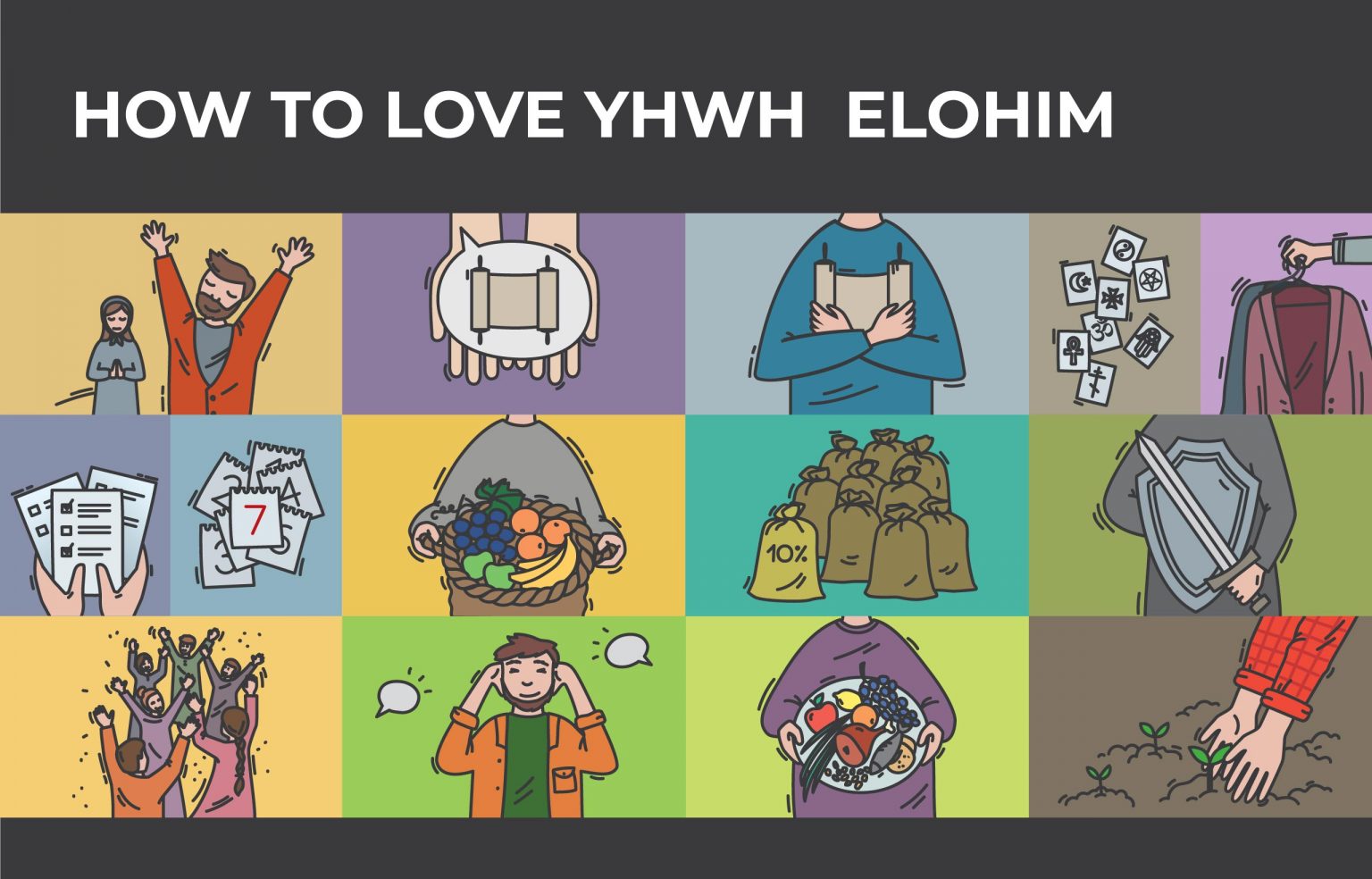

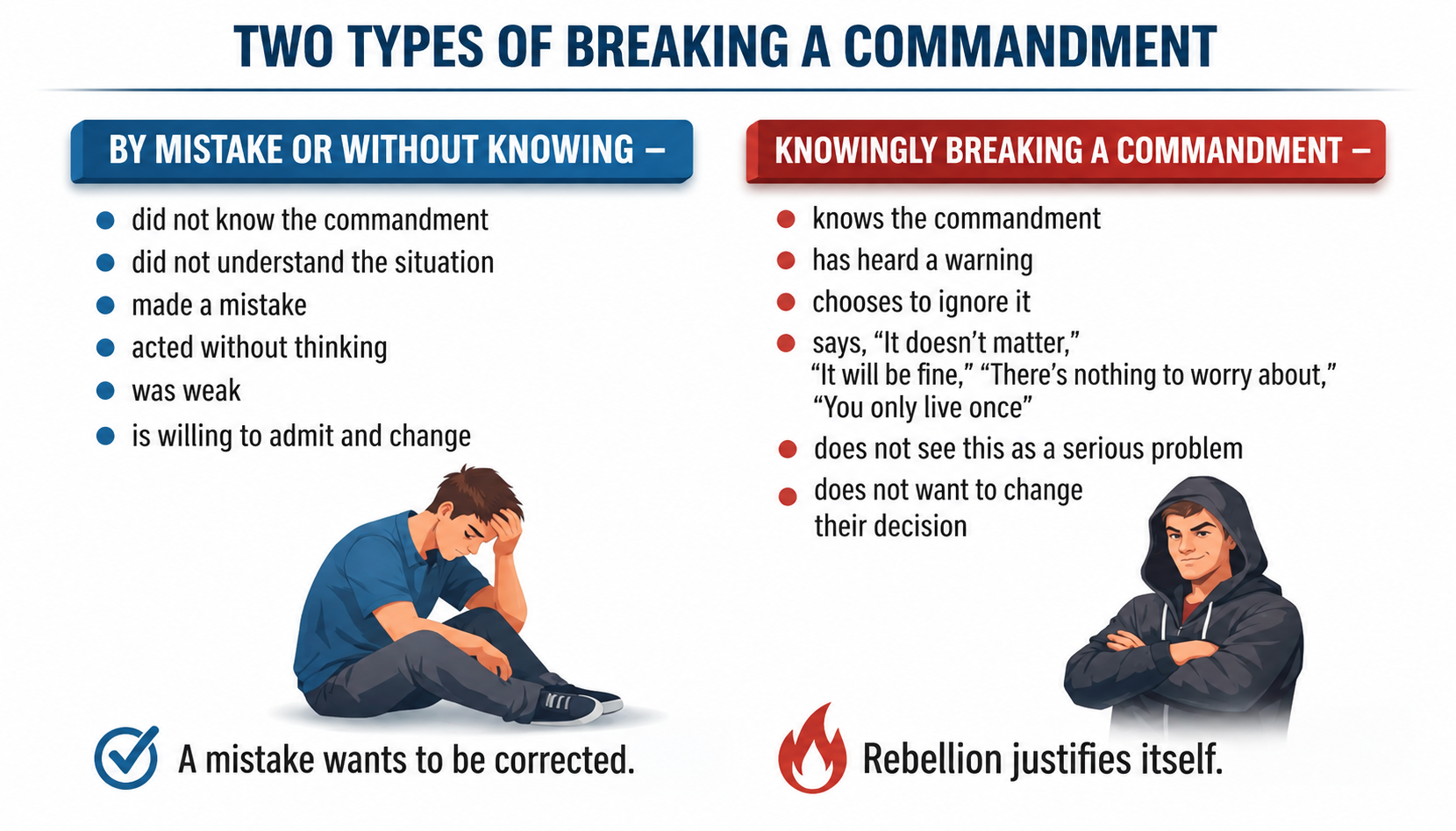

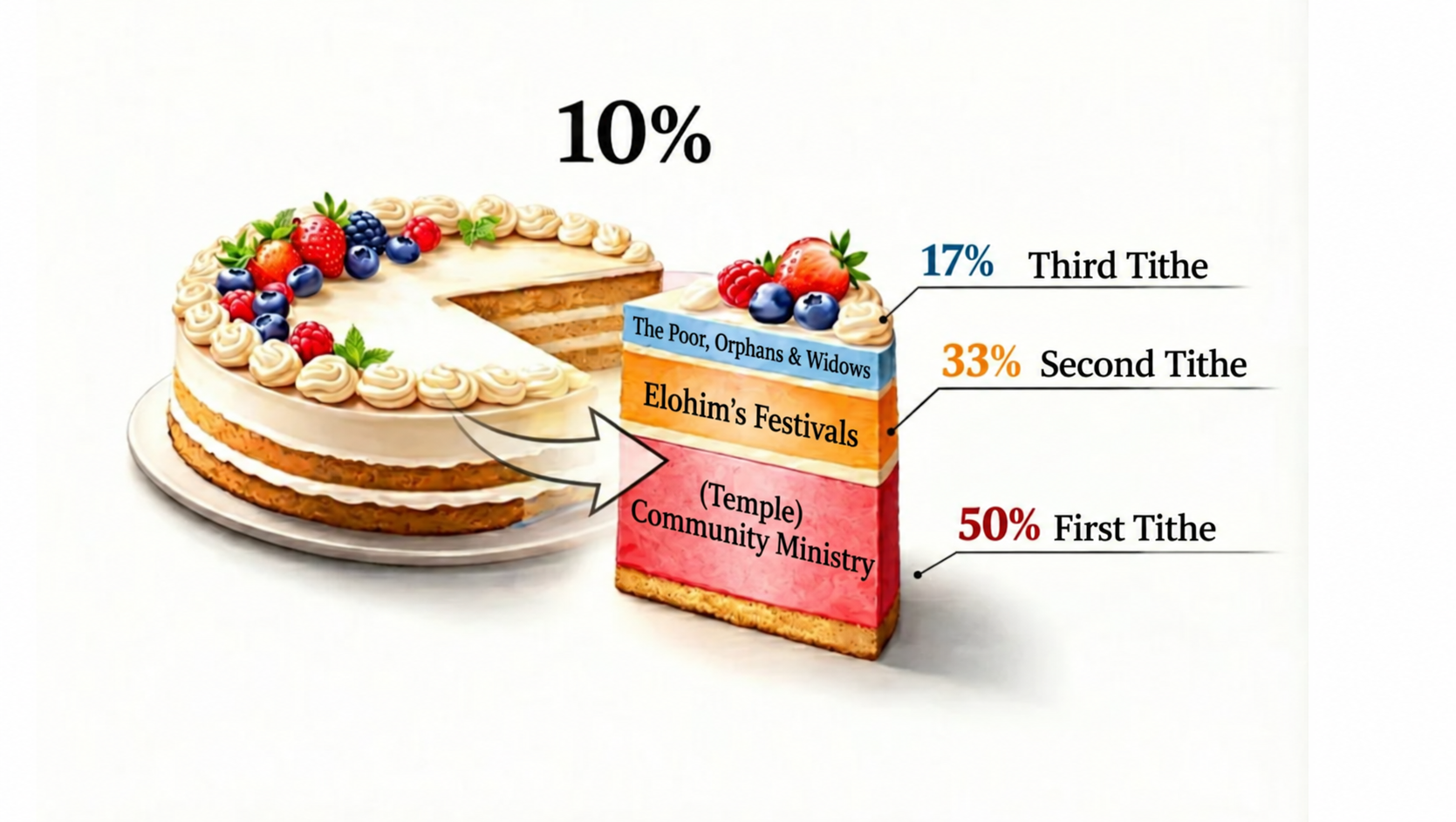


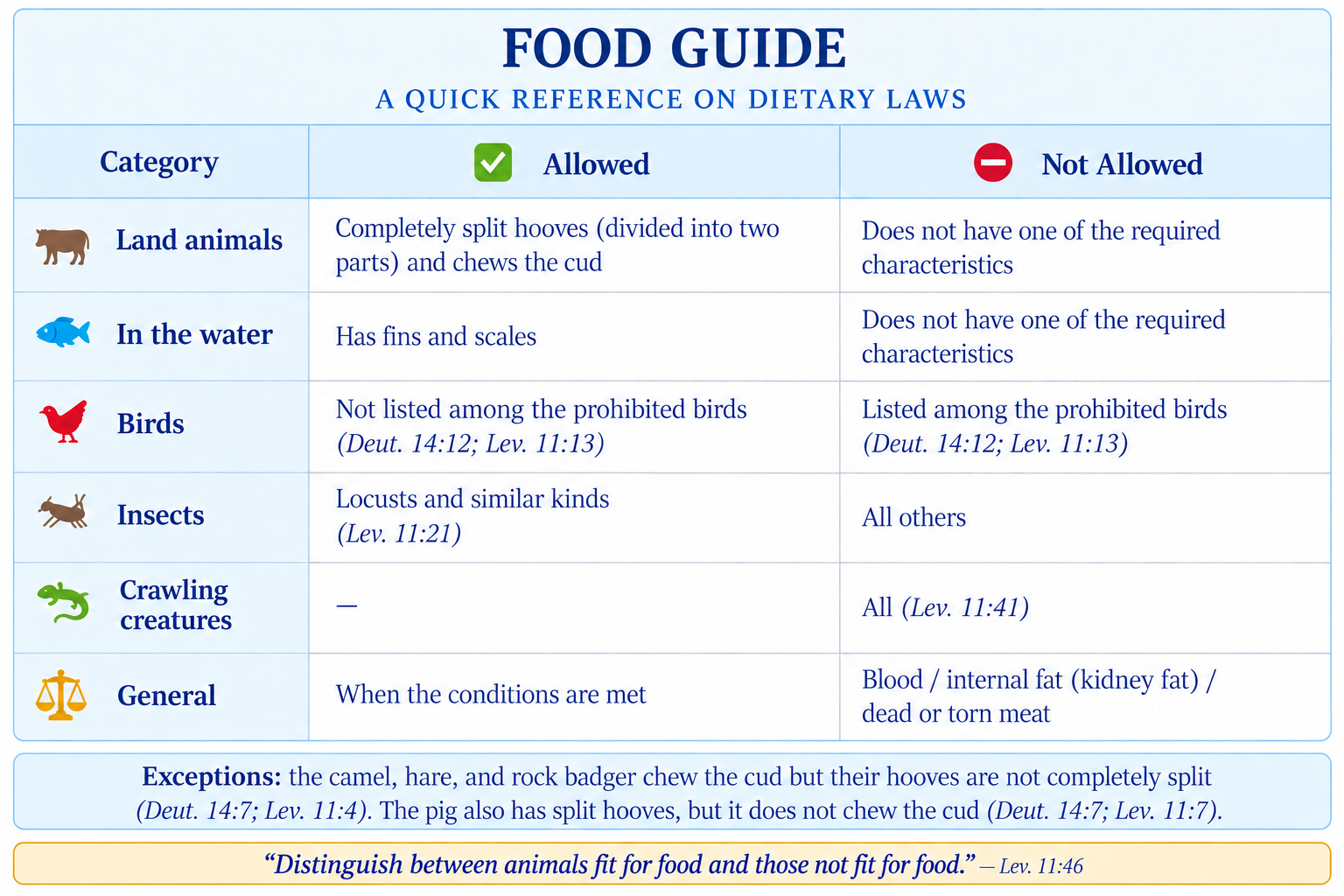



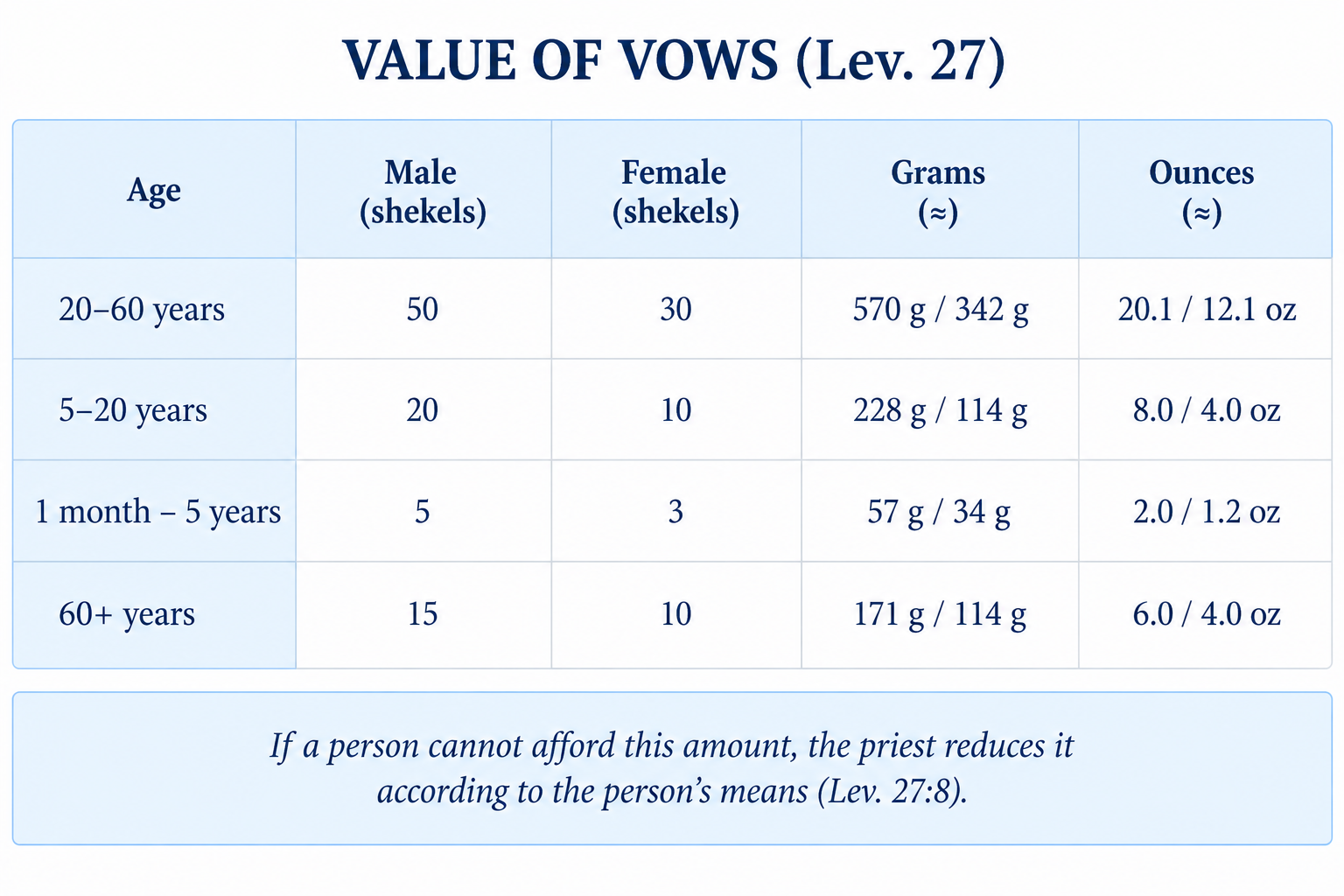


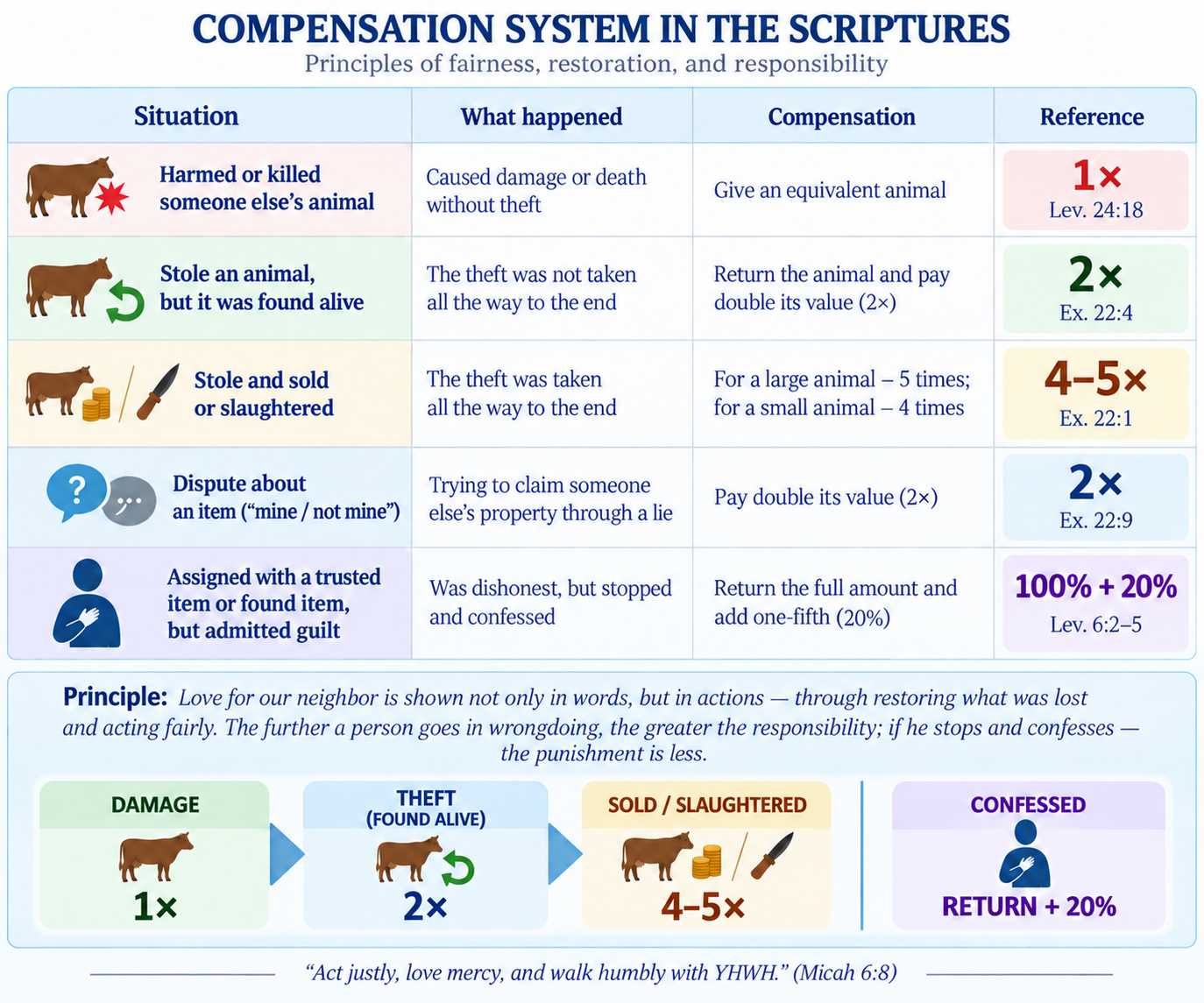
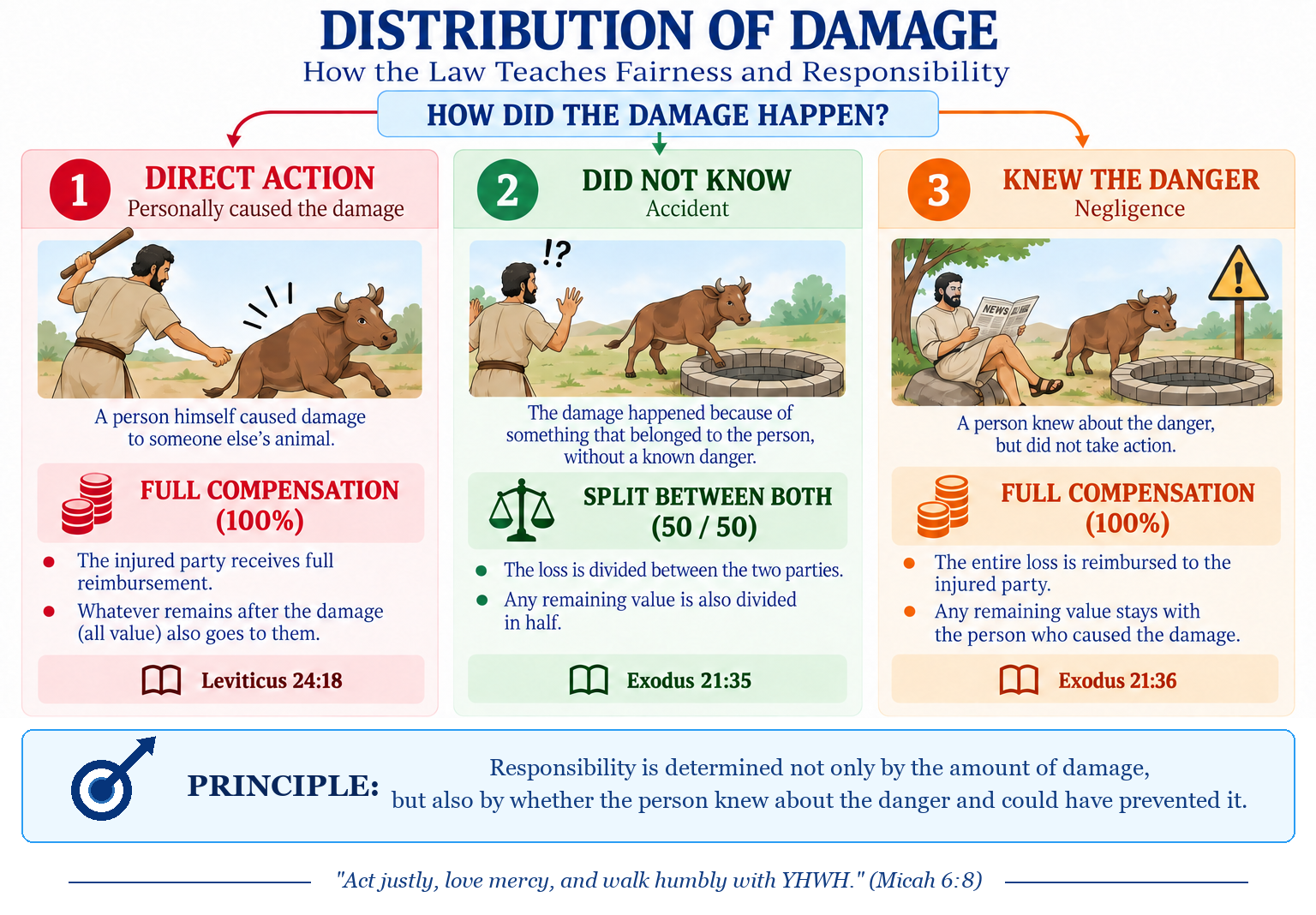



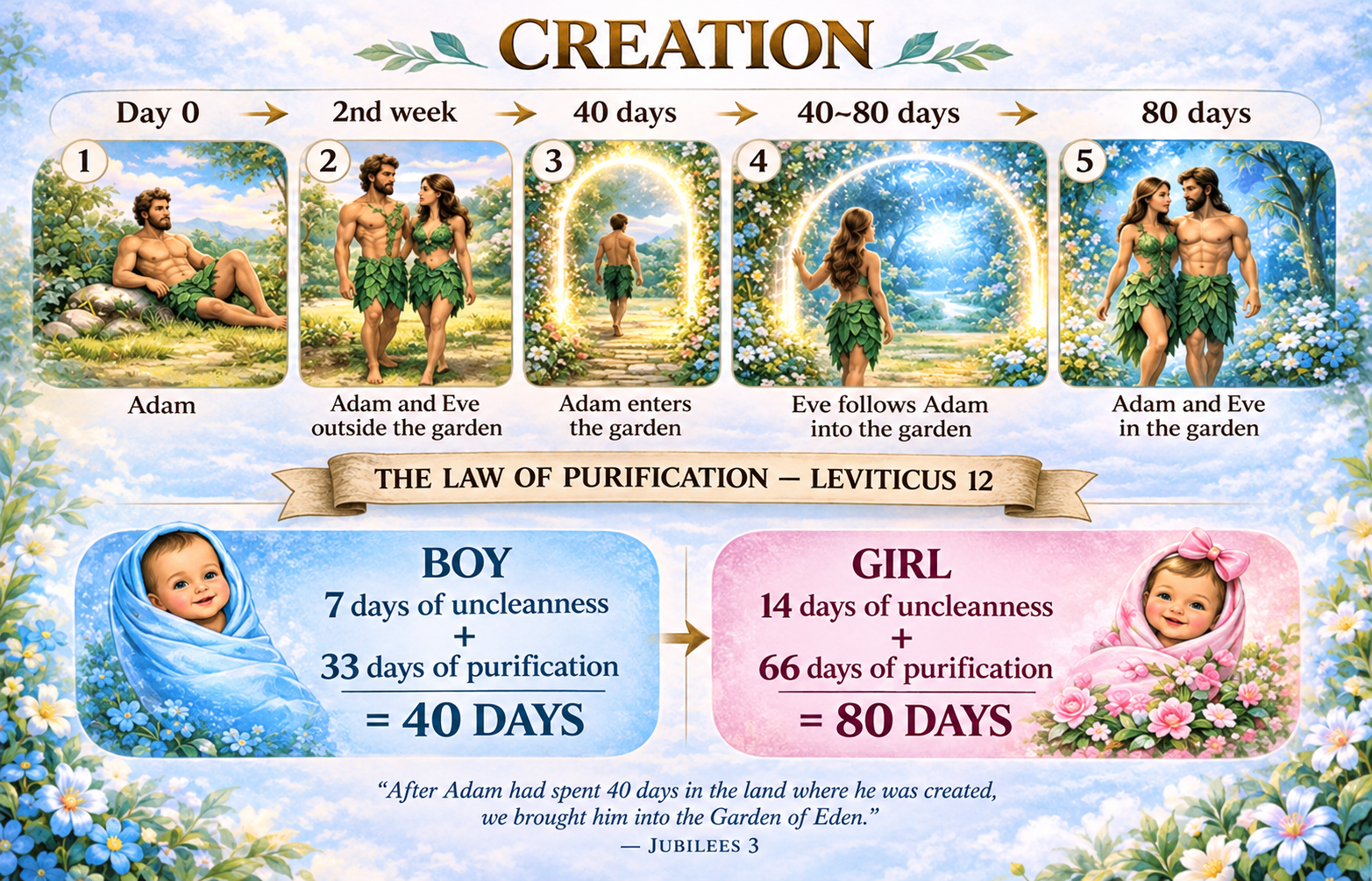
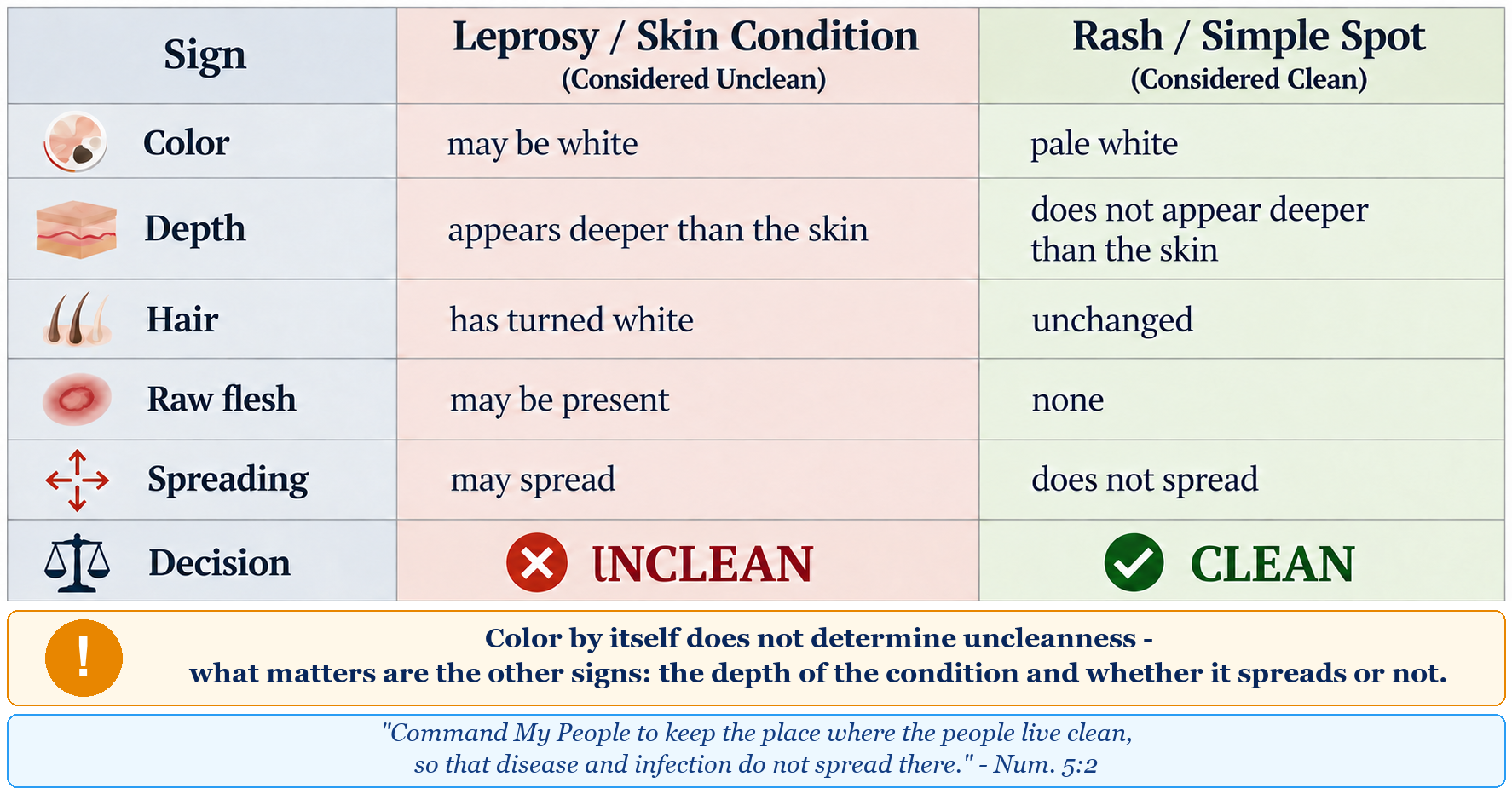
* lift up — Hebrew: נשא (nasa), which also means "to carry" or "to raise up."
** in vain — Hebrew: שָׁוְא (shav), which also means "falsely" or "deceitfully."
*** name — Hebrew: שֵׁם (shem), which also means "character" or "reputation."
In light of this, this commandment can also be understood as: "Do not misrepresent the character of Elohim," or, in other words, "Do not bring dishonor to His reputation." Considering that human beings were created in His likeness—or, more literally, as His "image" (Hebrew צֶלֶם (tselem) also means "shadow"; Gen. 1:27)—this commandment takes on an even deeper meaning.